

Sustainable Ways to Build a Personal Library
Table of Contents
- Why Your Bookshelf Has a Carbon Footprint
- Used Books vs New Books: The Environmental Math
- How to Source Second-Hand Books Without Sacrificing Quality
- Eco-Friendly Book Storage Solutions That Protect Your Collection
- Curating a Collection Built to Last Generations
- Community Sharing and the Circular Library Economy
- What to Skip: Greenwashing Traps and Bad Advice
- Your Sustainable Library Action Plan
- Frequently Asked Questions
Last Updated: September 7, 2026
Every book on your shelf carries a hidden cost that most collectors never consider. The publishing industry depends on virgin paper, energy-hungry printing presses, and global shipping networks, so a new hardback can generate a surprisingly large environmental footprint before it reaches your hands. Building a sustainable library starts with understanding that the greenest book is often the one that already exists. At The Almost New Book Shop, we are dedicated to rehoming pre-loved titles, and we believe choosing second-hand books can transform both your collection and your conscience.
Shifting to sustainable ways to build personal library habits does not mean sacrificing quality, rare finds, or the joy of a beautiful shelf. It simply means changing where you source your books and how you care for them long-term. Below, we walk through the environmental maths of used versus new books, where to find hidden gems, and how to store your collection so it lasts for generations.
Why Your Bookshelf Has a Carbon Footprint
Most people assume the environmental impact of reading ends at the paper mill. In reality, the carbon footprint of book production is a multi-stage process that begins long before a title hits the printing press and continues long after you finish the last page.
The publishing supply chain is resource-intensive from start to finish. The environmental impact research from the Book Industry Study Group highlights that the publishing supply chain is resource-intensive from start to finish. Here is what happens at each stage:
-
Forestry and Pulping: Virgin paper requires felling trees, transporting logs, and chemically processing wood fibre. This stage consumes significant water and energy, and it generates chemical waste that must be managed. While many publishers now use certified sustainable sources, the processing itself remains energy-hungry.
-
Printing and Binding: Commercial printing presses run at high temperatures and require substantial electricity. The binding process uses adhesives, thread, and sometimes plastic laminates. A typical print run of 10,000 copies can consume enough energy to power a small neighbourhood for a month.
-
Distribution and Retail: Books travel from printer to warehouse to distributor to retailer, often crossing national borders. A hardback printed in one country and sold in another carries the fuel emissions of that entire journey. Unsold copies frequently make a return trip to the publisher for pulping, doubling their transport footprint.
-
End of Life: When a book ends up in landfill, all of that embedded energy is wasted entirely. Paper in landfill decomposes anaerobically, releasing methane, a greenhouse gas roughly 25 times more potent than carbon dioxide over a 100-year period.
The key insight most guides miss is the concept of embedded carbon. Every book you own has already consumed resources before you bought it. A book that sits unread for a decade has not justified its environmental cost; a book that is read, shared, and passed on spreads that cost across multiple readers.
The single most effective choice is simply not buying new. Every pre-loved volume you purchase prevents one more tree from being pulped and keeps a readable book out of the waste stream.
Used Books vs New Books: The Environmental Math
The comparison between used books vs new books is not close when you account for full lifecycle emissions. A new book requires virgin materials, manufacturing energy, and transport to a retailer. A used book requires only the journey from its previous owner to your shelf, often a short local trip.
By choosing second-hand, you directly interrupt that flow and support a circular economy where resources stay in use for as long as possible.
The trade-off used to be condition and availability, but that gap has narrowed considerably. Curated sellers often grade their stock carefully, meaning you can find high-quality copies of classics and out-of-print titles without the environmental guilt of a new purchase.
How to Source Second-Hand Books Without Sacrificing Quality
Sourcing second-hand books does not mean settling for dog-eared paperbacks with coffee stains. With a little know-how, you can build a collection that rivals any new-book haul, often at a fraction of the price.
Where to Look Beyond the Big Charity Shops
To find better quality, try these less obvious sources:
- Online curated sellers that specialise in pre-loved stock and grade each book individually
- Library withdrawal sales, where retired titles are sold for pennies to make room for new stock
- Local book fairs and school fetes, which often have hidden gems buried in bargain boxes
- Specialist online communities for collectors of specific genres like military history
When you buy from a dedicated second-hand retailer, you often get the benefit of human curation. Someone may have already checked the spine, the pages, and the dust jacket, so the book you receive is more likely to match the description.
What to Check Before You Buy Online
Always check the stated condition grade, and look closely at any photos for spine creases, foxing, or annotations.
Ask the seller directly if the listing is unclear about damage. A reputable seller will happily describe any flaws rather than risk a return. For rare or collectible titles, confirm the edition and printing year, as these dramatically affect value.
Eco-Friendly Book Storage Solutions That Protect Your Collection
Once you have sourced your books sustainably, the next challenge is storing them so they survive for decades. Proper storage is itself a green strategy: a book that lasts 50 years avoids the need for a replacement copy.
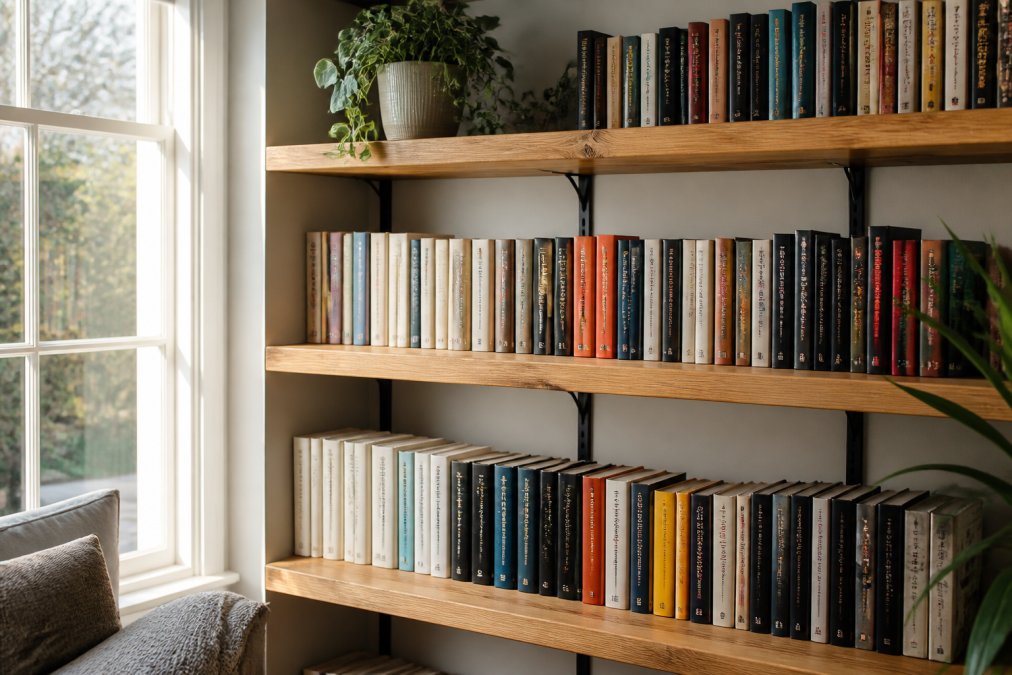
Eco-friendly book storage solutions start with choosing the right location. Avoid shelves near radiators, direct sunlight, or damp exterior walls. Fluctuating temperature and moisture cause pages to warp and bindings to crack.
- Keep books upright and supported, not leaning at angles that stress the spine
- Leave a finger's width of space at the end of each row for air circulation
- Dust regularly with a soft brush to prevent grit from grinding into page edges
- Use wooden or metal shelving over particle board, which off-gasses acids over time
Climate control matters more than most collectors realise. The ideal environment is cool, dry, and stable. If you live in a humid area, consider a small dehumidifier for your reading room.
Curating a Collection Built to Last Generations
A truly sustainable library is not measured by how many books you own, but by how many you keep. Curating with longevity in mind means choosing titles you will reread, lend, and eventually pass down, rather than disposable bestsellers you will discard within a year. This is where minimalist library design becomes a genuine sustainability strategy.
Before adding a book, ask yourself whether it earns a permanent place or belongs in the lending pool. This mindset shift reduces clutter and ensures your shelf reflects genuine taste rather than impulse buying.
The Preservation Mindset
The difference between a book that survives generations and one that falls apart within a decade often comes down to how it was selected and stored. Most collectors focus on acquisition; few consider the physical chemistry of their shelves.
The rate of degradation depends on the quality of the original materials, the storage environment, and how they are handled.
Selection Criteria for Longevity
Not all books are created equal when it comes to durability. When choosing between editions, consider these factors:
- Paper quality: Acid-free paper, often labelled as "permanent paper" or meeting ISO 9706 standards, resists yellowing and embrittlement for centuries. Cheaper groundwood paper begins to acidify within decades.
- Binding method: Smyth-sewn bindings, where signatures are stitched together before being attached to the cover, open flat and survive repeated reading. Perfect binding, where pages are glued to the spine, is cheaper but prone to cracking and page loss.
- Cover material: Cloth and real leather age gracefully when conditioned. Cheap faux leather and laminated paper covers tend to peel and degrade within years.
- Print-on-demand caution: While convenient, many print-on-demand titles use adhesive bindings and lower-grade paper that do not hold up to the same standards as offset-printed editions from established publishers.
For children's books especially, sturdy bindings matter because young readers are not gentle. Seek out picture books with reinforced spines and washable covers if you want them to survive multiple childhoods.
The 20-Book Rule
A practical heuristic used by many serious collectors is the 20-book rule: if you cannot identify 20 books on your shelf that you would genuinely reread or pass down to the next generation, your collection is too large for its purpose. This is not about arbitrary minimalism; it is about focusing your resources on volumes that will actually be used and preserved.
A smaller, well-chosen collection requires less storage space, less energy for climate control, and fewer resources overall. It also makes each book more visible and more likely to be read. A shelf of 200 cherished volumes outperforms a wall of 2,000 forgotten ones on every sustainability metric.
Community Sharing and the Circular Library Economy
The circular economy is not just about buying used books, it is about keeping them moving through your community. A book that sits unread for a decade has stopped being useful, regardless of how sustainable its origins were.
Little Free Libraries, small weatherproof boxes where neighbours leave and take books freely, have grown into a global network. Participating is simple: leave a finished book, take a new-to-you one, and repeat.
Beyond street libraries, consider starting a book swap with friends or colleagues. A monthly exchange circle means everyone reads more while buying less. For children's books, which children outgrow quickly, swapping with other parents is particularly effective.
Digital archives also play a role in reducing physical consumption. While nothing replaces the feel of paper, borrowing e-books from your local library for one-time reads keeps your physical collection focused on titles you truly treasure. The sustainable practices guidance from the UK Government encourages exactly this kind of resource efficiency in daily life.
What to Skip: Greenwashing Traps and Bad Advice
Not everything marketed as "eco-friendly" deserves your money. As demand for sustainable products grows, so does the temptation for companies to overstate their credentials.
Buying a second-hand book printed on conventional paper is almost always greener than buying a new one printed on recycled stock.
Be wary of books that arrive wrapped in excessive plastic packaging. A seller claiming environmental virtue while shipping each volume in its own bubble-wrap envelope is missing the point. Consolidate orders to reduce packaging waste.
The waste reduction hierarchy from the Environment Agency ranks waste prevention above recycling, and reuse above both. Buying used books sits firmly in the "reuse" tier, which is why it outperforms even the most responsibly manufactured new product.
Your Sustainable Library Action Plan
Building a truly green collection comes down to consistent habits rather than grand gestures. Start with these steps:
- Audit your shelves and identify books you will never reread. Donate them to a charity shop, hospital, or Little Free Library to keep them circulating.
- Source second-hand first for every new addition. Make buying used your default, not an occasional option.
- Check condition carefully when buying online, and support sellers who grade honestly and describe flaws clearly.
- Store books properly in a cool, dry, stable environment away from direct sunlight to maximise their lifespan.
- Share what you finish through swaps, donations, or lending to extend the useful life of every volume.
The Almost New Book Shop aims to make step two effortless. Our curated selection of pre-loved fiction, non-fiction, classics, military history, and children's titles means you can build a meaningful library without compromising on quality or contributing to landfill. Every book we sell is one more volume rescued from the waste stream and given a second chapter with a reader who will treasure it.
Frequently Asked Questions
What are the environmental benefits of buying second-hand books?
Buying second-hand extends a book's life without demanding new paper, ink, or shipping materials. It keeps volumes out of landfills and displaces demand for newly printed copies. Research shows the publishing industry contributes significantly to deforestation and carbon emissions. Each pre-loved purchase avoids that impact entirely. For a sustainable library, second-hand is the single highest-impact choice you can make.
How do I properly store and preserve pre-loved books?
Keep books away from direct sunlight and moisture. Aim for a stable room temperature between 16-20°C and humidity around 45-55%. Store books upright on sturdy shelves, not crammed too tightly. Use bookends to prevent leaning, which warps spines. For valuable finds, consider acid-free archival boxes. Avoid plastic containers that trap humidity and encourage mould.
Are digital books more sustainable than physical books?
The comparison is complex. E-readers have a high upfront manufacturing footprint, but if you read more than 20-30 books on one device, it typically beats print. However, digital books don't create the joy of a physical collection and rely on rare earth minerals. For a sustainable personal library, a mix works well: use e-readers for new releases and reserve physical shelves for books you truly love.
What is the most sustainable way to source books for a collection?
Start with local charity shops and second-hand bookshops to eliminate shipping emissions entirely. For rare or specific titles, use online pre-loved retailers that consolidate shipping. Ask about packaging materials, choose sellers using recycled paper or cardboard rather than plastic. And remember the most sustainable book is the one already in circulation, so swap with friends before buying anything new.
How can I tell if a second-hand book is in good enough condition to buy online?
Check the seller's condition descriptions carefully. Look for terms like 'reading copy' versus 'fine' or 'near fine'. Ask for photos of the spine and page edges if they aren't shown. Reputable sellers grade honestly and describe any markings, foxing, or damage. If a listing seems vague about condition, ask questions before you order, most sellers are happy to clarify.
What is the rule of 5 in library sustainability?
The 'rule of 5' isn't a formal library standard, but a useful personal guideline. It suggests keeping only books you will read, reference, or lend within five years. If a book hasn't been touched in that window, pass it on to a charity shop or a friend. This prevents accumulation, keeps your collection meaningful, and keeps books circulating in the community rather than gathering dust.
Building a sustainable library is not about deprivation, it is about smarter choices that honour both great stories and the planet they travel through. Start with second-hand sourcing, protect your books with proper storage, and keep them moving through your community when you are done. Subscribe to our emails for new arrivals, reading recommendations, and the satisfaction of knowing your next great read saved a book from landfill.