

Best Websites for Rare Classic Books: A 2026 Guide
Table of Contents
- What Makes a Website Good for Rare Classic Books?
- How to Identify First Edition Books Before You Buy
- A Rare Book Price Guide: What Actually Drives Value
- How to Care for Rare Books Once They Arrive
- Comparing Appraisal Services and Authentication Help
- Common Mistakes When Buying Online
- Conclusion: Building Your Collection with Confidence
- Frequently Asked Questions
Last Updated: October 3, 2026
What Makes a Website Good for Rare Classic Books?
Finding the best websites for rare classic books comes down to three things: seller vetting, transparent condition grading, and buyer protection that actually works when something goes wrong. According to Arts Council England's guidance on collections care, responsible sellers should document condition and provenance before listing.
A rare book is a volume valued for its scarcity, age, or historical significance rather than its text alone. The best platforms grade condition honestly, verify seller identities, and offer returns when a book arrives not as described.
Not every marketplace clears that bar.
Seller Vetting and Authentication
The strongest sites verify who is selling before a listing goes live. Look for sellers who photograph the actual book, not a stock image, and who answer direct questions about provenance.
Red flags to watch for:
- Listings using publisher stock photos
- Vague condition descriptions like "good for its age"
- No returns policy stated anywhere
Return Policies and Buyer Protection
A clear returns window matters more than a low price. Check whether the platform holds payment until delivery is confirmed, and whether disputes are handled by the site or left to you and the seller to sort out. Sites that mediate disputes themselves are worth paying a little more for.
How to Identify First Edition Books Before You Buy
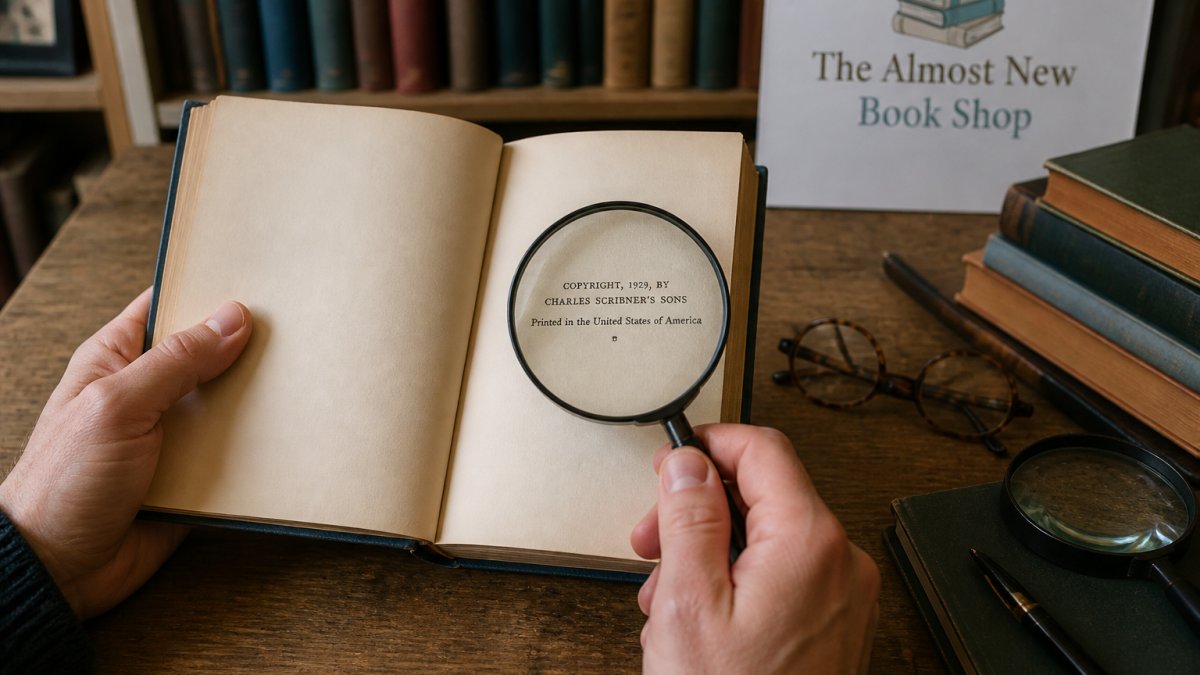
A first edition is the first printing of a book in its original form, and identifying one takes about two minutes once you know where to look.
Checking the Copyright Page and Number Line
Open the book to the copyright page. You're looking for the words "First Edition," "First Printing," or a number line. A number line reading "10 9 8 7 6 5 4 3 2 1" indicates a first printing; if the "1" is missing, you're holding a later reprint.
Other signals worth checking:
- The publisher's name matches the original imprint, not a book club
- No mention of "reprinted" or "second impression"
- The dust jacket price, if present, matches the era
A Rare Book Price Guide: What Actually Drives Value
Value in the rare book market comes from five factors: scarcity, condition, provenance, demand, and whether the dust jacket survived. A rare book price guide is only useful if it accounts for all five, and if it tells you how they interact, because they rarely move in isolation.
| Factor | Why It Matters | Impact on Value |
|---|---|---|
| Scarcity | Fewer copies means higher demand | Strong upward pressure |
| Condition | Foxing, tears, and repairs lower grades | Moderate to severe |
| Provenance | A famous previous owner adds history | Can be significant |
| Demand | Genre and author popularity shift over time | Variable |
| Dust jacket | Jackets are often discarded | Major when present |
How the Five Factors Interact
A first edition with a fine dust jacket but a cracked hinge will usually sell for less than a very good copy with an intact binding, because structural damage is harder to reverse than cosmetic wear.
A common pattern is that scarcity and demand pull in opposite directions. A genuinely scarce title in a niche genre may sit unsold for months because the buyer pool is tiny, while a relatively common edition of a popular author sells quickly at a higher price.
Reading Condition Grades Properly
Condition grading follows recognised scales, and the difference between "very good" and "near fine" can be substantial. For guidance on what each grade means, see the Antiquarian Booksellers' Association condition glossary.
The grades that matter most in practice:
- Fine: As close to new as a used book can be, with no defects worth noting.
- Near fine: Minor flaws only, such as a lightly bumped corner or a faint pencil price.
- Very good: Noticeable wear but complete and sound, the working grade for most collectible reading copies.
A Beginner's Valuation Walkthrough
If you want to know what a book is worth, work through these steps in order:
- Identify the edition. Check the copyright page and number line (see the section above). A later printing of the same title can be worth a fraction of the first.
- Grade the condition honestly. Compare against the ABA glossary rather than your own optimism. Photograph every flaw.
- Check the dust jacket. If it is present and unclipped, note it separately, jackets are frequently the single largest value multiplier.
- Research recent sold prices, not asking prices. Asking prices on marketplaces are aspirational; sold prices on auction results are evidence. Look for at least three comparable sales within the last year.
- Adjust for provenance. A signed copy, a previous owner of note, or a documented association can move the figure up, but only with evidence in writing.
Where Online Price Guides Fall Short
Online price guides are useful for a rough range but poor for a firm figure. They rarely account for the interaction between condition and jacket, they lag the market by months, and they cannot see provenance. Use them to sanity-check a range, then confirm with sold auction results and, for anything valuable, a written valuation (see the appraisal section below).
How to Care for Rare Books Once They Arrive
Caring for rare books means controlling light, humidity, and handling. Keep volumes out of direct sunlight, store them upright on shelves rather than stacked, and aim for stable indoor conditions rather than a damp garage or loft.
A few habits protect value over decades:
- Wash and dry your hands before handling
- Support the spine when opening a tight binding
- Store in acid-free sleeves if the jacket is fragile
If you want to know how to care for rare books properly, the British Library's collection care advice is a solid starting point. It covers storage, pest control, and environmental monitoring in plain language.
Comparing Appraisal Services and Authentication Help
Appraisal services fall into three broad types, and choosing the right one depends on why you need a valuation. Insurance, sale, and curiosity each call for a different approach, and the wrong choice wastes money or leaves you without the documentation you actually need.
The Three Routes, Compared
- Auction house specialists: Best for high-value items you plan to sell. They often appraise for free if you consign, because their fee comes from the buyer's premium. The trade-off is that their estimate is designed to attract bidders, so it may sit below a retail replacement figure.
- Independent appraisers: Best for insurance valuations, since they provide written reports you can hand to an insurer. Expect a fee, and expect to wait, good appraisers are booked weeks ahead. Ask upfront whether the report follows a recognised format and whether it states the basis of value (market, replacement, or insurance).
- Dealer opinions: Best for a quick sanity check before you commit to a paid appraisal. Useful but rarely formal enough for insurers, and a dealer who wants to buy has an obvious interest in the figure they quote.
When to Use an Online Price Guide Instead
An online price guide is the right tool when you want a rough range, you are not insuring or selling, and the book is not obviously valuable. It is the wrong tool when an insurer, a buyer, or a court needs a figure. The dividing line is documentation: a price guide gives you a number, an appraiser gives you a signed report.
A practical sequence for most collectors:
- Use a price guide and recent sold prices to establish a rough range.
- If the range is low and you are not selling, stop there.
- If the range is high, or you need insurance cover, commission a written valuation.
- If you plan to sell, approach an auction house specialist first, the free appraisal is often the cheapest route to a real figure.
A Beginner's Authentication Walkthrough
Before you pay for any appraisal, run these checks yourself. They will not replace an expert, but they will tell you whether an expert is worth the fee.
- Check the edition points. Copyright page, number line, publisher imprint, and any statement of "first edition" or "first printing." A book club edition can look identical at a glance.
- Examine the binding and paper. Age-appropriate paper tone, endpapers, and sewing patterns are hard to fake convincingly. A modern reprint in an old-looking jacket is a common trap.
- Inspect signatures and inscriptions. Compare the handwriting against known examples of the author's signature. A signed copy without provenance is a claim, not a fact.
What a Written Valuation Should Contain
A usable report typically states the book's full identification (author, title, edition, printing), the condition grade, the basis of value, the figure, the date, and the appraiser's signature and credentials. If any of those are missing, ask for them before you rely on the document. A report that names the book but not the edition is not a valuation, it is an opinion.
Common Mistakes When Buying Online
The biggest mistake is buying on price alone. A cheap copy with a repaired spine and a missing jacket is rarely the bargain it appears to be once you factor in resale value.
Other errors we see often:
- Trusting a seller's condition grade without asking for extra photos
- Ignoring shipping method, since poor packaging damages spines
- Skipping the returns policy until after a problem appears
A common mistake is treating a bookseller's description as a formal appraisal. It isn't. For a proper authentication guide, ask the seller for provenance details in writing before you pay.
Conclusion: Building Your Collection with Confidence
Building a collection takes patience, and the right platform makes the difference between a shelf of treasures and a drawer of regrets. At The Almost New Book Shop, we curate pre-loved classics, military history, and children's titles so every volume finds its next reader, and we keep prices accessible for collectors on a budget. Subscribe to our emails.
Frequently Asked Questions
What is the best website to search for rare books?
There is no single best website, but the strongest options for rare classic books are established marketplaces that vet sellers and provide detailed condition reports. Look for sites that show clear photographs of the actual copy, list the edition and printing, and offer buyer protection. Some specialise in antiquarian and out-of-print titles, while others focus on affordable second-hand classics. Always check return policies before buying, and cross-reference the seller's reputation across multiple platforms.
How do I find out if my old books are worth anything?
Start by identifying the edition, printing, and condition. Check the copyright page for the date and any number line, then compare your copy against sold listings on collector marketplaces. Condition matters enormously: a fine first edition with its original dust jacket can be worth many times more than a reading copy. For valuable items, a professional appraisal from a recognised book dealer or auction house will give you a reliable figure. Online catalogues and auction archives are free starting points.
How do I verify the authenticity of a rare book online?
Ask the seller for high-resolution photographs of the title page, copyright page, binding, and any inscriptions or marginalia. Compare these against known copies in institutional catalogues or digital exhibitions. Look for inconsistencies in paper texture, typeface, or binding that suggest a facsimile or later reprint. Reputable sellers will provide provenance details and answer questions openly. If a price seems far below market trends for that edition, treat it as a warning sign and request more evidence before committing.
What should I look for when buying rare classic books?
Focus on five things: edition and printing, condition, completeness, provenance, and seller reliability. A first edition with the original dust jacket and no restoration will hold value best. Check for missing pages, loose bindings, foxing, or water damage, and ask whether any repairs have been made. Provenance, such as a previous owner's inscription or a known collection history, can add interest but also raises questions about authenticity. Finally, buy from sellers who describe flaws honestly and offer returns.