

How to Clean Vintage Hardback Books: A 2026 Guide
Table of Contents
- Step 1: Set Up Your Workspace and Gather the Best Tools for Cleaning Antique Books
- Step 2: Remove Loose Dust and Surface Dirt from the Book Block and Spine
- Step 3: How to Clean Vintage Hardback Book Covers and Boards
- Step 4: Tackle Stubborn Grime, Foxing and Stains on Delicate Pages
- Step 5: How to Remove Musty Smell from Old Books
- Step 6: How to Store Vintage Books to Prevent Damage Long-Term
- When to Stop Cleaning and Call a Professional Conservator
- Frequently Asked Questions
Last Updated: September 24, 2026
Step 1: Set Up Your Workspace and Gather the Best Tools for Cleaning Antique Books
Learning how to clean vintage hardback books starts with preparation, not scrubbing, and the same care applies to clean vintage hardback books. A clear, dry workspace and the right tools prevent damage before you touch a single page.
The biggest mistake we see is people reaching for a damp cloth first. Moisture is the enemy of old paper and board.
Set up on a clean table with good light. Lay down a white cloth so you can see what falls off the book.
Gather these tools for gentle cleaning:
- Soft-bristled brush for dust on the book block and spine
- Microfiber cloth for dry wiping covers
- Gum eraser for light marks on boards
- Crevice tool or a soft paintbrush for the spine hinge
- Dry cleaning pad for soot and surface dirt
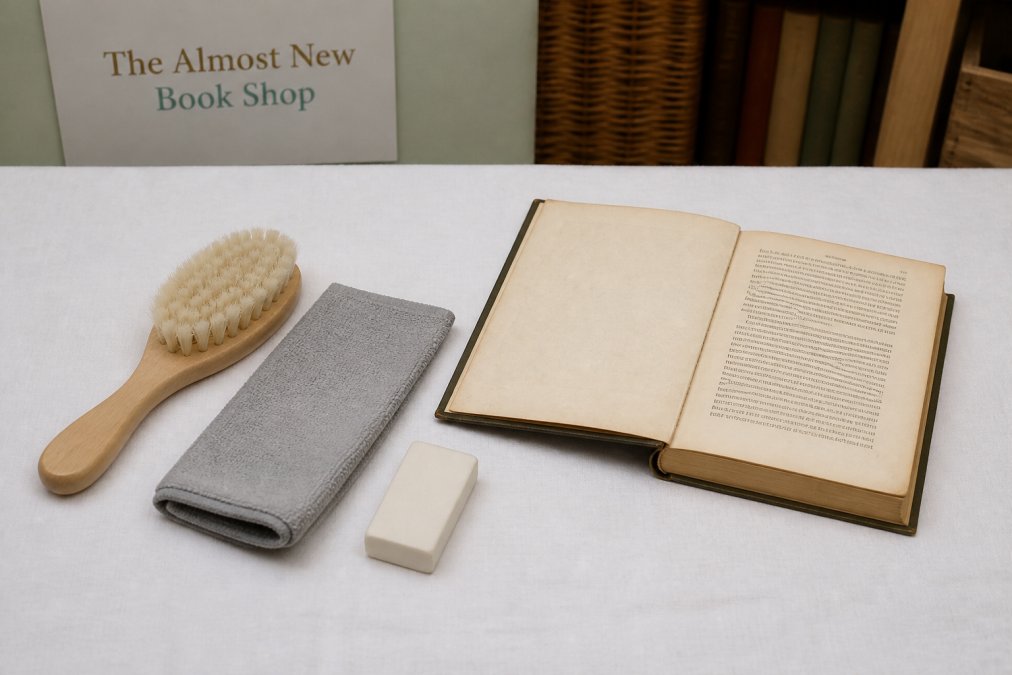
Avoid anything abrasive. Steel wool, scouring pads and harsh solvents will strip the patina that makes an antique book collectible. The British Library's guidance on caring for paper collections is clear that gentle, dry methods come first.
Step 2: Remove Loose Dust and Surface Dirt from the Book Block and Spine
Dust is the first thing to tackle, and it is the easiest to remove safely. The book block (the pages) and the spine hold most of the surface dirt you will find.
Hold the book closed and upright. Gently brush from the spine outwards, letting dust fall away from the pages.
Work in this order:
- Brush the top edge of the book block
- Move to the fore-edge (the opening side)
- Finish with the bottom edge
- Use the crevice tool along the spine hinge
Keep the brush dry and soft. A stiff brush pushes dirt deeper into the paper fibres.
For a dusty dust jacket, wipe with a dry microfiber cloth. Never rub hard, as this scuffs the surface and dulls any gloss.
If the spine feels loose, stop brushing. A fragile book spine can crack with too much pressure. Support it flat on the table instead.
Step 3: How to Clean Vintage Hardback Book Covers and Boards
Covers and boards need a different approach to the pages. Most grime sits on the surface and lifts with a dry eraser or cloth.
Start with a dry microfiber cloth. Wipe the hardback binding in small circles. This removes light surface dirt without moisture.
For sticky marks or fingerprints, try a gum eraser. Rub gently in one direction. The eraser lifts grime without scratching the board.
For cloth-bound covers, brush with the soft-bristled brush first.
Check any book plate or pasted label before you rub. Old adhesive lifts easily. Work around it, not over it.
Step 4: Tackle Stubborn Grime, Foxing and Stains on Delicate Pages
Pages are the most fragile part of any vintage book. Handle them as little as possible, and never pull on them.
Try this safe order for pages:
- Brush loose dirt with a soft brush
- Use a dry cleaning pad on edges
- Leave foxing and set stains alone
- Note any serious damage for a professional
Step 5: How to Remove Musty Smell from Old Books
A musty smell is a symptom, not a problem in itself. Understanding what causes it tells you whether you can fix it at home or whether the book needs to be isolated.
Step 1: Diagnose before you treat
Check the book in good light, page by page, especially along the spine gutter and inside the boards. Look for:
- Fuzzy white, grey or green patches
- Dark speckling that smudges when touched
- A sharp, ammonia-like or earthy smell that worsens when you fan the pages
- Warped boards or wavy pages, which suggest past moisture exposure
Step 2: Dry the book slowly
For surface odour with no active growth, the goal is to reduce moisture content in the paper without forcing it. Rapid drying warps boards and cracks adhesives.
- Stand the book upright on a dry surface with the pages fanned slightly.
- Place it in a room with good air circulation and a steady temperature, ideally around 18-21°C.
- Run a dehumidifier nearby, aiming for a relative humidity of 45-55%. A hygrometer costs very little and tells you whether you are actually achieving that.
- Leave it for several days, checking daily. Do not rush this with a hairdryer or direct heat.
Step 3: Absorb remaining odour
Once the book is dry, you can try passive absorption. Place the book in a sealed plastic container with a small open dish of activated charcoal or silica gel beside it, not touching it. Leave it for a week, then air the book for a day and reassess. Bicarbonate of soda works in the same way but is less effective than charcoal for this purpose.
What not to do
- Never use air fresheners, scented sprays, fabric softener sheets or essential oils. They add oils and chemicals that stain paper, attract dust and can feed mould later.
- Never seal a damp book in a plastic bag for storage. That traps moisture and encourages mould.
- Never freeze a book as a home remedy. Freezing can kill some mould but does not remove spores or odour, and the thawing process introduces moisture.
If the smell returns after treatment, the cause is environmental. Check the room, not the book.
Step 6: How to Store Vintage Books to Prevent Damage Long-Term
Cleaning removes existing dirt. Storage determines whether it comes back. The two are linked: a book cleaned in a damp room will reabsorb moisture and smell musty again within weeks.
The three environmental factors that matter most
Relative humidity (RH). Paper is hygroscopic, meaning it absorbs and releases moisture from the air. Fluctuating RH causes pages to swell and contract, which weakens the binding and encourages foxing. The widely cited target for paper collections is 45-55% RH, with minimal fluctuation. Below 40% and paper becomes brittle; above 65% and mould risk rises sharply.
Shelving and support
Store books upright and vertical, not leaning. A leaning book puts uneven stress on the spine and can distort the boards over time. If a book is too tall for the shelf, lay it flat rather than forcing it.
Materials to use and avoid
Use acid-free boxes, envelopes or tissue for valuable titles. Acidic cardboard, newspaper and cheap plastic bags all off-gas or transfer acid to paper over time.
Avoid:
- PVC plastic sleeves, which release plasticisers that damage paper
- Rubber bands, which perish and leave sticky residue
- Self-adhesive tape of any kind on or near books
- Wooden shelves that have not been sealed, as some woods release acids
Connecting storage to cleaning
For collectible and antique titles, consider a closed cabinet with a silica gel packet. Swap the packet every few months, or recharge it according to the manufacturer's instructions. It is a cheap way to buffer small humidity swings.
When to Stop Cleaning and Call a Professional Conservator
Some jobs are not for a home kit. Knowing when to stop protects both the book and your wallet.
Call a professional if you spot:
- Active mould or a strong, spreading smell
- Loose or broken binding integrity
- Torn pages, missing sections or detached boards
- Water damage or warped covers
- Anything you would call rare or valuable
Frequently Asked Questions
Is it safe to use water when cleaning old hardback books?
Water is generally not safe for vintage hardback books. Moisture can warp boards, weaken the binding, and encourage mould growth. For most surface dirt, use a dry method with a soft-bristled brush or microfiber cloth. Avoid household cleaners entirely, as they can damage paper and cloth.
How can I tell if a vintage book has mould or mildew?
Mould and mildew appear as fuzzy patches, often black, green, or white, and usually come with a persistent musty smell. Check the spine, endpapers, and page edges first, as these areas trap moisture. If you find active mould, isolate the book immediately. For extensive mould, consult a professional conservator, as cleaning alone may not stop the damage.
What are the best tools for cleaning antique books without causing damage?
The best tools for cleaning antique books include a soft-bristled brush for dusting, a dry microfiber cloth for covers, a gum eraser for light marks on paper, and a crevice tool for the spine hinge. Avoid abrasive materials like scrubbing pads or harsh solvents.
Can I use household cleaning products on antique book bindings?
No, household cleaning products should never be used on antique book bindings. Most contain solvents, bleaches, or surfactants that can strip away finishes, fade cloth, or weaken leather. Even mild soap can leave residue that attracts dirt and moisture. Stick to dry cleaning methods with a soft brush or microfiber cloth.
Cleaning a vintage hardback takes patience, not products. Get the tools right, work dry where you can, and stop before you risk the binding. If you would rather skip the work and grow your shelf straight away, The Almost New Book Shop rescues and rehomes pre-loved fiction, classics and military history titles so they find a second reader instead of a landfill. Browse our curated selection, enjoy affordable prices, and subscribe to our emails for new arrivals and care tips.