

How to Verify Used Book Condition: A Buyer's Guide
Table of Contents
- Understanding Used Book Grading Standards
- Step-by-Step Inspection Checklist for Online Buyers
- How to Spot Book Foxing and Yellowing
- How to Check for Mould in Used Books
- Repair Versus Damage: What Affects Resale Value
- Tools and Resources for Inspection
- How Book Condition Impacts Resale Value
- Conclusion
Last Updated: August 21, 2026
Understanding Used Book Grading Standards
When buying second-hand books online, condition grading is your lifeline. You can't hold the book or check the spine in person, so the grading system tells you what to expect. Grading isn't vague, it's a standardized language that separates a book worth keeping from one that'll disappoint you.
The Almost New Book Shop uses industry-standard grading for every title. Understanding these grades transforms you from a passive buyer into someone who knows exactly what condition to anticipate.
Fine (F) Condition
Fine condition means minimal signs of handling or age. The spine hasn't cracked, pages haven't yellowed significantly, and the dust jacket remains crisp and intact. A Fine book looks like it's been read once, carefully, and then shelved.
Fine books are rare in the second-hand market and command higher prices. The binding is tight, endpapers are clean, and there's no foxing or staining visible. If you're a collector or want a book that feels nearly new, Fine is your target grade. The catch: availability is limited, and you'll pay closer to new-book prices.
Very Good (VG) Condition
Very Good condition describes a book that's been read and handled carefully. There may be minor wear to the dust jacket, light creasing, or edge wear. The spine might show a slight bend, but it's not cracked. Pages are clean with little to no yellowing or foxing.
Very Good books make up a solid portion of quality second-hand stock. They've had a life but been respected. The binding is tight and the overall appearance is sharp. For most readers, VG is the sweet spot: a well-maintained book at a fraction of new-book cost. This is the condition you'll find most often at The Almost New Book Shop.
Good (G) Condition
Good condition means clear signs of use but remains fully readable and structurally sound. The dust jacket may be heavily worn, price-clipped, or missing. The spine might be creased or faded. Pages may show light yellowing and minor foxing.
Good books are the workhorses of the second-hand market. They've been read multiple times and show it, but the binding holds and text is clean and legible. If you're building a personal library on a budget, Good condition offers exceptional value. The trade-off is aesthetic, a Good book won't look pristine on your shelf, but it'll read beautifully.
Fair (FR) Condition
Fair condition indicates significant wear. The dust jacket is likely missing or heavily damaged. The spine may be cracked and the binding might be loose or separating. Pages show yellowing and possibly staining with moderate foxing throughout.
Fair books are still readable but clearly well-loved. They're ideal for rare titles, out-of-print classics, or books you plan to read rather than display. Fair condition books cost considerably less. At The Almost New Book Shop, we're selective about Fair stock, we won't list books falling apart, but we'll rescue titles that still have chapters ahead.
Poor (P) Condition
Poor condition means the book is damaged in ways that affect usability. The binding may be severely broken, pages might be loose or missing, and there could be water damage, mould, or heavy staining. Poor books aren't typically worth purchasing unless extremely rare or for restoration.
We rarely stock Poor condition books because our mission is to rehome books readers will genuinely enjoy.
Step-by-Step Inspection Checklist for Online Buyers
You can't physically inspect a book before buying online, but you can train yourself to read condition descriptions and photos like a pro.

1. Examine the Cover and Dust Jacket
Look for creasing, tears, or fading on the dust jacket. A price-clipped dust jacket is common and doesn't significantly affect condition grade. However, torn or heavily stained jackets suggest rough handling. Check the hardcover or paperback exterior for warping, water stains, or discoloration. Minor shelf wear is normal in Good condition and lower grades.
2. Check the Spine and Binding
A tight spine means the book was stored properly and handled gently. A cracked spine indicates heavy use or poor storage. Look at the binding itself, does the book block feel secure when gently flexed, or does it shift inside the cover? Bumping (small dents on the spine) is common and doesn't affect readability. Cocking (where the book block sits at an angle) suggests binding failure and indicates Fair or Poor condition.
3. Assess the Pages and Interior
Examine photos for clean, intact endpapers. Look at page edges, are they white and clean, or yellowed? Check for marginalia (handwriting or annotations), which should be disclosed. A few bent corners in Good condition are acceptable, but systematic damage throughout suggests the book was dropped or sat on.
4. Examine the Binding Integrity
A tight binding means pages don't shift when opened. A shaken binding (where pages move independently) indicates the adhesive is failing. If you can see photos of the book open, look at the gutter for cracks or separation.
How to Spot Book Foxing and Yellowing
Foxing appears as brown or rust-coloured spots caused by oxidation of paper impurities. It's cosmetic and doesn't affect readability, though it affects appearance. It's most common in older books printed on acidic paper.
Yellowing is gradual browning of page edges caused by lignin breakdown in paper over time. Like foxing, it's cosmetic and doesn't affect text. Both issues are normal in books older than 20-30 years (peer-reviewed research).
Light foxing or edge yellowing in a 40-year-old book is acceptable and expected. Heavy foxing that obscures text or severe yellowing suggests poor storage conditions and indicates the book may be more fragile.
How to Check for Mould in Used Books
Mould is the one condition issue that matters beyond aesthetics, it's a structural and health concern.
Mould grows in damp environments and appears as black, green, or white spots, usually on page edges, endpapers, or inside the spine (the CDC). It has a distinctive musty, earthy smell.
How to spot it online:
Look closely at photos of page edges and endpapers. Mould spots are darker and more clustered than foxing, and may appear fuzzy in close-ups. Check the seller's description, reputable sellers like The Almost New Book Shop disclose mould explicitly. If a description mentions "musty smell" or "storage issues," assume mould is present.
If a book arrives with mould:
Surface mould can be carefully cleaned, though it may not disappear completely. If mould has penetrated deep into pages or binding, the book is compromised. Store books in cool, dry conditions with good air circulation. Avoid basements and attics.
Repair Versus Damage: What Affects Resale Value
Not all book damage is equal. Cosmetic damage includes dust jacket wear, minor spine creasing, light yellowing, and small foxing spots. These don't affect readability or longevity. Cosmetic damage lowers resale value slightly but doesn't eliminate it.
Structural damage includes loose or missing pages, broken binding, water damage causing swelling or warping, or mould penetrating pages. Structural damage affects readability and longevity. A structurally damaged book may not survive another 10 years of reading.
Repairs matter. A book with a professionally rebound spine or carefully repaired pages is more valuable than one with the same damage left unrepaired. Professional repair adds cost but preserves function and value. DIY repairs typically lower resale value because they're visible and often cause further damage.
Cosmetic damage is acceptable; structural damage is a red flag. Professional repairs are good news; amateur repairs are bad news.
Tools and Resources for Inspection
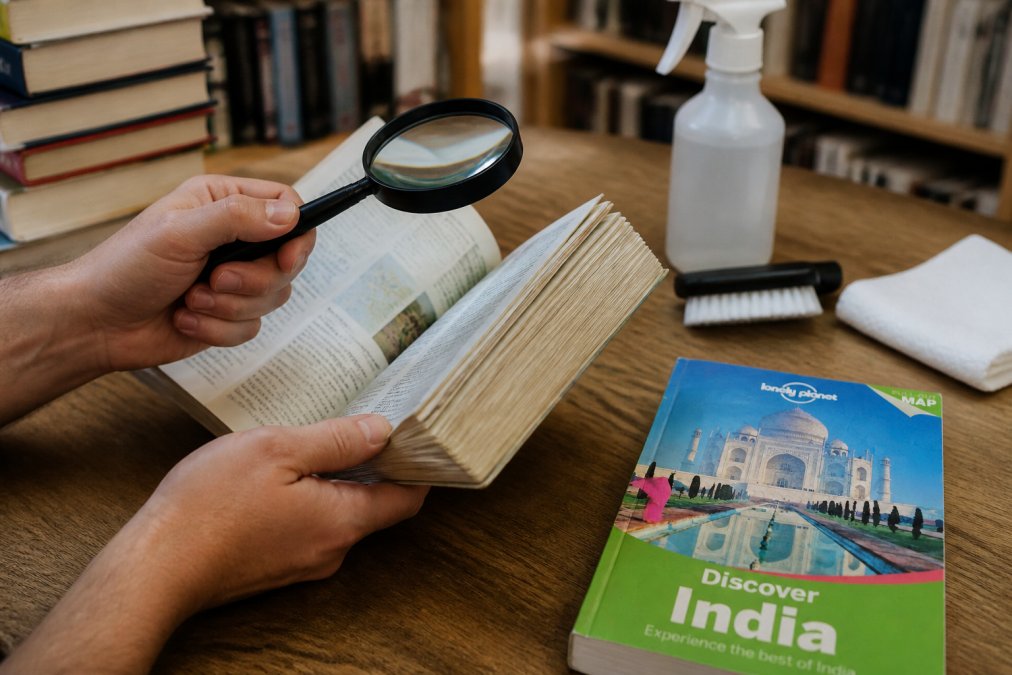
Magnifying glass: A 10x magnification loupe costs £5-10 and reveals details invisible to the naked eye.
Natural light: Never assess condition under artificial lighting alone. Daylight reveals yellowing and discoloration that fluorescent light can hide.
Condition guides: Familiarise yourself with grading standards from major book retailers. Most second-hand sites use the same five-grade system, though terminology can vary slightly.
Seller reputation: Sellers with consistently positive reviews are more likely to grade accurately and disclose issues honestly. The Almost New Book Shop maintains detailed condition descriptions and photos because buyers deserve transparency.
Communication: Don't hesitate to ask sellers questions before buying. Request additional photos or ask about storage history. Honest sellers welcome these questions.
How Book Condition Impacts Resale Value
Fine and Very Good condition books retain 60-80% of their original purchase price if in demand. A £15 VG book might resell for £9-12.
Good condition books typically resell for 40-60% of original price. A £15 Good book might fetch £6-9.
Fair condition books are harder to resell, typically bringing 20-40% of original price. A £15 Fair book might resell for £3-6.
Poor condition books rarely resell unless extremely rare or collectible.
At The Almost New Book Shop, we believe the best resale value is a book that stays in circulation. When you buy a well-maintained second-hand book, you're extending its life and keeping it out of landfill.
Verifying used book condition is a skill that improves with practice. Start by learning the grading standards, develop a routine for examining photos and descriptions, and don't be shy about asking sellers questions. At The Almost New Book Shop, we're committed to transparent condition grading because you deserve to feel confident about your purchase. Browse our curated collection of pre-loved titles and discover books worth reading, worth keeping, and worth passing on. Subscribe to our emails for updates on new arrivals and exclusive finds.
Frequently Asked Questions
What are the standard condition grades for used books?
Used book condition is typically graded on a five-point scale: Fine (F) means the book looks new with minimal wear; Very Good (VG) shows slight wear but remains in excellent condition; Good (G) has noticeable wear, minor damage, or creasing but is still readable; Fair (FR) has significant wear, staining, or loose pages but remains complete; Poor (P) means the book is heavily damaged but still bindable. Understanding these grades helps you verify used book condition accurately and set realistic expectations before purchase.
How do I check for foxing in old books?
Foxing appears as brown or rust-coloured spots on pages, typically caused by acidic paper reacting with moisture and air over time. To spot book foxing, examine the pages under good light, starting with the endpapers and flyleaves where it's most visible. Look for small speckles or larger patches of discoloration. Light foxing is common in older books and doesn't significantly affect readability, but heavy foxing may indicate the book was stored in damp conditions. When you verify used book condition, note the extent of foxing as it impacts both the book's appearance and its collectible value.
How can I tell if a used book has hidden water damage or mould?
Water damage and mould are serious concerns when you verify used book condition. Check for warped pages, a musty or damp smell, visible discoloration or soft spots, and swollen book blocks. Mould appears as fuzzy growth, usually grey or black, often on endpapers or spine edges. Run your fingers along the pages gently to feel for moisture or brittleness. Open the book fully and inspect the gutter (where pages meet the spine) for staining. If a book smells strongly musty, it likely has mould. Avoid purchasing books with active mould, as it can spread to other books in your collection.
Does a dust jacket significantly affect the value of a used book?
Yes, dust jackets substantially impact a book's resale value and collectibility. A dust jacket in fine or very good condition can increase a book's value by 20-50% or more, especially for first editions and collectible titles. When you verify used book condition, assess the dust jacket separately: check for tears, creases, sun-fading, price-clipping (where the original price has been removed), and edge wear. An unclipped dust jacket (original price still visible) is worth more than a clipped one. For collectors of military history or rare editions, an intact, well-preserved dust jacket is often as important as the book itself.
This article was written using GrandRanker