

Build a Home Library on a Budget: Complete Guide
Table of Contents
- Why Building a Home Library on a Budget Matters
- Finding Affordable Books at Second-Hand Book Shops
- Smart Affordable Bookshelf Ideas That Fit Your Space
- Assessing Your Space and Planning Your Layout
- How to Organise a Home Library for Easy Access
- Creating a Comfortable Reading Zone on a Budget
- Maintaining and Preserving Your Book Collection
- Frequently Asked Questions
Last Updated: September 25, 2026
Why Building a Home Library on a Budget Matters
Building a home library doesn't require deep pockets, the key is knowing where to find quality books and organise them smartly.
Second-hand books offer the same stories, knowledge, and joy as new ones at lower cost. At The Almost New Book Shop, we offer a curated selection of pre-loved titles to help readers build collections without breaking the bank.
The real advantage: a home library on a budget can be bigger and more diverse than what you'd afford buying new, more books, better variety, lower cost.
Finding Affordable Books at Second-Hand Book Shops
Second-hand book shops are treasure troves for budget-conscious collectors, offering classics, military history, children's books, and rare editions in one place.
Here's what to look for when shopping:
- Condition matters, but perfection isn't required. A slightly worn spine doesn't change the reading experience. Check the pages for stains or damage.
- Ask about discounts. Many shops offer deals on bulk purchases or loyalty schemes.
- Visit regularly. Stock changes constantly. New finds arrive weekly.
- Check online listings first. Many second-hand retailers now show inventory online, saving you a wasted trip.
The Almost New Book Shop rescues books that would otherwise end up in landfills, carefully inspecting every title so you get affordable books in the condition described.
Smart Affordable Bookshelf Ideas That Fit Your Space
Your shelving needs to fit your space and hold books safely. The best affordable bookshelf ideas work with what you already have.
Repurposing Existing Furniture
Ladder shelves are inexpensive and stylish, fitting corners and tight spaces. Cost is typically £20-40 and they hold 15-25 books depending on size.
Wall-mounted floating shelves create clean lines without taking up floor space. Budget around £15-30 per shelf with DIY installation.
Vintage suitcases stacked on top of each other add character and storage. Stack three or four, secure them together, and you've got a quirky bookcase. Cost is minimal if you source them from charity shops.
Wooden crates are brilliant for budget-friendly storage. Stack them vertically or horizontally. Paint them to match your décor. Each crate costs £5-15 and holds 8-12 books.
DIY Shelving and Storage Hacks
DIY shelving saves serious money with basic tools and patience.
Pipe shelving looks industrial and costs £30-60 per shelf depending on length, with straightforward installation.
Pallet shelving uses reclaimed wood pallets (often free from businesses). Sand, stain, and mount on walls for minimal cost.
Tension rods and wooden boards create adjustable shelving for under £40 total.
Cinder block and wooden plank shelves are a classic budget solution, costing £20-40 total and surprisingly sturdy.
Assessing Your Space and Planning Your Layout
Vertical space is your friend. Floor-to-ceiling shelving maximises storage in small rooms.
Calculate shelf capacity. A standard shelf holds 25-35 books depending on size and thickness.
Plan for growth. Leave 10-15% of space empty for future additions.
Consider lighting. Direct sunlight fades book covers, so place valuable titles away from windows and position reading areas near light sources.
Think about access. Keep frequently read books at eye level; occasional reads can go higher or lower.
Map your layout on paper first. Sketch your room with measurements and check for obstacles like light switches, radiators, or windows.
How to Organise a Home Library for Easy Access
Organisation systems keep your collection usable and prevent costly duplicate purchases.
Physical Organisation Methods
Alphabetical sorting by author is simple and works well for mixed collections, scaling as your library grows.
Genre categorisation groups similar books together and works well for large collections (100+ books), helping you spot gaps in your reading interests.
Colour coding looks beautiful but works best as a secondary layer, arrange by genre or author first, then add subtle colour grouping for visual appeal.
Hybrid systems combine methods for maximum usability, organise by genre first, then alphabetically within each genre.
Digital Inventory Management
The Almost New Book Shop gift card →
As your collection grows beyond 50 books, a simple spreadsheet or free app prevents duplicate purchases.
Spreadsheet tracking requires minimal setup with columns for Title, Author, Genre, Condition, Date Acquired, Cost, and Location. This reveals spending patterns and prevents duplicate purchases.
Free inventory apps like Goodreads, Libby, or Google Sheets let you photograph spines, tag by genre, and search instantly, helping you avoid duplicate purchases.
Hybrid digital-physical approach maximises both space and money. Keep physical copies of books you reread frequently or reference often. For one-time reads or reference books you rarely consult, consider borrowing from your local library instead of buying. Track borrowed titles in your inventory app so you remember what you've read. This approach reduces physical clutter while maintaining a comprehensive reading record. Many budget-conscious collectors find this cuts their spending because they stop buying books they could borrow.
Practical Maintenance of Your System
Avoid over-complicated systems. The best organisation method is one you'll actually maintain. If you abandon your system after two months, it's not the right one for you. Start simple, alphabetical by author or genre, and add complexity only if you genuinely need it.
Review your system annually. Once a year, spend an hour reviewing your collection. Update your inventory, identify books you've outgrown or no longer want, and consider selling or donating them. This keeps your collection intentional and prevents it from becoming a storage problem.
Use your organisation system to inform purchases. Before buying a second-hand book, check your inventory. This single habit eliminates duplicate purchases, one of the easiest ways to stay on budget.
Creating a Comfortable Reading Zone on a Budget
A dedicated reading space transforms how often you actually read. You don't need much space or money to create one.
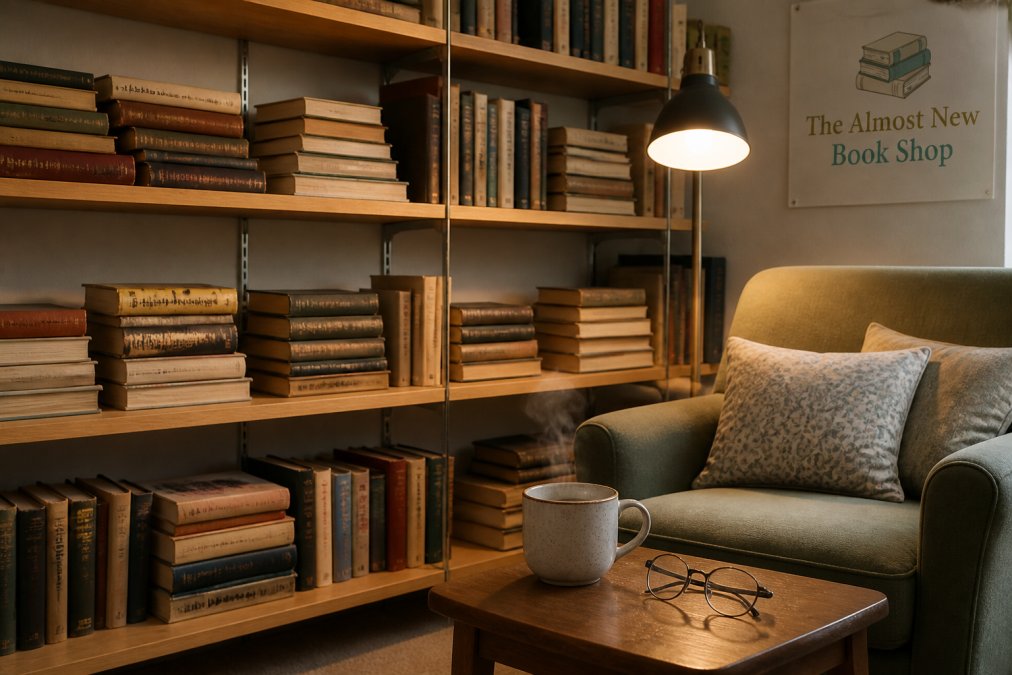
Seating is essential. An old armchair from a charity shop beats a hard wooden chair. Add cushions for comfort. Your back will thank you during long reading sessions.
Lighting matters more than you think. Natural daylight is free. Position your chair near a window if possible. For evening reading, a basic desk lamp provides focused light without glare.
Ambient lighting creates atmosphere. String lights or a small table lamp add warmth. Avoid harsh overhead lighting. Soft, warm light encourages longer reading sessions.
A small side table holds your tea, notebook, or reading glasses. A simple wooden stool works perfectly. Cost is minimal.
Shelving nearby keeps books within arm's reach. You don't need an entire wall of shelves. Even a single small bookcase next to your chair works.
Silence and privacy matter. If possible, position your reading zone away from main living areas. A corner, alcove, or spare room works brilliantly.
Rugs and blankets add cosiness. A rug defines the space. A throw blanket keeps you warm during longer reading sessions. Both are inexpensive and create that "reading nook" feeling.
Maintaining and Preserving Your Book Collection
Books last decades with basic care, but budget-sourced second-hand books need particular attention. Proper maintenance protects your investment, keeps your collection readable, and prevents expensive damage that forces you to replace titles.
Environmental Control: Humidity and Temperature
This is the single most important factor in book preservation. Books deteriorate rapidly in damp conditions, yet many home libraries are stored in bathrooms, kitchens, or basements where humidity fluctuates.
Ideal conditions are 30-50% relative humidity and 16-21°C. You don't need expensive equipment to achieve this. Simply avoid storing books in:
- Bathrooms (humidity spikes during showers)
- Kitchens (steam from cooking damages paper)
- Basements or cellars (prone to damp and flooding)
- Attics (temperature swings cause warping)
- Unheated garages or sheds
Monitor humidity cheaply. A basic hygrometer tells you if your storage area is suitable. If humidity regularly exceeds 60%, move your collection or invest in a small dehumidifier. This is far cheaper than replacing water-damaged books.
Prevent warping and brittleness. Stable temperature matters as much as humidity.
Protection from Light and Pests
Handling and Minor Repairs
Storage for Valuable or Sentimental Titles
Frequently Asked Questions
What's a realistic budget for building a home library on a budget?
Your budget depends on your collection goals. Second-hand books typically cost £1-£4 each, compared to £8-£12 for new paperbacks. Basic shelving can start at £30-£50 for budget-friendly units or free if you repurpose furniture. Many readers build a solid 50-100 book collection for £100-£200 by shopping at second-hand book shops and using affordable shelving solutions. The key is starting small and expanding gradually.
Where can I find affordable books for my home library?
Second-hand book shops offer curated selections at a fraction of new-book prices. Charity shops, car boot sales, and online platforms specialising in pre-loved books are excellent sources. The Almost New Book Shop stocks fiction, non-fiction, classics, military history, and children's titles at competitive prices, with the added benefit of giving books a second life. Shopping sustainably also means fewer books end up in landfills.
How do I organise a home library so I can actually find my books?
Start by sorting books into categories: fiction, non-fiction, genre, or by author. Alphabetical sorting by surname works well for fiction. Use adjustable shelves to group similar titles together, and consider labelling shelves if your collection grows. Genre categorisation helps readers quickly find what they're looking for. Keep frequently read books at eye level and reserve higher shelves for reference materials or display pieces.
What's the cheapest way to get shelving for my home library?
Repurposing existing furniture is often free or very low cost. Ladders, old wardrobes, and floating shelves made from reclaimed wood work well. Budget-friendly ready-made units start around £30-£50, while DIY shelving projects using brackets and timber can cost £20-£40 per unit. Floor-to-ceiling shelving maximises space in small rooms. Upcycling and DIY projects reduce costs significantly while adding character to your reading zone.