

Cost of Shipping Used Books UK: A 2026 Guide
Table of Contents
- Understanding Shipping Costs for Used Books
- Royal Mail Parcel Size Guide for Books
- Cheapest Courier for Books UK
- How to Package Books for Shipping
- Calculating Postage and Weight Restrictions
- Shipping Rare and Antique Books
- International Shipping for Used Books
- Frequently Asked Questions
Last Updated: August 31, 2026
Understanding Shipping Costs for Used Books
When selling used books online, shipping costs directly impact profit margins. The cost varies dramatically depending on weight, size, destination, and carrier. Royal Mail, private couriers, and specialist services each have different pricing structures and weight thresholds. Get this wrong and you're either overpaying significantly or delivering late.
At The Almost New Book Shop, we are dedicated to rescuing and rehoming pre-loved books. This guide covers everything you need to calculate postage accurately and choose the right shipping method.
Royal Mail Parcel Size Guide for Books
Royal Mail dominates UK book shipping due to ubiquity and competitive pricing on smaller parcels. However, Royal Mail has specific size and weight categories that determine rates, crossing a threshold by even 50 grams can push you into a more expensive tier.
Small Parcels vs Large Letters
Alarge letter is Royal Mail's term for a flat parcel up to 45cm × 35cm × 16cm weighing no more than 2kg. Most paperbacks and thin hardbacks fit here. A small parcel exceeds those dimensions but stays under 2kg, with anything heavier becoming a medium parcel at higher cost.
Large letters are cheaper and often arrive within 2-3 working days with second-class service (royalmail.com). Small parcels cost more but handle bulkier items. If shipping a single used book, large letter pricing usually applies. If bundling multiple titles, you'll likely move into small parcel territory.
Measure your package carefully before sealing. Royal Mail staff check dimensions at the counter, and undersizing to claim cheaper rates results in surcharges or returns.
First Class vs Second Class Delivery
First class promises next-working-day arrival in most cases (royalmail.com). Second class typically takes 2-3 working days. For used books, second class is usually sufficient, customers buying pre-loved titles rarely expect next-day service, and the cost difference is substantial.
For standard used book sales, second class keeps shipping costs competitive while meeting reasonable delivery expectations. Many sellers advertise second class as standard and offer first class as an optional upgrade.
Second class items receive proof of postage but no tracking number by default. First class includes tracking, which adds value if customers monitor delivery. Consider whether your audience values tracking enough to justify the extra cost.
Cheapest Courier for Books UK
Beyond Royal Mail, private couriers compete on book shipping. The cheapest option depends on weight, destination, and volume. A single 300-gram paperback to London might favour Royal Mail, while a 2kg collection to rural Scotland might be cheaper via a specialist service.
Comparing Courier Services and Postal Options
Royal Mail remains competitive for lightweight parcels under 2kg, especially with second class rates. Their network is unmatched for remote areas, and most customers trust their reliability.
Private couriers like Parcelforce, DPD, Hermes, and Yodel offer flat-rate boxes and negotiated pricing for regular senders. Parcelforce handles parcels up to 20kg with tracked delivery. Hermes and Yodel are budget options but have mixed reliability records. DPD is reliable for heavier parcels but costs more for lightweight items.
Specialist book shippers sometimes negotiate group rates with carriers, reducing per-parcel costs for regular sellers.
The cheapest courier for a single book is usually Royal Mail second class. For bulk shipments (10+ books weekly), a private courier with negotiated rates might be cheaper. Calculate your typical parcel weight and destination, then compare quotes across carriers. Prices change quarterly, so what's cheapest today might shift next month.
Don't assume the carrier with the lowest advertised rate is actually cheapest for your use case. A service charging £1.50 per parcel but with a £5 monthly fee might cost more than one charging £2 per parcel with no fees if you're only shipping a few books monthly.
How to Package Books for Shipping
Packaging protects books during transit and affects postage costs. Heavier materials increase weight, potentially pushing you into a higher price tier. Lighter packaging risks damage, leading to returns and refunds costing far more than original shipping.
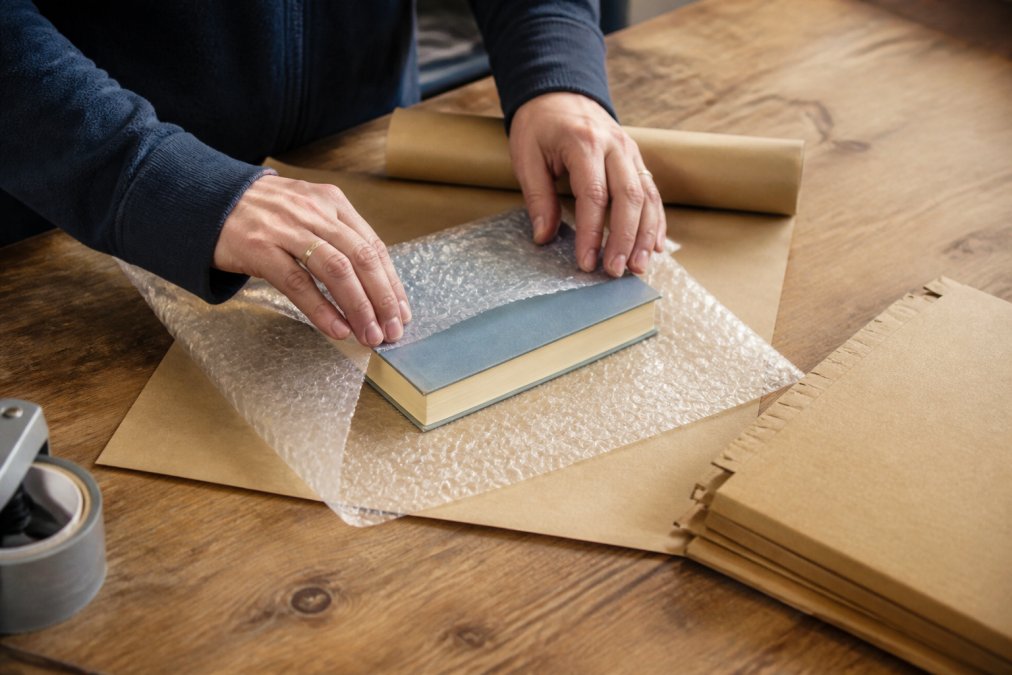
The standard approach uses corrugated cardboard mailers sized to fit your book snugly, with bubble wrap or kraft paper as internal cushioning. A single hardback fits in a small mailer weighing 50-100 grams total. Multiple books require larger boxes and more padding, quickly adding weight.
Wrap the book in kraft paper or bubble wrap to protect the dust jacket and cover. Use just enough material to prevent shifting, excess padding adds weight without improving protection. Place the wrapped book in a cardboard mailer, fill gaps with crumpled paper or air pillows, and seal with brown tape.
For valuable or rare books, use thicker cardboard and extra padding. For standard used fiction, minimal packaging keeps costs down while ensuring safe arrival.
Eco-Friendly Packaging Alternatives
Sustainable packaging appeals to environmentally conscious customers, exactly the audience The Almost New Book Shop serves. Kraft paper, recycled cardboard, and biodegradable air pillows replace plastic bubble wrap and polystyrene. The weight difference is negligible, but the environmental impact is significant.
Kraft paper is lightweight, recyclable, and costs less than bubble wrap. Shredded paper from your waste stream provides excellent cushioning. Cardboard mailers made from recycled content cost the same as virgin cardboard. Air pillows made from corn starch or paper are pricier than plastic alternatives but align with sustainability values.
Customers appreciate visible eco-friendly choices. Mention in your packaging that you've used recycled materials and encourage customers to recycle the mailer. This builds brand loyalty, especially among Gen Z and Millennial buyers prioritising sustainability.
For a brand built on rescuing books from landfill, eco-friendly packaging is consistent with your values.
Calculating Postage and Weight Restrictions
Accurate weight and dimension measurements prevent costly surprises. Underestimating weight means surcharges at the sorting office. Overestimating means paying more than necessary.
Using a Postage Calculator
Royal Mail's online postage calculator lets you input weight, dimensions, and destination, then shows available services and prices. Enter your book's weight in grams (most used books range 200-800 grams), select large letter or small parcel, choose second or first class, and the calculator shows the cost instantly.
Use it to compare costs across different weight tiers and services before packaging and shipping. Private couriers like Parcelforce and DPD offer similar calculators. Compare results across carriers for your typical book.
Weight restrictions exist for a reason. Large letters have a 2kg maximum. Medium parcels go up to 20kg. Attempting to send a 2.5kg parcel as a large letter results in rejection or surcharges. Weigh your package on a kitchen scale before shipping.
Bulk Shipping for Sellers
If shipping 20+ books weekly, bulk discounts and negotiated rates become available. Royal Mail offers business accounts with discounted rates for regular senders. Private couriers negotiate volume-based pricing if you commit to minimum monthly volume.
A Royal Mail business account requires registering as a regular sender. You'll get a discount on postage (typically 5-10% off retail rates), access to prepaid labels, and simplified tracking. The registration is free.
Private couriers require higher minimum volumes, usually 50+ parcels monthly, before negotiating custom rates. A 10% discount on 50 parcels monthly saves £50-100 monthly, or £600-1200 annually.
For smaller operations (5-20 books weekly), Royal Mail's standard rates are usually most competitive. For larger operations, investigate business accounts and bulk discounts.
Shipping Rare and Antique Books
Valuable books demand special handling. A first edition or rare title worth £500 requires insurance, tracking, and often signature-on-delivery service. The shipping cost should reflect the book's value, and your customer should expect to pay accordingly.
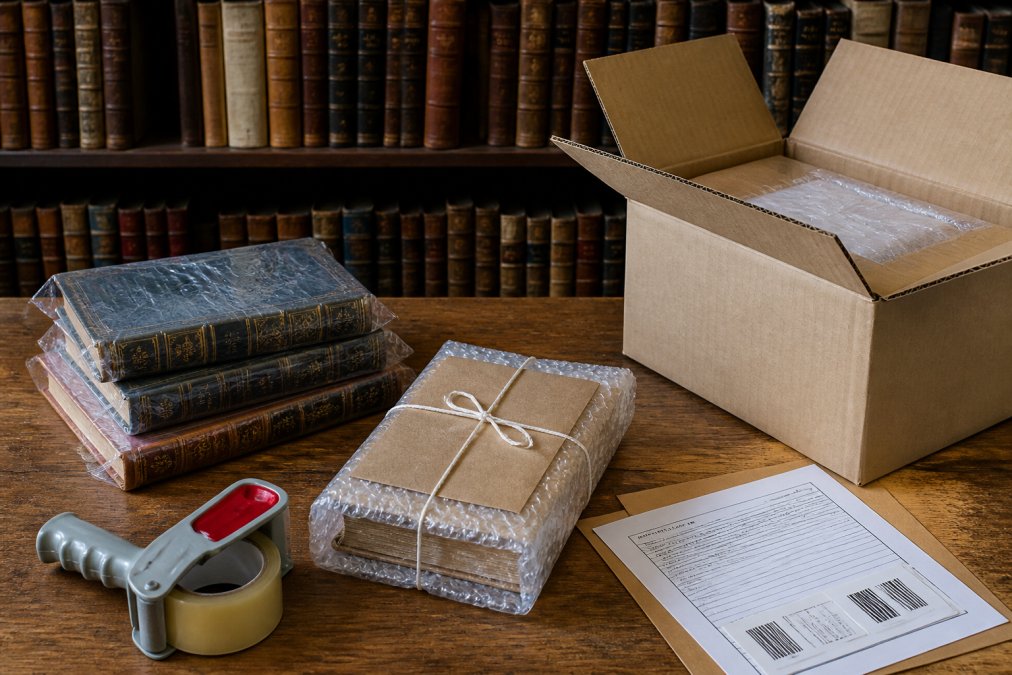
Rare books are typically heavier due to quality binding and paper. A leather-bound first edition might weigh 1.5kg, pushing it into small or medium parcel pricing. Use substantial packaging: thick cardboard, generous padding, and reinforced corners. Consider double-boxing for extra protection.
Insurance Coverage and Tracking
Royal Mail's special delivery service includes £20 of compensation by default (royalmail.com). For valuable books, you need additional insurance. Royal Mail offers optional insurance up to £500 for small parcels and up to £2500 for larger parcels.
Tracking is mandatory for rare books. Customers need proof of delivery and signature. Royal Mail's special delivery service includes signature-on-delivery and tracking. Private couriers offer similar services.
Declare the full value of the book for insurance purposes. If a rare book worth £300 arrives damaged and you declared it as £50, compensation is limited to £50. Document the book's condition before shipping with clear photos of the cover, spine, pages, and any damage. Keep photos for at least six months after delivery.
International Shipping for Used Books
Selling used books internationally opens new markets but introduces complexity. Postage costs rise sharply, customs documentation becomes mandatory, and delivery times extend to 2-4 weeks. For most small sellers, international shipping is a secondary service.
Royal Mail's international services include standard and tracked options. A standard large letter to the EU costs more than domestic but remains reasonable for lightweight books. Tracked services cost significantly more but provide peace of mind for valuable items.
Customs documentation is required for all parcels leaving the UK. You'll need to complete a customs declaration form listing contents, their value, and shipment purpose. Royal Mail handles this if you provide the information, but errors delay delivery.
Customs Documentation for Book Sales
When shipping a book internationally as a sale, declare it as "merchandise" or "book sale" with the appropriate value. Undervaluing items to reduce customs duties is illegal and can result in seizure or return. Declare the actual selling price.
Different countries have different import duties on books. The EU has reduced or zero duty on books in many cases, but this varies by country. Your customer is responsible for any customs charges due upon delivery, but inform them of the likely amount before purchase.
International tracking is essential. Standard international parcels can take 3-4 weeks, and without tracking, you have no visibility if something goes wrong. Tracked services cost more but provide updates at key points.
Most casual sellers limit international shipping to EU destinations. Shipping further afield requires higher postage costs and longer delivery times that few used book customers accept.
Shipping used books profitably requires matching the service to the book. A lightweight paperback needs minimal packaging and second-class postage. A rare or heavy book justifies premium packaging, tracking, and potentially insurance. Calculate your typical costs, test different carriers for your most common routes, and adjust shipping charges to cover costs without overcharging customers.
The Almost New Book Shop is dedicated to rehoming pre-loved titles. Transparent shipping costs and reliable delivery build customer trust. When customers understand why shipping costs what it does, they accept it. When books arrive safely and on time, they return for more. That's the real value of getting shipping right.
Frequently Asked Questions
What is the cheapest way to send a single book in the UK?
Royal Mail's Large Letter service is often the most affordable option for single books under 750g. For heavier books, a Small Parcel with second class delivery typically costs less than first class. Always use a postage calculator to compare Royal Mail against courier services, as prices vary by weight, destination, and current rates. Tracking number inclusion also affects final cost.
How should I package used books to keep shipping costs low?
Use lightweight packaging materials like bubble wrap and cardboard mailers rather than rigid boxes, which add unnecessary weight and size. Wrap books individually to prevent damage without excess padding. For multiple books, consider whether combining them into one parcel qualifies for a lower rate than shipping separately. Measure dimensions carefully to ensure you're not paying for a larger parcel category than needed. Eco-friendly alternatives like recycled cardboard and kraft paper reduce both cost and environmental impact while meeting protection standards.
Is it cheaper to use a courier or Royal Mail for heavy book parcels?
This depends on weight, destination, and delivery speed requirements. Royal Mail Small Parcels with second class delivery are competitive for parcels up to 2kg going to standard addresses. Courier services may offer better rates for heavier shipments (5kg+) or if you're sending multiple parcels regularly. Some couriers provide flat-rate options that become cheaper at specific weight thresholds. Compare quotes using postage calculators for your exact parcel weight and destination before deciding. Bulk shipping discounts from couriers can significantly lower per-parcel costs for sellers dispatching many books.
What is the Royal Mail parcel size guide for books?
Royal Mail distinguishes between Large Letters and Small Parcels. Large Letters can be up to 35.3cm x 25cm x 2cm and weigh no more than 750g, suitable for single books. Small Parcels can measure up to 45cm x 35cm x 16cm and weigh up to 2kg, accommodating multiple books or thicker volumes. Anything exceeding these dimensions or weight limits moves into Medium Parcel pricing. Knowing which category your shipment fits prevents overpaying. Always measure your packaged book accurately and use the Royal Mail website to confirm current size and weight limits.
This article was written using GrandRanker