

Sustainable Ways to Buy Books: A 2026 Guide
Table of Contents
- Why Sustainable Book Buying Matters
- Benefits of Buying Second-Hand Books
- Sustainable Ways to Buy Books: Key Methods
- Choosing Ethical Book Retailers in the UK
- How to Donate Books to Charity Shops
- Digital vs Physical: The Carbon Footprint Question
- Managing Your Reading Habits for Sustainability
- Conclusion
Last Updated: August 29, 2026
Why Sustainable Book Buying Matters
Every book that ends up in a landfill represents wasted resources, paper, ink, energy, and carbon emissions from production and transport. Manufacturing a single new book requires water, chemicals, and energy (fsc.org). The supply chain, printing facilities, warehouses, distribution networks, and retail shelves, adds to the carbon footprint at each step. By shifting toward pre-loved books, library borrowing, and community sharing, you reduce demand for new print runs and prevent perfectly good books from becoming waste.
At The Almost New Book Shop, readers are rethinking their relationship with books, asking better questions: Do I need a new copy, or will a second-hand one do? Can I borrow instead of buy? Is there a community swap I could join? These smarter choices align reading with values while being economical, accessible, and genuinely rewarding.
Benefits of Buying Second-Hand Books
Environmental impact of second-hand purchases
When you buy a second-hand book, you extend its lifecycle by years or decades. That book has already consumed its resources during initial production. Every time it passes to a new reader, those environmental costs are distributed across multiple people, dramatically lowering the per-reader carbon footprint.
A new book might be read by two or three people in its lifetime. A second-hand book from The Almost New Book Shop could be read by many people before it wears out. Buying pre-loved books also reduces pressure on the publishing industry to print new copies, meaning fewer trees harvested, less water used in pulping, and fewer carbon emissions from printing and transport.
Cost savings and affordability
Second-hand books typically cost 40-70% less than new editions (booksellers.org.uk). For avid readers, this difference compounds quickly. Instead of spending £15-20 per hardcover, you might find the same title in good condition for £4-6.
This affordability opens reading to more people. Parents can stock homes with children's books without guilt. Students can afford classics and literary canon. A collection of 50 books might cost £200-250 second-hand versus £750-1,000 new.
Sustainable Ways to Buy Books: Key Methods
Buying pre-loved books from independent retailers
Independent second-hand retailers are the backbone of sustainable reading. Unlike large chains focused on new releases, indie shops like The Almost New Book Shop specialise in rescuing books that might otherwise end up in landfills. They curate selections, inspect condition carefully, and price competitively.
Shopping at independent retailers supports your local community and keeps money circulating locally. When buying from independent retailers, you gain several advantages: hand-selected curation based on quality and reader interest, honest condition transparency, rare editions and out-of-print classics, and personal recommendations that create reading culture beyond transactional purchasing.
The Almost New Book Shop, based in Chichester, exemplifies this model. We curate fiction, non-fiction, classics, military history, and children's titles, each one rescued and prepared for its next reader. When you buy from us, you're directly preventing books from landfill and supporting a business built on the principle that great stories deserve a second chapter.
Library borrowing and community access
Public libraries remain one of the most underutilised resources for sustainable reading. Borrowing is free, requires zero environmental impact beyond your trip, and lets you read widely without committing shelf space or money. Libraries now offer physical collections spanning every genre, digital lending through apps for instant e-books and audiobooks, interlibrary loans to access titles from other branches, and community events and book clubs.
One physical book serving dozens of readers across its lifetime eliminates the need for multiple copies to be printed (peer-reviewed research). The carbon footprint per reader approaches zero.
Book swapping and community sharing
Book swaps are informal, community-driven alternatives to buying. Readers exchange books they've finished for titles they want to read, creating a circular economy through local swap groups, community events, online platforms, little free libraries, and book clubs.
Swapping is particularly effective for fiction and recent releases. It requires minimal environmental impact and costs nothing while strengthening community connections around reading.
Choosing Ethical Book Retailers in the UK
What makes a retailer truly ethical
An ethical book retailer operates with transparency, fair pricing, and genuine commitment to sustainability. The Almost New Book Shop exemplifies this approach by rescuing pre-loved books and preventing them from landfill, ensuring every volume finds its next reader.
Look for honest condition descriptions with photos and detailed notes, fair pricing reflecting actual condition, clear explanation of sustainable sourcing, local operation with community engagement, and transparency about environmental impact. Avoid retailers using sustainability language without substance, ask where books come from and what happens to unsold stock. A genuine ethical retailer will answer clearly.
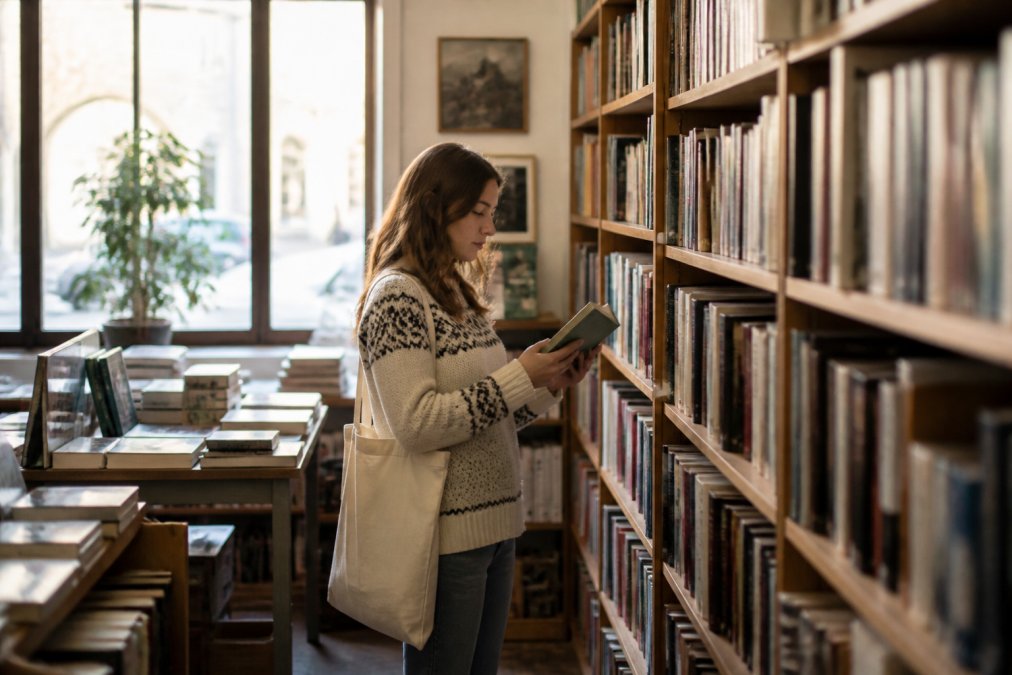
The Almost New Book Shop operates on the principle that books deserve a second life. We curate selections across genres, ensuring quality and variety. Every book we stock represents one fewer book destined for a landfill.
Quality and condition standards
Condition matters because it determines how long a book will last and how much enjoyment you'll get from it. Ethical retailers grade books consistently and describe condition honestly.
Standard condition grades typically include: Like new (minimal signs of use), Fine (light wear, no major flaws), Very good (minor wear, fully readable), Good (visible wear, fully functional), and Acceptable (significant wear, still readable). When buying second-hand, "good" condition is often the sweet spot, books that have been loved and read but remain entirely readable and enjoyable.
Ethical retailers inspect books before listing them, noting flaws: torn pages, water damage, mould, missing dust jackets, or spine creasing. They don't hide problems or misrepresent condition to inflate prices.
How to Donate Books to Charity Shops
Preparing books for donation
Before donating, prepare your books so they're genuinely useful to the next reader. Books in poor condition often end up discarded anyway, defeating the purpose of donation.
Preparation steps: assess condition honestly, clean gently with a soft cloth, check for excessive markings, verify all pages are present and binding is intact, and organise donations by genre to help retailers assess stock efficiently. Books suitable for donation include recent fiction and non-fiction, classics, children's books, and educational titles. Avoid heavily damaged textbooks, outdated reference materials, and books with significant water or mould damage.
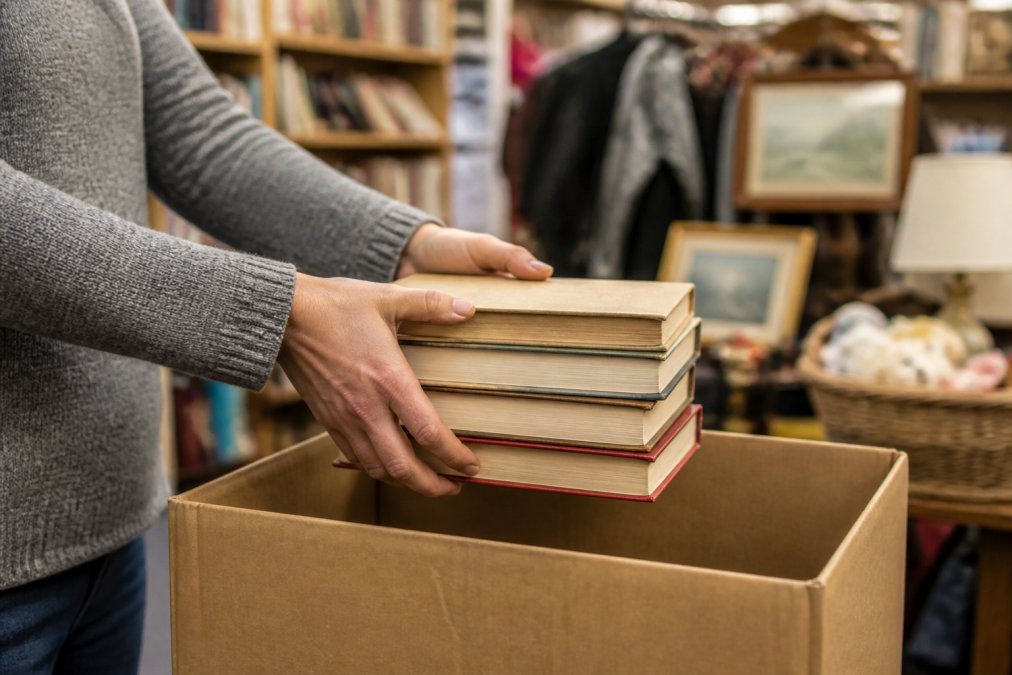
Finding local charity shops and recycling options
Charity shops are the most accessible donation option. They're widespread, free to donate to, and your books directly support charitable causes. Search online for "charity shops near me," check opening hours before visiting, and ask about their selection focus.
For books in poor condition that charity shops won't accept, recycling is the responsible next step. Check with your local council for paper and cardboard recycling facilities. Independent retailers like The Almost New Book Shop also accept donations in some cases, contact them directly to ask about their donation policy.
Digital vs Physical: The Carbon Footprint Question
The choice between digital and physical reading isn't straightforward. Manufacturing an e-reader requires mining rare earth minerals, assembling electronics, and packaging for shipment. The electricity to charge it and server infrastructure to deliver digital content also consume energy. However, once purchased, an e-reader can deliver thousands of books with minimal additional environmental impact. For prolific readers, the break-even point typically occurs within the first year.
Physical books have a fixed environmental cost at production. A second-hand physical book distributes that original impact across multiple readers, making it remarkably efficient environmentally. The most sustainable reading approach combines methods: consider digital or borrowing for new releases and popular titles, buy second-hand physical books you'll read multiple times, prefer physical for children's books, and support independent retailers for rare or collectible titles.
A second-hand physical book often has a lower lifetime carbon footprint than a digital purchase delivered via energy-intensive server infrastructure.
Managing Your Reading Habits for Sustainability
The TBR pile problem and intentional reading
TBR (To Be Read) piles reveal something important about modern reading habits: we buy books faster than we read them, accumulating unread volumes that gather dust. This contradicts sustainability. Before buying a book, ask: Will I read this within the next three months? Do I genuinely want to own this, or would borrowing serve me better? Is this book worth shelf space? Am I buying because I want to read it, or because I want to want to read it?
This discipline doesn't mean reading less, it means reading smarter. Borrowing from libraries, joining book swaps, and purchasing only books you're genuinely committed to reading maximises the value you extract from each book and minimises waste.
Building a circular reading habit
A circular reading habit means books flow through your hands, not stagnate. Practical approaches include: borrow first and buy selectively, participate in swaps, donate after reading, buy second-hand intentionally, and track your reading to prevent duplicate purchases.
A circular habit means your personal library contains books you actively reread or genuinely treasure, not books you bought on impulse. It's smaller, more intentional, and far more sustainable.
Conclusion
Sustainable ways to buy books aren't about sacrifice or compromise. They're about making smarter choices that align your reading habits with your values. Whether you're borrowing from libraries, buying second-hand from independent retailers like The Almost New Book Shop, participating in book swaps, or choosing digital when it makes sense, every decision reduces your environmental footprint.
The Almost New Book Shop rescues pre-loved books and gives them a second life with new readers, preventing them from landfill while offering affordable access to curated fiction, non-fiction, classics, military history, and children's titles. By choosing second-hand, you're supporting a business built on the belief that great stories deserve another chapter, and you're building a personal library that's both sustainable and genuinely rewarding.
Ready to start your sustainable reading journey? Explore our curated collection at The Almost New Book Shop or subscribe to our emails for recommendations, new arrivals, and community reading events. Join readers who believe that the best books deserve to be read again and again, not discarded after one pass.
Frequently Asked Questions
Q: What are the environmental benefits of buying second-hand books?
A: Second-hand book purchases prevent volumes from reaching landfill and reduce demand for new paper production, which requires significant water and energy. Each pre-loved book rehomed avoids the carbon emissions from manufacturing, printing, and shipping a new copy. By choosing second-hand, you extend a book's lifecycle and support the circular economy, making sustainable ways to buy books one of the most direct environmental choices a reader can make.
Q: Where can I find ethical book retailers in the UK?
A: Ethical book retailers prioritise transparency about sourcing, fair pricing, and genuine sustainability efforts. Independent second-hand shops, charity bookstalls, and curated online retailers like The Almost New Book Shop focus on rescuing pre-loved books from landfill. When evaluating ethical book retailers UK, look for businesses that clearly communicate their mission, maintain quality standards, and reinvest in their communities rather than simply selling stock at inflated margins.
Q: How should I prepare books before donating them to charity shops?
A: Before donating, inspect books for damage, mould, or staining that would make them unsaleable. Wipe the covers and pages with a dry cloth to remove dust. Remove any personal markings or library labels. Check that spines are intact and pages aren't loose. Most charity shops welcome books in 'good' condition; how to donate books to charity shops successfully means understanding that damaged stock creates waste rather than preventing it. Bundle similar titles together and contact your local shop about drop-off times.
Q: Is buying e-books more sustainable than physical second-hand books?
A: The carbon footprint comparison depends on device lifespan and reading habits. A single e-reader used for years to read hundreds of books may have lower lifetime emissions than buying new physical books. However, pre-loved physical books already exist and require no manufacturing; their carbon cost is already sunk. For most readers prioritising sustainability, buying second-hand physical books remains the lowest-impact option, especially when sourced locally and kept in circulation for many readers.
This article was written using GrandRanker