

6 Ways to Swap Books Locally: A Practical Guide
Table of Contents
- Why Swapping Beats Buying New (and How to Start)
- 1. Community Book Exchange Shelves in Public Spaces
- 2. How to Organise a Book Swap with Friends and Neighbours
- 3. Book Swap Event Ideas for Workplaces and Campuses
- 4. Book Swap Rules: Etiquette and Condition Standards
- 5. Digital Coordination: How to Swap Books Without Meeting in Person
- 6. Choosing Books to Bring and Take: A Fair Exchange
- Making Your Local Book Swap Last
- Frequently Asked Questions
Last Updated: October 13, 2026
Why Swapping Beats Buying New (and How to Start)
Swapping books is trading finished titles with other readers so both gain something new to read without spending money.
A book you have finished is not clutter, it is currency. Someone nearby wants that title and holds the book you want next.
Most people do not swap simply because they do not know where to look or how to start.
1. Community Book Exchange Shelves in Public Spaces
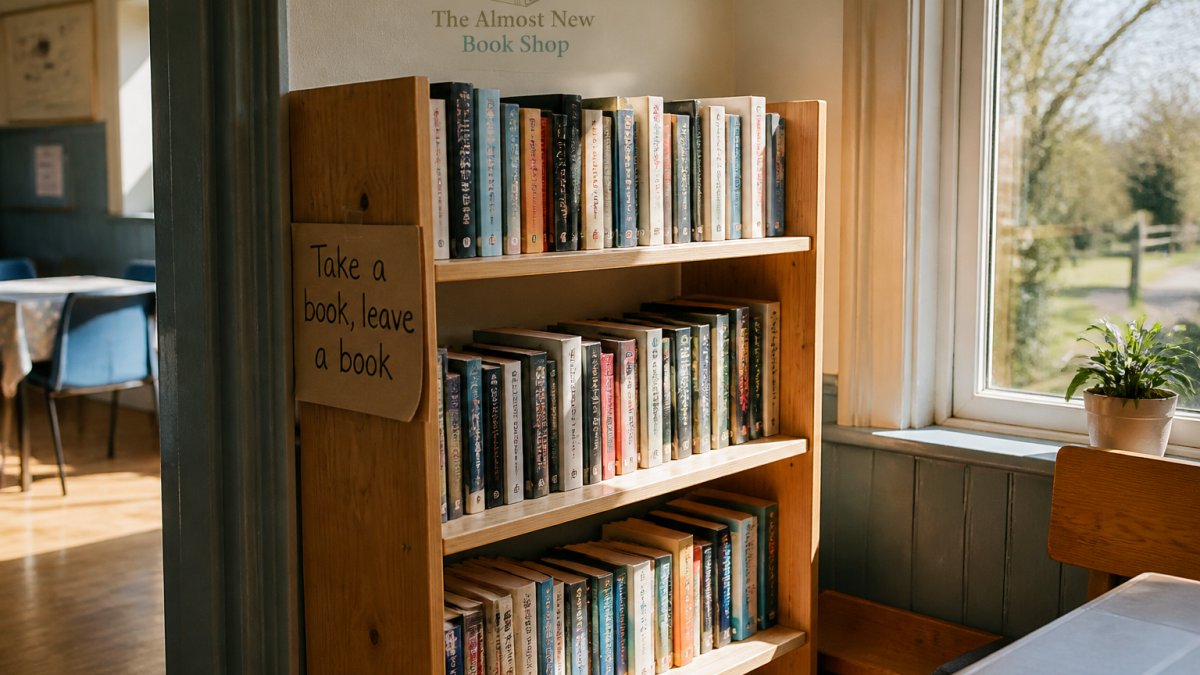
A community book exchange is a shelf or small cabinet in a public spot where anyone can take a book or leave one, in village halls, cafes, train stations, community centres and even old phone boxes. They run on trust: no fees, no membership, no checkout desk.
Their beauty is low effort: you pass one on your walk, drop off two paperbacks, and pick up something new.
How to Find a Swap Shelf Near You
Start with places you already visit. Ask your local library, cafe or community centre whether they host a swap shelf, many do but rarely advertise it.
Other ways to find one:
- Search local Facebook groups and community noticeboards
- Check the noticeboard in your nearest supermarket or church hall
- Ask neighbours, especially those with children or a visible love of reading
If nothing exists nearby, that is your cue to start one. It takes less space than you think.
Setting Up a Take-a-Book, Leave-a-Book System
The take-a-book, leave-a-book model is exactly what it sounds like: you take one, you leave one. It keeps stock steady without anyone managing a ledger.
To set one up:
- Find a host venue willing to offer a corner, a shelf or a windowsill.
- Add a clear sign: "Take a book, leave a book."
- Seed it with 10 to 15 gently used books across different genres.
- Check it weekly and tidy the shelves.
- Restock from your own finished titles when supplies dip.
2. How to Organise a Book Swap with Friends and Neighbours
Pick a relaxed setting, your living room, a garden or a shared communal area, and send the invite two weeks ahead.
On the day, set books out by rough category, fiction, non-fiction, children's, and let people talk about what they brought.
Keep it fair with a simple rule: bring books, take books, no money changes hands. That single rule removes all awkwardness.
3. Book Swap Event Ideas for Workplaces and Campuses
A book swap event at work or on campus works because the audience is already together, with a built-in common room and plenty of commuters who read. The difference between a one-off and a fixture is the mechanics behind it.
Book swap event ideas that actually draw a crowd
- Lunchtime swap table: Staff room, one hour, once a month, same slot so people build it into their routine.
- Themed swaps: Crime and thriller week, or summer holiday reads. A theme gives people a reason to bring something specific.
- Campus hall swap: Partner with a student society and use a common room. Societies bring the footfall; you bring the books.
Getting permission and setting the ground rules
For a workplace swap, ask before using shared space. Facilities or office managers want to know where the shelf will sit, who tidies it, and what happens to leftovers. Put up a sign with the rules and a named contact.
A simple rule set that works:
- Bring books in good condition, no mould, no missing pages, no strong odours.
- Take a book, leave a book where you can.
- Return anything you have not read within a month so stock keeps circulating.
- Report a full shelf to the named contact rather than stacking books on the floor.
Making it accessible and inclusive
Not everyone can crouch to a low shelf or carry hardbacks across a campus. A few adjustments widen the audience:
- Use a table at standing height rather than a floor-level shelf.
- Choose a room with step-free access and space for a wheelchair or walking frame.
- Offer a lightweight trolley or a box one person can carry.
- Let people reserve a title by email or message and collect it at a set time.
Promoting the swap
A swap with no promotion gets one visitor: you. Use the channels people already check, staff intranet, noticeboard or newsletter, a campus or office social media group, a poster by the kettle or lift, and a short message in a team meeting. Announce it two weeks ahead and send a reminder the day before.
What to do with leftovers
After the event, donate leftovers to a charity shop or community shelf. If the swap recurs, keep a small reserve of good titles to seed the next one and recycle anything damaged beyond use.
4. Book Swap Rules: Etiquette and Condition Standards
Good book swap rules protect everyone's trust. The core standard: only bring books you would be happy to receive. A swap is a fair exchange, not a way to clear out rubbish.
Follow this condition checklist before you bring anything:
- No mould, damp damage or strong odours
- No missing pages or loose, falling-out sections
- Covers intact, with no heavy water stains
- No writing or highlighting that spoils the text
Etiquette matters as much as condition. Do not grab the rarest title and leave nothing in return, do not take more than you brought at a small shelf, and if you promise to bring books next time, bring them.
5. Digital Coordination: How to Swap Books Without Meeting in Person
Digital coordination lets you swap books without meeting in person, suiting readers short on time, unable to travel easily, or who prefer arranging things from their phone. Local groups and apps handle the matching; you arrange the handover on your own terms.
How it works in practice
- Join a local reading or swap group on social media, or use a community noticeboard app.
- Post a clear photo and an honest description of each book's condition, mention any creases, writing or missing dust jacket.
- Agree a swap with one person at a time to keep things simple.
- Choose a safe, public meeting spot, or use a local pickup point.
- Confirm the swap in writing before you travel, including the title, condition and meeting time.
Safety and privacy when meeting a stranger
Meeting someone from an online group puts people off, so treat it like any online-to-offline arrangement:
- Meet in daylight in a busy public place, a cafe, library entrance, supermarket foyer or station concourse.
- Tell someone where you are going and when you expect to be back.
- Never share your home address with someone you have not met.
- Use a locker or shop counter as a drop point if you would rather not meet.
If a swap feels off, walk away, there is no obligation to complete an exchange you are not comfortable with.
Options if you do not drive or have limited mobility
A car is not a requirement for swapping:
- Walkable swaps: Look for shelves and groups within a short walk of home, a bus stop or a station.
- Transit-friendly meets: Choose a public meeting point at a transport hub so neither person travels far.
- Doorstep handover: Arrange a swap with a trusted neighbour and leave the book on the step at an agreed time.
- Postal swaps: Within a small local group, post a paperback at large letter rate, cheap and travel-free.
Different swap rules and whether money is involved
Not every swap is a straight one-for-one trade. Knowing the format avoids awkwardness:
- Free exchange: Take a book, leave a book. No money, no tracking.
- One-for-one swap: Trade a specific title for a specific title, agreed in advance.
- Credit systems: Some groups give a credit per donated book, spent on a title you want, good if you have more to give than to take.
- Event-based formats: A ticketed or drop-in swap where you bring books and take others on the day.
Money rarely changes hands, but postage, venue hire or a small group fee can creep in. Ask before you join.
Find local reading and swap groups in your area
6. Choosing Books to Bring and Take: A Fair Exchange
Choosing the right books keeps a swap healthy: bring titles in good condition that someone else will genuinely want, and take only what you will actually read.
What to bring:
- Popular fiction and well-known classics
- Children's books in good nick, which always move fast
- Recent non-fiction that still feels current
- Genres with a clear audience, such as crime, romance or military history
What to leave at home:
- Textbooks tied to an old exam syllabus
- Damaged or incomplete copies
- Anything you would not want to receive yourself
If you are hunting for something specific, arrive early and browse before the crowd. If you cannot find a swap for a title you want, a curated second-hand shop can fill the gap.
Making Your Local Book Swap Last
A swap only survives if someone tends it: restock the shelves, tidy them, and welcome new faces. A full, cared-for shelf attracts more books than a neglected one.
The six routes above cover almost every reader: public shelves, friends and neighbours, workplaces and campuses, in-person events, digital swaps, and the fair-exchange habits that hold it together.
If swapping leaves a gap in your shelf, we can help.
Frequently Asked Questions
What does book swap mean?
A book swap is a simple exchange where you bring books you have finished reading and take home books that are new to you, usually at no cost. Swaps happen in many forms: a shelf in a cafe, a monthly meet-up in a community hall, or an online group where neighbours post titles. The point is to pass on books rather than buy new ones, which keeps stories in circulation and saves money.
How do you organise a local book swap?
Start by picking a venue with good lighting and enough table or shelf space, such as a library meeting room or a workplace breakout area. Invite participants through a local group or noticeboard, ask each person to bring two to five gently used books, and set clear swap rules in advance. On the day, arrive early to arrange the initial book collection by genre, then let people browse in rounds so everyone gets a fair turn.
What are the rules for a book exchange?
Most book swaps follow a few simple rules: bring books in readable condition with no missing pages, mould or heavy water damage, and take roughly the same number you brought. Some swaps use a credit system where each book earns a token. Others are free-for-all shelves. Always label your books clearly, respect the designated swap area, and help restock or tidy shelves at the end so the exchange stays welcoming for the next group.
How can I swap books without meeting in person?
Digital coordination makes person-to-person swaps possible without a face-to-face meet-up. Post clear descriptions and photos of your books in a local online group, agree on a porch drop or a locker handover, and use a tracked postal service for longer distances. For safety, keep conversations within the platform, avoid sharing your full address until both sides confirm, and meet in a public place if you do decide to hand over in person.