

Affordable Home Library: Educational Supply Guide 2026
Table of Contents
- Why Building a Home Library Matters for Education
- Used Books vs New Books: What Actually Saves You Money
- Best Places to Buy Second-Hand Books for Educational Supply
- How to Organise a Home Library for Learning
- Budgeting for Educational Materials: A Practical Breakdown
- Curating Your Collection: Age Groups and Subject Areas
- Tax Deductions and Sustainable Sourcing for Home Educators
- Frequently Asked Questions
Last Updated: September 19, 2026
Why Building a Home Library Matters for Education
A home library is a collection of books and learning materials kept at home to support a child's education, reading habits, and curiosity. Building one does not require a large budget, but it does require a plan for sourcing, organising, and curating titles.
Affordable prices for building a home library for educational supply are entirely achievable when you know where to look.
Reading at home shapes literacy development long before formal exams. A stocked shelf gives children something to reach for during quiet afternoons, school projects, and rainy weekends. The National Literacy Trust research on reading for pleasure consistently links home reading habits to stronger vocabulary and confidence at school.
Many home educators stall because they treat it as one big purchase instead of an ongoing project. Below, we break down the sourcing, shelving, budgeting, and curation decisions that keep costs down.
Used Books vs New Books: What Actually Saves You Money
Second-hand books almost always cost less than new ones, and for educational supply the savings matter more than the format.
Here is how the two options usually stack up:
| Factor | Used Books | New Books |
|---|---|---|
| Typical cost | A few pounds per title | Full retail price |
| Condition | Good to very good, described per listing | Pristine |
| Availability | Best for popular and classic titles | Any title, any time |
| Environmental impact | Keeps books out of landfill | New paper and printing |
| Best for | Building volume quickly | Gifts, exam-specific editions |
A common mistake is assuming second-hand means worn out. The real skill is reading condition notes carefully.
Best Places to Buy Second-Hand Books for Educational Supply
Charity shops, library sales, online second-hand retailers, and dedicated pre-loved bookshops are the best places to buy second-hand books for educational supply. Each has a different strength, and most home educators use a mix.
Charity Shops and Library Sales
Local charity shops and library clearance events are the cheapest entry point, with paperbacks often under a pound and children's titles frequently bundled.
The trade-off is unpredictability: you cannot search for a specific title, so treat these trips as browsing. Go regularly, keep a wish list on your phone, and buy when you spot something useful.
Library sales are worth watching closely. When a library refreshes its stock, withdrawn titles often sell in bulk. Ask at the front desk whether they run a sale or a "friends of the library" scheme.
Online Second-Hand Retailers
Online sellers let you search by title, author, and subject, which matters when building a curriculum, and can surface rare and out-of-print titles that never appear in a charity shop.
Condition descriptions vary between sellers, so read them properly: look for clear notes on spine, pages, and any markings. A pre-loved bookshop that photographs each copy gives far more confidence than a stock image.
This is where the Charity Retail Association's guidance on buying second-hand is useful: buying pre-loved is now a mainstream habit, not a compromise.
How to Organise a Home Library for Learning
Organise a home library by grouping books by subject and reading level, keeping the most-used titles at child height, and leaving room to grow. A shelf children can reach gets used far more than a tidy display they cannot.
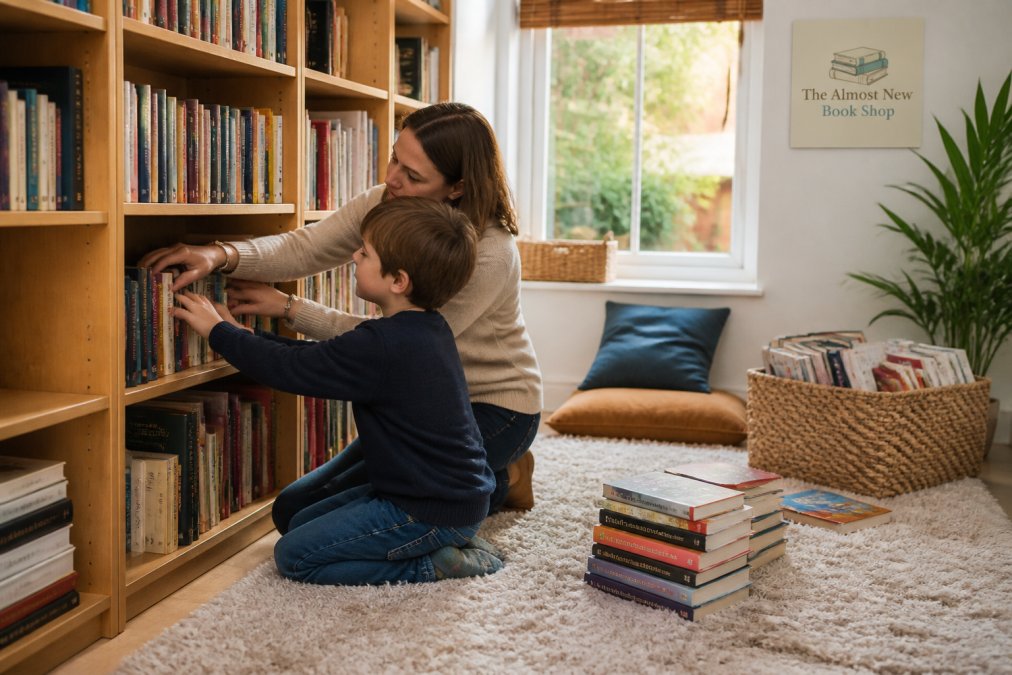
A System That Survives Growth
A simple structure that works:
- Fiction by author, so series stay together
- Non-fiction by subject: science, history, nature, reference
- A low "current favourites" shelf for whatever is being read this month
- A separate box for library loans, so they do not get absorbed into your collection
A collection that grows from 50 to 500 books will outgrow its first system, so leave one empty shelf per unit and label sections rather than individual spots.
Ecology: A Practical Introduction with →
The Inventory Problem Nobody Talks About
Once you pass a few hundred titles, you may lose track of what you own, buy duplicates, and waste time hunting for a title.
The fix is a simple inventory system:
- A barcode-scanning app. Most let you scan a book's ISBN and pull the title, author and cover automatically. Adding a new purchase takes seconds.
- A cloud spreadsheet. Columns for title, author, subject, reading level, location and source. Searchable from your phone in a charity shop, which is when it matters most.
- A location field. "Blue unit, top shelf" is enough. It turns a twenty-minute search into a ten-second one.
The Hybrid Shelf: Physical and Digital Together
Most guides treat physical books and digital resources as separate worlds, but a blended approach can be cost-effective and flexible.
- Physical books for reading, reference and anything you want children to browse without a screen.
- An e-reader or tablet for out-of-copyright classics, which are often free, and for titles you need once and will not reread.
- Free printables and worksheets for consumable work: maths practice, handwriting, project templates. Printing at home costs pennies and avoids buying a workbook per child.
- Subscription or library digital lending for audiobooks and ebooks, which many public library memberships include at no extra cost.
Shelving on a Budget: Built-In vs Freestanding
Freestanding shelving is the cheaper, more flexible option for most homes. Built-in bookshelves look better and use awkward spaces well, but cost far more and cannot move with you.
Budgeting for Educational Materials: A Practical Breakdown
A realistic home library budget separates books from everything else and works in pounds per title. A shelf with nothing on it teaches nothing.
What a Pound Actually Buys
Costs vary by source and format, but the pattern is consistent:
| Source | Typical cost per title | Best for |
|---|---|---|
| Charity shop paperback | Under £1 to around £2 | Building volume fast |
| Library clearance bundle | Often sold by the box or bag | Bulk fiction and reference |
| Online second-hand | £2-£5 including postage | Specific curriculum titles |
| New paperback | Full retail, often £7-£12 | Gaps and exam editions |
| New hardback reference | £15 and upwards | Long-term shelf spine |
A Worked Monthly Split
If you set aside £20 a month, a workable shape looks like this:
- £12 on second-hand books, roughly four to eight titles depending on source
- £4 on one reference or curriculum title, bought only when a genuine gap appears
- £3 on shelving, storage boxes or a second-hand unit
- £1 on consumables: paper, ink, folders, printable sleeves
Tracking What You Own
Past a few hundred books, you may buy duplicates without realising it. A simple system can help with that:
- A spreadsheet with columns for title, author, subject, reading level and source
- A phone app or library-catalogue app that scans barcodes, so adding a book takes seconds
- A shared wish list so family members do not buy the same title twice
- A monthly five-minute review to spot gaps and duplicates
Where Budgets Actually Break
Potential areas for overspend include:
- Buying a full curriculum at once. Reading levels can shift, and a bulk purchase may result in some books going unread.
- Paying retail for popular titles. The books children ask for most are usually the easiest to find second-hand.
- Overspending on shelving. A sturdy second-hand unit at a fraction of the price holds exactly the same books.
Set the monthly figure, track what you own, and let the collection compound.
Curating Your Collection: Age Groups and Subject Areas
Curate by age band first, then by subject. A collection that suits a five-year-old will frustrate a twelve-year-old, and buying for every stage at once wastes money.
A workable structure:
- Early years: picture books, first non-fiction, lift-the-flap titles
- Lower primary: early readers, simple science and nature
- Upper primary: chapter books, history, illustrated reference
- Teens: novels, deeper non-fiction, exam-adjacent titles
Tax Deductions and Sustainable Sourcing for Home Educators
Home educators may be able to treat teaching materials as allowable business expenses. If you are self-employed or run a home education business, teaching materials can often be treated as allowable business expenses.
Frequently Asked Questions
How much does it cost to build a home library for educational supply?
A starter home library of 50-100 books can cost £100-£250 if you buy second-hand. For example, titles like Human Body from The Almost New Book Shop cost £2.99, and Ecology: A Practical Introduction is £3.50. Shelving adds £30-£80 for a basic freestanding unit. Budgeting £15-£25 per month lets you build steadily without a large upfront spend.
Is it cheaper to buy used books for a home library?
Yes, significantly. Second-hand books typically cost 50-70% less than new retail prices. A hardback like Human Body has an original RRP of £12.99 but costs £2.99 used. Over a year, buying pre-loved titles for your home library can save hundreds of pounds compared to new paperbacks, and you still get quality educational content.
What are the best places to buy second-hand books for educational supply?
Charity shops, library clearance sales, and online second-hand retailers are the best options. Online shops like The Almost New Book Shop offer curated titles with condition descriptions, so you know what you're getting. Library sales often sell ex-stock books for 50p-£2 each. Combining these sources helps you find affordable educational supply across all subjects.
How do I organise a home library for educational use?
Sort books by subject and age group, keeping frequently used reference materials at eye level. Use labelled shelves or baskets for different categories like science, history, and fiction. A reading nook with a comfortable seat encourages daily use. For home education, keep current curriculum-linked books separate from general reading to make lesson planning easier.