

How to Identify Valuable First Edition Books
Table of Contents
- What Makes a First Edition Valuable
- Understanding First Edition vs First Printing
- Reading the Copyright Page and Number Line
- The Role of Dust Jacket Importance in Book Value
- Rare Book Condition Grading and What Collectors Look For
- Author Popularity, Print Runs, and Market Demand
- Spotting Red Flags and Avoiding Common Scams
- Storage and Preservation to Protect Your Collection's Value
- Frequently Asked Questions
Last Updated: October 1, 2026
What Makes a First Edition Valuable
A first edition is the original printing of a book released by a publisher. Not all first editions are valuable, scarcity, condition, and demand determine market value.
A first edition of a literary classic might fetch hundreds of pounds, whilst the same book from a later printing costs a few quid. This gap exists because first editions represent the author's original work before revisions or corrections.
Three factors determine value: the author's reputation, print run size, and physical condition. A signed copy of a rare military history title in pristine condition commands far more than an unsigned, damaged copy. Understanding these factors helps you identify valuable first edition books.
Understanding First Edition vs First Printing
A first edition is the first published version of a book. A first printing is the first batch of copies from that edition.
A book can be a first edition but a later printing. If you're holding a first edition from the third printing, it's less valuable than one from the first printing.
Collectors specifically hunt for first edition, first printing copies, the rarest and most sought-after versions. A first edition from a later printing is still desirable but won't command the same price.
To spot the difference, look at the number line on the copyright page. If the lowest number shown is 1, you likely have a first printing. If the sequence starts at 2 or higher, it's a later printing of the same edition.
Reading the Copyright Page and Number Line
The copyright page holds the key to identifying valuable first edition books. It contains crucial information about when and how many times the book was printed.
What the Number Line Tells You
The number line (also called the "printer's line") is a sequence of numbers on the copyright page, like 10 9 8 7 6 5 4 3 2 1, indicating which printing you're holding.
Each time a publisher reprints a book, they remove the lowest number. A first printing shows the complete line ending in 1. A second printing removes the 1, leaving 10 9 8 7 6 5 4 3 2.
If the number line shows only "1" or ends with "1", you're holding a first printing. This is what collectors want when hunting for first edition, first printing copies.
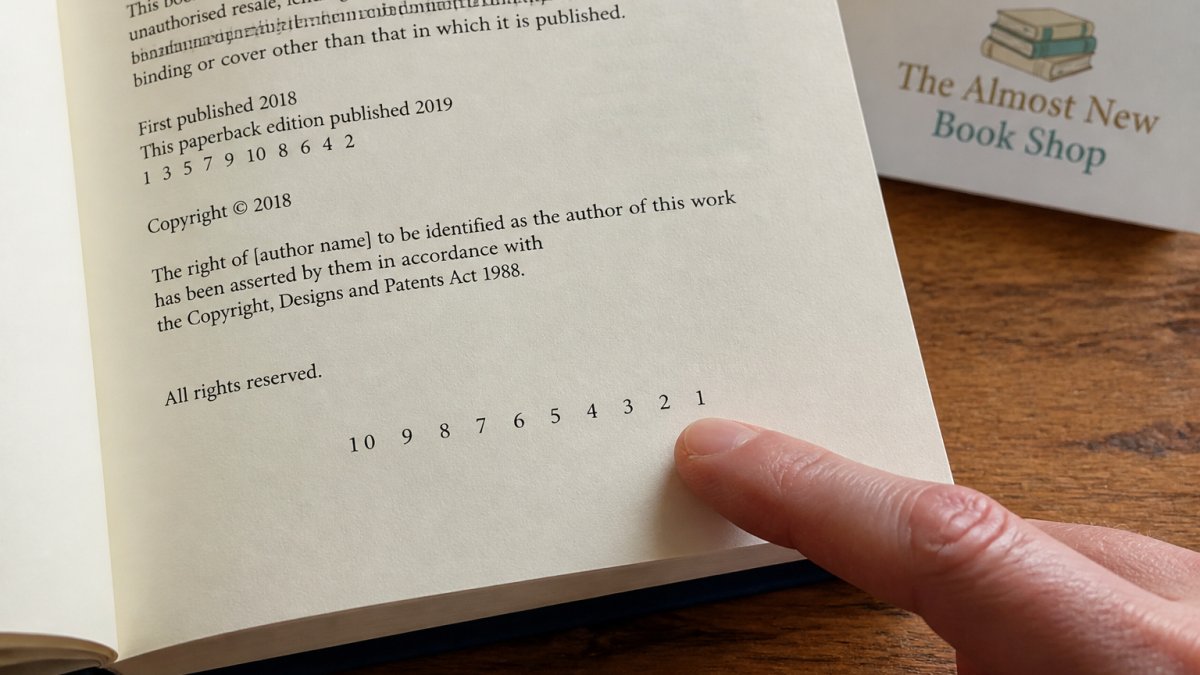
Older books often lack a number line. Look for "First Edition" or "First Printing" printed explicitly on the copyright page.
Publisher Codes and Issue Points
Publishers include additional codes on the copyright page to identify the specific issue point, the exact variant of a first printing.
An issue point refers to subtle variations within a first printing. Publishers sometimes catch errors mid-run and correct them, creating two versions of the "first printing". Collectors often prefer one over the other, affecting value.
For example, a typo on page 50 might exist in the first 5,000 copies but get corrected in the remaining 10,000. The version with the typo becomes rarer and sometimes more valuable.
Publisher codes appear as small marks, letters, or numbers on the copyright page. Research the specific publisher's system when evaluating a potentially valuable book.
The Role of Dust Jacket Importance in Book Value
For collectors, an unclipped dust jacket, one where the price hasn't been cut off the back flap, significantly increases value.
Unclipped dust jackets are rarer because most books sold in shops had their jacket flaps clipped at the point of sale. An unclipped jacket suggests the book sat untouched, appealing to collectors seeking pristine examples.
An unclipped dust jacket can add 50% or more to a book's value. A first edition without a dust jacket might fetch £20; with an unclipped jacket, it could reach £35 or higher.
The dust jacket must be in good condition to add value. Tears, fading, or stains reduce its worth. Collectors expect minimal wear if paying extra.
Look for the original retail price printed on the back flap. If you see a price like "2/6" (two shillings and sixpence) or "10/-" (ten shillings), the jacket is authentic to that era. Modern reprints use different pricing formats, which helps spot fakes.
Rare Book Condition Grading and What Collectors Look For
Condition determines value more than almost any other factor. A first edition in poor condition might sell for £5; in fine condition, £50 or more.
Collectors use standardised grading terms to describe condition. Understanding these terms helps you identify valuable first edition books accurately:
- Fine: Minimal wear, tight binding, clean pages, no marks or stains
- Very Good: Light wear, strong binding, occasional minor marks
- Good: Moderate wear, solid binding, visible wear on spine and edges
- Fair: Heavy wear, loose or cracked binding, staining or foxing present
- Poor: Severe damage, broken binding, extensive staining or missing pages
Most valuable first editions grade as "Fine" or "Very Good". Books grading lower than "Good" appeal mainly to scholars seeking rare content, not collectors focused on pristine copies.
Common Condition Issues: Foxing, Binding Damage, and Spine Wear
Foxing refers to brown spots from paper oxidation, common in older books. Light foxing is acceptable in vintage books, but heavy foxing reduces value significantly.
Spine wear indicates heavy use. A crisp, unmarked spine shows the book was rarely read. A worn or cracked spine reduces value.
Binding damage ranges from minor looseness to complete separation. A tight binding keeps pages secure. A loose or cracked binding suggests heavy use or poor storage and dramatically reduces value.
Check these areas carefully when evaluating any first edition. Run your finger along the spine, open the book gently to feel how tight the binding is, and examine pages for foxing or stains. These quick checks reveal whether a book meets collector standards.
Author Popularity, Print Runs, and Market Demand
The author's reputation drives demand. A first edition by a well-known author commands more money than an obscure one.
Literary classics by authors like Agatha Christie or George Orwell have sustained demand, keeping prices stable or rising. Lesser-known authors' first editions may sit unsold for months.
Print run size matters. A book printed 5,000 times is far rarer than one printed 100,000 times. Small print runs create scarcity and drive up value.
Military history titles often have smaller print runs than mainstream fiction, making them attractive to collectors and creating strong demand.
Market demand fluctuates based on cultural trends. A book that was overlooked for decades might suddenly become fashionable. This insight helps identify which first editions are likely to hold or gain value.
Spotting Red Flags and Avoiding Common Scams
Counterfeit first editions exist. Dishonest sellers alter copyright pages, remove dust jacket price clippings, or misrepresent later printings as first printings. Learning to spot these tricks protects your investment.
Red flag: Suspiciously perfect condition. A book from 1950 shouldn't look brand new. If a first edition appears completely untouched, ask why. Some books were genuinely stored carefully, but overly pristine examples warrant scrutiny. Check the dust jacket closely, if the colours are too bright or the paper too crisp, it might be a later reprint.
Red flag: Altered copyright pages. Examine the copyright page under good light. The ink should match the rest of the book's text.
Storage and Preservation to Protect Your Collection's Value
How you store first editions directly affects their long-term value. Books deteriorate in poor conditions, and damage is often irreversible.
Frequently Asked Questions
What is the difference between a first edition and a first printing?
A first edition refers to the first version of a book ever published, while first printing describes the initial batch of copies made from that first edition. A book can be a first edition but a later printing if the publisher reprinted it without significant changes. For collectors, a first edition first printing is most valuable. Check the copyright page number line to confirm both: the lowest number present indicates the printing, and the edition information appears separately on the copyright page.
How do I read a number line on a book's copyright page?
The number line is a sequence of numbers printed on the copyright page, typically reading 1 2 3 4 5 6 7 8 9 10 or similar. The lowest number present indicates the printing: if only 1 appears, it's a first printing. If the line starts at 2, it's a second printing. Some publishers use letters instead of numbers. Always check this line first before assuming a book is a first edition first printing, as reprints often look identical to originals.
Does a dust jacket always affect a first edition's value?
Yes, significantly. An original unclipped dust jacket can increase a first edition's value by 50% or more, depending on the title and condition. Dust jackets protect the binding and show the original publisher's artwork and marketing. A pristine, unfaded dust jacket with no tears or creasing is especially prized by collectors. Even a worn dust jacket adds value compared to a book without one, though condition matters greatly, faded colours or edge wear reduce its worth.
What condition issues should I watch for when evaluating a first edition?
Look for foxing (brown age spots), loose or cracked binding, spine wear, bent corners, and stains. Light foxing is common in older books and acceptable to many collectors, but heavy foxing reduces value. Check that pages aren't loose and the spine isn't broken. Endpapers and the title page should be clean. Water damage, mold, or strong odours are major red flags that damage both value and book integrity. Handle the book gently to assess condition without causing further harm.