

Are Second-Hand Books Hygienic? A Practical Guide
Table of Contents
- Are Second-Hand Books Hygienic? The Real Health Picture
- What Risks Do Second-Hand Books Actually Carry?
- How to Remove Mould from Old Books
- How to Care for Antique Books at Home
- Practical Steps to Sanitise Your Second-Hand Books
- When to Quarantine or Discard a Book
- Conclusion
Last Updated: August 26, 2026
Are Second-Hand Books Hygienic? The Real Health Picture
Buying second-hand books is an environmentally smart choice, but it raises a legitimate concern: are second hand books hygienic? The short answer is yes, with caveats. Most pre-loved books carry minimal genuine health risk, though certain conditions warrant attention. At The Almost New Book Shop, we've handled thousands of pre-owned titles and understand exactly what risks exist and which ones are overblown.
The reality is more nuanced than social media doomscrolling suggests. Books are porous surfaces, yes, but they're not petri dishes. What matters is understanding what can actually live on paper, how long pathogens survive, and what practical steps separate a safe second-hand purchase from one that needs care before reading.
This guide cuts through the anxiety and gives you the facts: what genuine risks exist, how to identify problem books, and exactly how to clean and store second-hand volumes so they're genuinely safe and ready to enjoy. Whether you're a budget-conscious collector, an environmentally minded reader, or a parent sourcing children's books, you'll know what to look for and what to do about it.
What Risks Do Second-Hand Books Actually Carry?
Second-hand books can harbour several types of biological material, but the actual transmission risk to you is far lower than many assume. Understanding what's actually present helps you respond proportionally rather than panic.
Pathogens and Microorganisms on Paper
Paper and book binding materials can host bacteria and viruses, but survival on these surfaces is limited. Microorganisms on porous surfaces like paper don't persist as long as they do on non-porous materials such as plastic or metal. Most common respiratory viruses survive only hours to a few days on paper fibres (peer-reviewed research). Bacteria can persist longer, weeks in some cases, but the concentration drops rapidly over time, especially if the book has been stored in normal room conditions.
The transmission risk is genuinely low because respiratory pathogens primarily spread through airborne droplets and direct contact, not through handling a book. Your skin is a barrier; pathogens don't absorb through fingertips. You'd need to transfer contamination directly to your mouth, nose, or eyes, which happens far less frequently than casual handling suggests.
Fomites (contaminated surfaces) do transmit some illnesses, but books rank low on the actual transmission hierarchy. A doorknob, shared keyboard, or shopping trolley handle poses greater risk because those surfaces see constant hand contact from many people throughout the day. A book sits on a shelf for weeks or months between readers.
Mold, Mildew, and Fungal Growth
This is where legitimate concern becomes practical. Mold spores and mildew thrive in damp, poorly ventilated environments, exactly the conditions some second-hand books experience in storage. Unlike bacteria or viruses, fungal spores can remain viable for months or years.
Visible mold or mildew on book pages or binding is a red flag. Inhaling mold spores in large quantities can trigger respiratory irritation, especially for people with asthma, allergies, or compromised immunity (the CDC). However, the spore count from handling a lightly affected book is typically minimal and unlikely to cause problems in healthy individuals.
The real issue isn't whether mold can be present, it's whether the book's storage conditions created an environment where it thrived. Books stored in damp basements, unheated garages, or humid climates are far more likely to show fungal growth than those kept in climate-controlled homes or bookshops.
Dust Mites, Insects, and Other Pests
Dust mites don't live on books in the way bacteria do, they live in the dust that accumulates in and around books. If a book has been in storage with poor air circulation, dust and dust mite debris will have settled into the pages and binding. For most readers, this causes no problem. For people with dust mite allergies, a heavily dusty book can trigger sneezing, congestion, or itching.
Insects, silverfish, book lice, or bedbugs, are rare in modern second-hand book retail but possible if a book came from a heavily infested home. Visible insects or insect damage (small holes, droppings, or egg casings) are obvious warning signs. Bedbugs, whilst uncommon in books, are the most concerning pest because they can infest a home if brought in.
Most reputable second-hand retailers, including The Almost New Book Shop, inspect books for visible pest damage before sale. A quick visual check when your book arrives, looking at the spine, page edges, and binding, will catch obvious problems.
How to Remove Mould from Old Books
Mold on books requires careful handling. Paper is fragile, and aggressive cleaning can damage pages, binding, or dust jackets. The goal is to remove surface mold without introducing moisture that could worsen the problem.
Identifying Mould Damage
Mold appears as fuzzy growth, brown or black spots, or a musty smell. Early-stage mold is light and powdery; advanced mold is thick, discoloured, and may have penetrated the paper. Inspect the book in good light, checking the spine, page edges, and inside the front and back covers, favourite spots for mold to begin.
If mold has penetrated deep into the pages (visible as staining throughout the interior), the book is difficult to save and poses higher spore risk. Surface mold on the cover or first few pages is manageable. Extensive internal mold means the book should be discarded or quarantined indefinitely.
Safe Cleaning Methods for Paper
Never use water or liquid cleaners on books. Moisture is paper's enemy and will worsen mold growth or cause permanent damage. Instead, use dry methods:
For light surface mold:
- Wear a dust mask to avoid inhaling spores
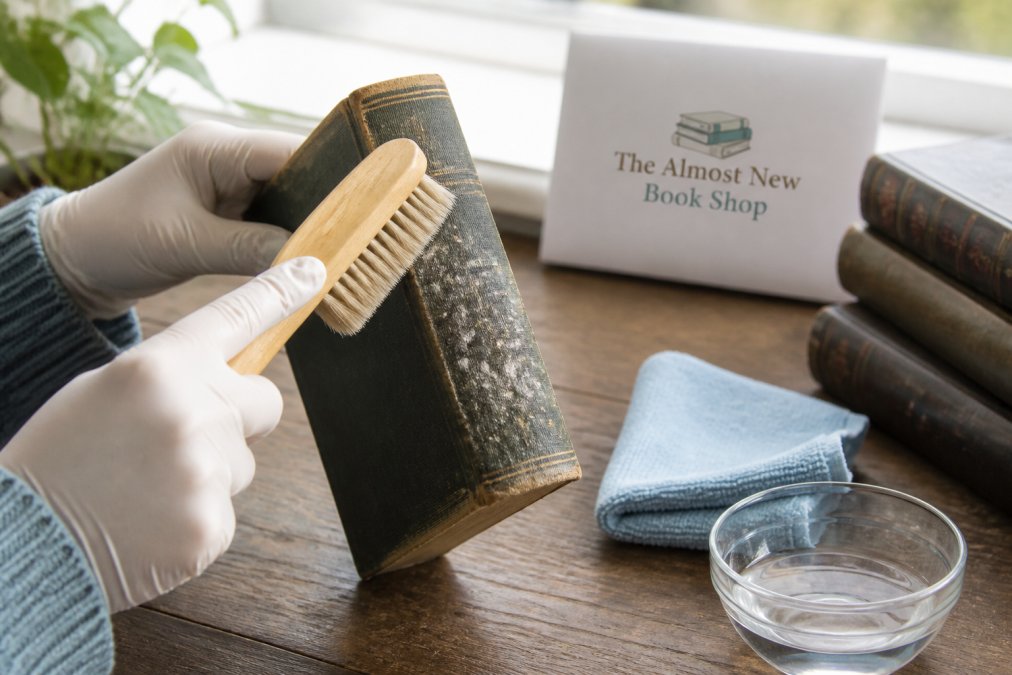
- Use a soft-bristled brush (an old toothbrush works) to gently brush mold away from the spine and page edges
- Brush outdoors or in a well-ventilated space to avoid dispersing spores indoors
- Wipe the brush on a cloth between strokes
- Follow with a microfiber cloth to remove residual mold dust
For mold on the dust jacket:
- Remove the dust jacket and clean it separately
- Use the same soft-bristled brush technique
- If the jacket is heavily affected, consider replacing it
For mold on hard covers:
- A slightly damp microfiber cloth (not wet, just barely damp) can clean hard covers
- Wring out excess water thoroughly before touching the book
- Allow the cover to air-dry completely before closing the book
Never attempt to clean mold from the interior pages with any liquid method. The risk of spreading mold deeper into the paper outweighs any benefit.
How to Care for Antique Books at Home
Rare or antique books deserve extra attention. These volumes are often irreplaceable, and improper handling can destroy both their monetary and sentimental value.
Cleaning Book Covers and Dust Jackets
Antique book covers, whether leather, cloth, or paper, require gentleness. Leather especially can crack or discolour if treated harshly. For cloth covers, a dry microfiber cloth removes surface dust without risk. For leather, a specialist leather cleaner designed for books is safer than general household cleaners.
Dust jackets on older books are fragile. If the jacket is torn, loose, or heavily soiled, consider having it professionally restored rather than attempting DIY cleaning. A professional conservator has archival-quality materials and expertise that protect the book's value.
For modern second-hand books with sturdy covers, a slightly damp cloth works fine. Test any cleaning method on an inconspicuous area first.
Disinfecting vs. Cleaning: What's the Difference?
Cleaning removes visible dirt, dust, and surface mold. Disinfecting kills microorganisms. For most second-hand books, cleaning is sufficient. Disinfecting is overkill and unnecessary for healthy readers.
If you're immunocompromised, caring for someone with a weakened immune system, or the book came from a source with known contamination (a home with active mold, for example), disinfecting adds a safety layer. UV light exposure kills pathogens and mold spores without damaging paper. Placing a book in direct sunlight for several hours, or using a UV sanitizer cabinet, disinfects whilst preserving the book.
Chemical disinfectants like isopropyl alcohol can damage paper and binding adhesives. Avoid spraying or wiping books with alcohol-based products. If disinfection is necessary, UV light is the safest method for books.
Storage and Prevention
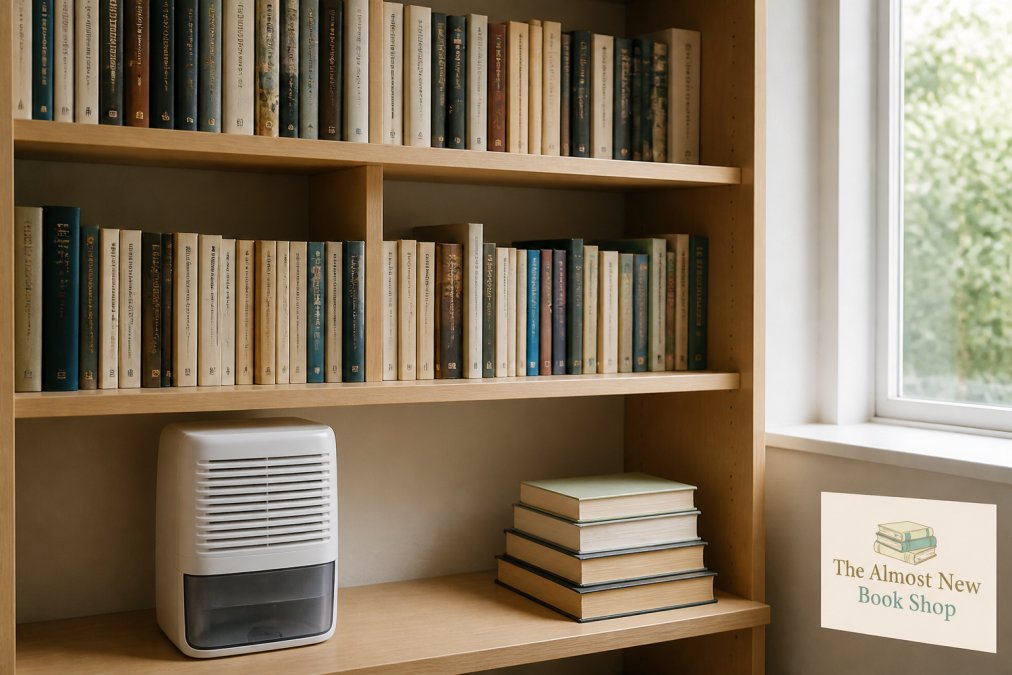
Prevention is far easier than remediation. Store books in cool, dry conditions with moderate air circulation. Ideal conditions are 18-21°C and 30-40% relative humidity (loc.gov). Avoid basements, attics, and unheated spaces where temperature and humidity fluctuate.
Stack books upright on shelves rather than stacking them flat on top of each other, which traps moisture and dust. Leave space between books for air to circulate. A small dehumidifier in a library or reading room helps maintain humidity, especially in damp climates.
Keep books away from direct sunlight, which fades covers and weakens paper over time. A bookshelf in a living room with normal room conditions is ideal. Avoid windowsills, radiators, and areas prone to water splash.
Practical Steps to Sanitise Your Second-Hand Books
Most second-hand books need no sanitisation, a simple inspection and light dusting suffice. For books that do need attention, follow these steps:
Step 1: Inspect the book upon arrival Check for visible mold, staining, insects, or damage. If the book looks clean and smells normal, move to Step 2. If you spot mold, insects, or strong musty odour, isolate the book and assess severity before proceeding.
Step 2: Remove surface dust Use a soft-bristled brush or dry microfiber cloth to gently remove dust from the spine, page edges, and cover. Brush over a bin or outside to contain dust. This step alone removes most surface microorganisms and allergens.
Step 3: Air the book Place the book in a well-ventilated area, ideally outdoors or near an open window, for several hours. Air circulation allows any remaining moisture to evaporate and helps reduce musty odours. Sunlight provides mild UV disinfection as a bonus.
Step 4: Store properly Once dry and clean, store the book upright on a shelf with moderate spacing and stable temperature and humidity. Proper storage prevents future mold and pest problems.
For books with light surface mold, add an extra step: use a soft brush to gently remove mold (outdoors, wearing a dust mask), then air the book thoroughly before storage.
When to Quarantine or Discard a Book
Some books aren't worth saving. Clear decision points help you avoid wasting time or risking contamination:
Quarantine immediately if:
- Visible insects or insect droppings are present
- Active mold growth is visible (fuzzy, wet-looking growth rather than old stains)
- The book smells intensely of mold or decay
- The book is visibly water-damaged or warped
Quarantine means isolating the book in a sealed bag or container, away from other books and living spaces, for at least two weeks. This prevents pests from spreading and allows mold to stabilise. After quarantine, reassess: if the book is valuable or sentimental, attempt cleaning. If it's a common title, discard it.
Discard if:
- Mold has penetrated throughout the interior pages (not just the surface)
- The book is infested with bedbugs or active insect colonies
- Water damage is severe and the book is structurally compromised
- The book smells of rot or decay that doesn't improve with airing
A damaged book isn't worth the risk or effort. Discarding it prevents potential contamination and saves you time better spent on books worth saving.
Keep and enjoy if:
- The book is clean or has only light surface dust
- Any mold is superficial and easily removed
- No insects or pest damage are visible
- The book smells normal or has only a mild musty odour that improves with airing
Most second-hand books fall into this category. A quick inspection and light cleaning are all that's needed before reading.
Conclusion
Are second-hand books hygienic? Yes, with informed care. The risks are real but manageable and far lower than anxiety-driven narratives suggest. Most pre-loved books carry minimal genuine health threat, especially when sourced from reputable retailers like The Almost New Book Shop, where books are inspected and curated before sale.
The practical reality: inspect your books when they arrive, remove surface dust, air them in a well-ventilated space, and store them in cool, dry conditions. That's it. For the tiny fraction of books showing mold or pest damage, simple dry-cleaning methods or quarantine handles the problem. You'll build a safe, sustainable personal library without paranoia or waste.
Frequently Asked Questions
Are second-hand books safe to bring into your home?
Yes, second-hand books are generally safe when handled with basic precautions. Most pathogens and bacteria survive only briefly on paper surfaces. The real risks, mould, mildew, and dust accumulation, are visible and manageable through simple cleaning and proper storage. Millions of readers buy pre-loved books annually without hygiene issues. The key is inspecting books on arrival, cleaning them if needed, and storing them in a dry environment with good air circulation.
How long do germs typically survive on paper surfaces?
Most bacteria and viruses survive on paper for hours to a few days, depending on humidity, temperature, and the specific microorganism. Respiratory viruses like COVID-19 typically remain viable for 24 hours on paper under normal conditions. However, the transmission risk from touching a book page is extremely low compared to other fomites like door handles. Proper hand hygiene after handling books is more important than the books themselves posing a direct infection risk.
How do I remove mould from old books safely?
First, isolate the affected book in a well-ventilated area. Use a soft-bristled brush or vacuum with a brush attachment to gently remove surface mould spores from the pages and binding. For persistent mould, lightly wipe affected areas with a microfiber cloth slightly dampened with isopropyl alcohol (70%), working carefully to avoid moisture damage to the paper. Allow the book to air dry completely in sunlight or with a dehumidifier nearby. Never use water directly on paper, as it promotes further fungal growth and damages the binding.
Can second-hand books carry bed bugs or silverfish?
Bed bugs and silverfish are rare in second-hand books, particularly those from reputable sellers who inspect stock. These pests prefer warm, dark spaces with food sources, not the dry pages of a book. If you're concerned, inspect the book's spine, binding, and page edges for small insects or droppings upon arrival. Store books in a cool, dry place with good air circulation. Quarantining a book for a few days in a sealed bag is an extra precaution, though the actual risk is minimal.
Second-hand books deserve a second life. By understanding what risks actually exist and how to address them, you can confidently expand your collection whilst protecting both your health and the environment. The Almost New Book Shop makes this easy: we curate every title, inspect for damage, and ensure you're buying books ready to read. Start building your sustainable library today, subscribe to our emails for new arrivals, curated recommendations, and book care tips delivered to your inbox.
This article was written using GrandRanker