

musicMagpie vs AwesomeBooks for Readers: Which Wins?
Table of Contents
- How the Two Marketplaces Compare at a Glance
- musicMagpie: Strengths, Weaknesses and What to Expect
- AwesomeBooks: Strengths, Weaknesses and What to Expect
- Book Condition, Grading Accuracy and Trust Signals
- Shipping Costs, Delivery Times and Returns Compared
- Best Places to Buy Used Books: Where Each One Fits
- Sustainable Book Shopping: The Circular Economy Angle
- Selling Your Own Books: Bulk Selling vs Individual Listing
- Frequently Asked Questions
Last Updated: September 26, 2026
How the Two Marketplaces Compare at a Glance
The musicMagpie vs AwesomeBooks for readers debate usually comes down to one question: do you want cheap and fast, or curated and specific? This guide from The Almost New Book Shop breaks down where each marketplace wins, where it falls short, and how to decide which one suits your shelf.
musicMagpie is a large-scale trade-in and resale operation built around volume. AwesomeBooks is a smaller online bookseller with a stronger focus on niche and out-of-print titles. Both sell second-hand books, but they serve different readers.
| Feature | musicMagpie | AwesomeBooks |
|---|---|---|
| Typical stock | Mass-market paperbacks, tech, media | Fiction, classics, academic titles |
| Condition grading | Standard tiers | Standard tiers plus notes |
| Bulk selling | Yes, strong | Limited |
| Rare editions | Rarely | Sometimes |
| Delivery speed | Fast on in-stock items | Varies by seller |
If you want a quick, cheap paperback, musicMagpie is hard to beat. If you're hunting a specific out-of-print title, AwesomeBooks often has it.
musicMagpie: Strengths, Weaknesses and What to Expect
musicMagpie's biggest strength is scale. It buys and resells in enormous volumes, which keeps prices low on common titles. You'll find paperback fiction, children's books, and textbooks at prices that undercut most high-street charity shops.
The trade-off is condition accuracy. Because stock moves so fast, listings sometimes rely on generic grading rather than individual photos. A "very good" copy can arrive with a creased spine or a faded cover.
- Pros: low prices, fast dispatch, easy bulk selling via trade-in
- Cons: limited rare stock, generic condition descriptions, less personal service
For readers building a general library on a budget, it works. For collectors chasing a specific edition, it's a gamble.
AwesomeBooks: Strengths, Weaknesses and What to Expect
AwesomeBooks leans into curation. Its catalogue skews toward fiction, classics, and academic titles, and it's more likely to stock something out-of-print. If you're completing a book series or tracking down a rare edition, it's often the better bet.
Where it falls short is consistency. Because stock comes from a wider network, delivery times and condition can vary more between orders. You may get a pristine hardcover one week and a well-thumbed paperback the next.
- Pros: strong niche and out-of-print range, good for series completion
- Cons: variable delivery times, less predictable grading
Book Condition, Grading Accuracy and Trust Signals
Condition accuracy is the single biggest frustration for second-hand book buyers, and it's where the two marketplaces diverge most in practice. Both use tiered grading, but the tiers don't mean the same thing on both sites.
How the tiers usually translate
- Like new / as new: may still show a remainder mark or a faint shelf-wear crease. On a mass-volume seller, treat this as "read once, carefully".
- Very good: the workhorse grade. Expect a straight spine, no loose pages, and possibly a previous owner's name inside. On a high-volume seller, a creased spine or faded cover is still within tolerance.
- Good: readable and complete, but assume visible wear, bumped corners, tanning to page edges, a spine that's been opened flat.
- Acceptable: a reading copy only. Don't buy at this grade if you want it to look good on a shelf.
Where the two differ
musicMagpie grades in bulk. Because stock moves through a warehouse at volume, listings often rely on a generic tier with a stock image rather than a photo of the actual copy. That's efficient, but it means a "very good" paperback can arrive with a creased spine or a faded cover and still be considered correctly graded.
AwesomeBooks is more likely to carry individual condition notes and, on some listings, a photo of the actual book, particularly on older or scarcer titles. That extra detail is the main reason collectors gravitate to it, but it isn't universal, so you can't assume every listing has it.
A practical verification routine
Before you buy, run through this checklist:
- Check the ISBN, not just the title. Different printings of the same book can have different cover art, page counts, and even revised content. If you want a specific edition, the ISBN is the only reliable identifier.
- Look for a photo of the actual copy. A stock image tells you nothing about the book you'll receive.
- Read the condition note for specifics. "Some shelf wear to edges" is useful. "Used - good" on its own is not.
- Check the seller rating and review count where the marketplace shows them. A pattern of "arrived damaged" or "not as described" in recent reviews is a stronger signal than the grade itself.
- Note the publication details. Ex-library copies, book club editions, and print-on-demand reprints all get graded as ordinary used books but are materially different objects.
If it arrives not as described
You are not stuck with it. Under the Consumer Rights Act 2015, goods must be as described, of satisfactory quality, and fit for purpose. If a book arrives in a condition that doesn't match the listing, you're entitled to a refund, repair, or replacement, and for a misdescribed used book, a refund is the realistic remedy. This applies to both marketplaces, and to any seller trading into the UK.
Consumer Rights Act 2015 guidance
Keep the packaging and photograph the book as it arrived before you send it back. A clear photo of the mismatch is the fastest way to resolve a dispute.
Shipping Costs, Delivery Times and Returns Compared
Shipping is where the "cheap book" illusion often breaks. A £2 paperback with £3.50 postage costs more than a £4.50 book with free delivery, and the gap widens fast if you're buying several titles. The right comparison isn't sticker price, it's total delivered cost per book.
How to work it out
- Add the item price and the delivery charge.
- Divide by the number of books in the order if you're buying more than one.
- Compare that figure, not the headline price, across both marketplaces.
A single £2 book with £3.50 postage is £5.50 delivered.
Delivery speed and reliability
Returns
- Faulty or misdescribed: you're entitled to a refund under the Consumer Rights Act 2015, and return postage should be covered by the seller.
- Changed your mind: you may have a short cancellation window under the Consumer Contracts Regulations 2013 for distance sales, but you'll usually pay return postage, and the book must come back in a resaleable condition.
- Keep the packaging until you've checked the book. It makes a return straightforward if you need one.
A quick decision rule
- Buying one cheap paperback? Compare total delivered cost, not the list price.
- Buying several common titles? A flat-postage seller often wins on the basket.
- Buying a scarce or out-of-print title? Accept the longer delivery time and order early.
- Need it by a date? Favour the single-warehouse seller with predictable dispatch.
Consumer Contracts Regulations 2013 guidance
Best Places to Buy Used Books: Where Each One Fits
The best places to buy used books depend entirely on what you're after. There's no single winner, and that's the point most comparison guides miss.
Sustainable Book Shopping: The Circular Economy Angle
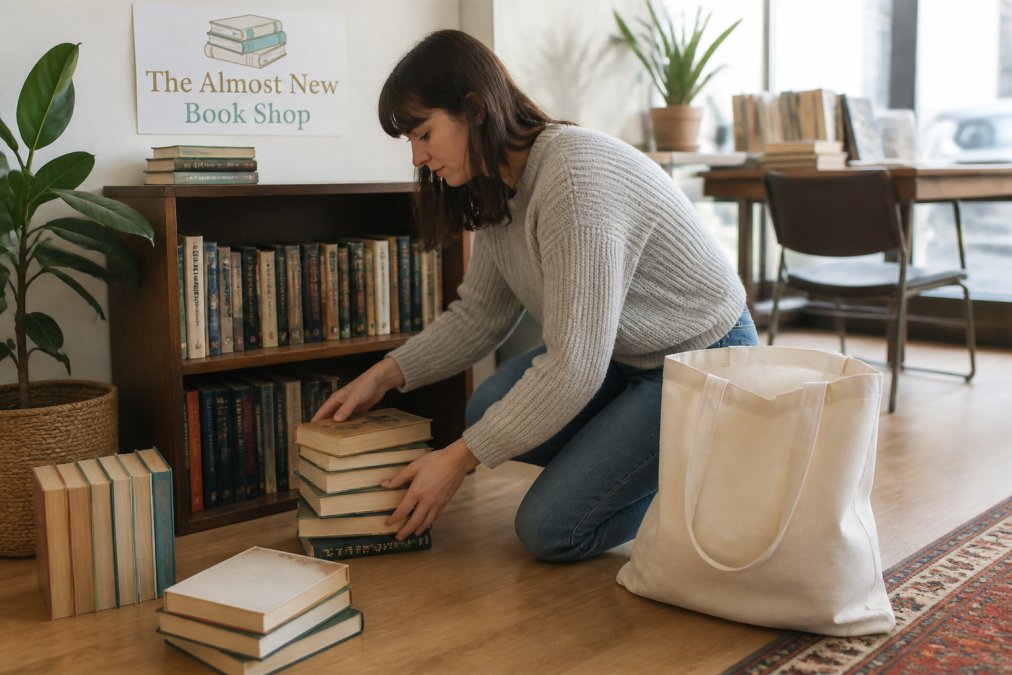
Sustainable book shopping is about keeping books in circulation rather than pulping them. Every second-hand purchase avoids the paper, ink, and transport that a new copy demands.
WRAP UK circular economy guidance
Selling Your Own Books: Bulk Selling vs Individual Listing
- Bulk selling: fast, lower per-book return, best for common titles
- Individual listing: slower, higher return, best for rare editions
If you'd rather skip the admin entirely, The Almost New Book Shop takes pre-loved books and gives them a second life. And if you're buying for someone else, our gift card at £5.00 lets them pick their own treasure.

Frequently Asked Questions
Is AwesomeBooks safe to buy from?
AwesomeBooks has been trading for over two decades and operates as an established online bookseller, so buyers have a long track record to check. As with any used books marketplace, review the condition grade before ordering, keep your order confirmation, and check the return window. Paying by card or PayPal gives you extra protection under UK consumer law if an item arrives damaged or significantly different from its description.
What does musicMagpie do with books?
musicMagpie buys used books, CDs, DVDs and tech from the public, then resells the sellable stock through its own online store. Titles that cannot be resold are routed into recycling or recovery streams rather than sent straight to landfill. For readers, this means the catalogue leans towards popular fiction, biographies, textbooks and paperback series rather than rare or out-of-print editions.
Which online retailer offers the best condition for used books?
Condition accuracy varies more by individual seller than by platform. Look for listings that state a specific grade, such as very good or like new, and that show the actual copy rather than a stock photo. Smaller curated shops can offer a more personal service. Always check the return policy before you commit.
Are there sustainable alternatives to large online book retailers?
Yes. Independent pre-loved bookshops, charity shops and community book swaps keep titles in circulation and out of waste streams. These smaller operations can offer a more personal service. If you want to support sustainable book shopping while building a library, buying from a curated second-hand seller is one of the simplest switches you can make.
Choosing where to buy second-hand books comes down to what you value most: speed, price, or a seller who genuinely cares about keeping stories alive. At The Almost New Book Shop, we rescue pre-loved books from landfill and rehome them with readers who'll love them, offering a curated selection across fiction, classics, military history, and children's titles. Get started with The Almost New Book Shop and give your next read a second chapter.