

Oxfam Books Online vs Independent Shops: A 2026 Guide
Table of Contents
- How Oxfam Books Online and Independent Shops Compare at a Glance
- The Best Places to Buy Used Books: Charity Giants vs Local Sellers
- The Benefits of Buying from Independent Bookshops
- Condition Grading and Accuracy: What to Expect from Each Source
- Shipping Costs, Delivery Times, and Return Policies Compared
- Bulk Selling vs Individual Listing: Where to Offload Your Old Books
- Environmental Impact: The Circular Economy of Pre-Loved Books
- Conclusion: Which Route Fits Your Reading Habits?
- Frequently Asked Questions
Last Updated: September 27, 2026
How Oxfam Books Online and Independent Shops Compare at a Glance
Oxfam Books Online and independent shops are the two main routes UK readers use to buy second-hand titles, and they serve different needs. Oxfam offers scale, a familiar charity name and a national network of shops feeding stock into one web store. Independent sellers offer curation, faster condition checks and a local relationship. At The Almost New Book Shop, we sit in the second camp: a Chichester-based seller rescuing pre-loved books before they reach landfill.
The comparison below sums up the trade-offs before we dig into each one.
| Factor | Oxfam Books Online | Independent Shops |
|---|---|---|
| Stock range | Very wide, high turnover | Curated, specialist strengths |
| Condition detail | Basic grade, varies by volunteer | Often photographed and described |
| Shipping | Standard national rates | Varies, sometimes free locally |
| Returns | Charity policy, slower process | Usually flexible, seller-led |
| Rare and out-of-print | Occasional, unpredictable | Strong if the shop specialises |
| Bulk selling | Donation, no cash back | Cash or credit, varies by shop |
The Best Places to Buy Used Books: Charity Giants vs Local Sellers
The best places to buy used books depend on what you value most: breadth or precision. A charity web store wins when you want a specific popular paperback cheaply and quickly. An independent online bookseller wins when condition matters, when you are chasing a rare edition, or when you want a real person to answer a question before you pay.
Oxfam books online works well for the reader who wants a mainstream title and does not mind a generic condition grade. The catalogue is enormous because donations flow in constantly from high-street shops. That is also the weakness: stock rotates fast, photos are often stock or absent, and a "good" grade can mean very different things from one warehouse to the next.
Independent shops, by contrast, tend to know their inventory. A specialist military history seller can tell you whether a jacket is price-clipped, whether a map is present, and whether the spine is tight. That knowledge is the product. You pay a little more, and you get certainty.
The Benefits of Buying from Independent Bookshops
Independent bookshops keep money and books circulating locally, and they give readers something a warehouse cannot: human judgement about condition and value. According to research on the environmental case for reusing books, reusing products like books avoids the emissions and resource use tied to making new ones, which is exactly why buying second-hand matters.
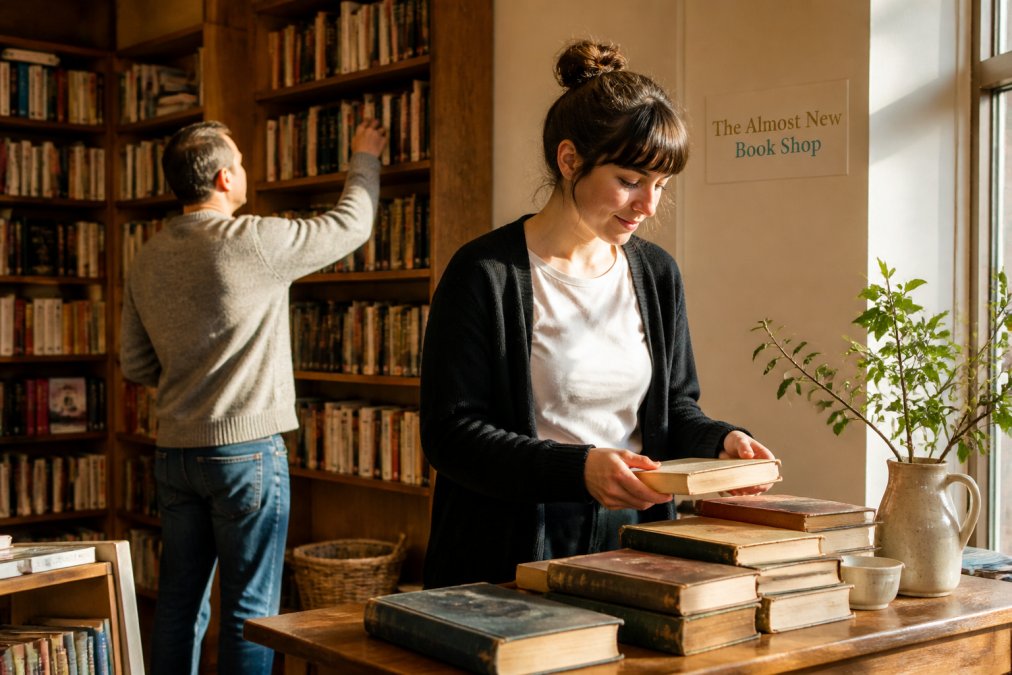
Beyond sustainability, the benefits of buying from independent bookshops include:
- Condition accuracy. A real person inspects each copy and can describe faults honestly.
- Curation. A good shop stocks what its readers actually want, not just what sells fastest.
- Rare editions. Specialists hold out-of-print, first-edition and military history titles that charity shops rarely keep.
- Trust signals. Reviews, photos and a named seller make it easier to buy with confidence.
- Community. You support a business that rehomes books rather than pulping them.
The trade-off is scale. An independent shop will not have every title on your list, and delivery times depend on how small the operation is. But for the reader who cares about condition and wants a book series completed properly, that is a fair exchange.
Condition Grading and Accuracy: What to Expect from Each Source
Condition grading is the biggest source of disappointment in second-hand buying, and accuracy varies sharply between a national charity store and a small independent. Charity web stores usually apply a simple scale: very good, good, acceptable. That scale is applied by many hands, so consistency slips. Independent sellers describe the actual copy, often with photos, which is why condition accuracy is where they pull ahead.
A common mistake is assuming a "good" grade means "nearly new." In practice, it often means readable with visible wear.
The Almost New Book Shop gift card →
| Term you see | What it usually means on a charity web store | What it usually means from an independent seller |
|---|---|---|
| Very good | Read once, minor shelf wear, no writing | Often near-fine, may still have a crisp spine |
| Good | Read several times, creased spine, possible tanning | Solid reading copy, faults listed individually |
| Acceptable | Heavy wear, may be ex-library, jacket missing | Rarely used; independents usually downgrade instead |
| As new | Almost never applied to donated stock | Genuinely unread, often remaindered |
Ask these questions before buying:
- Is the dust jacket present, and is it price-clipped?
- Are there ex-library stamps, owner names or highlighting?
- Is the spine tight, or cracked and creased?
- For older titles, is there foxing or damp staining?
- Is it a book club edition or a true first?
Shipping Costs, Delivery Times, and Return Policies Compared
| Cost or timing factor | Charity web store | Independent shop |
|---|---|---|
| Postage model | Flat rate per order, so bulk orders win | Often weight-based, sometimes free over a threshold |
| Dispatch speed | Central warehouse, usually 2-5 working days | Same or next day if the owner packs it |
| Packaging | Standardised, occasionally thin for hardbacks | Often recycled and hand-packed |
| Return window | Fixed policy, may be shorter than statutory minimum | Usually seller-led and flexible |
| Who pays return postage | Often the buyer unless the item is faulty | Frequently the seller for a genuine grading error |
| Combined orders | One postage charge for many books | May combine if you message before paying |
A practical rule: for light, common paperbacks, optimise for postage by ordering in bulk. For heavy, rare or expensive titles, optimise for the seller's willingness to describe and stand behind the condition, because that is where the real risk sits.
Bulk Selling vs Individual Listing: Where to Offload Your Old Books
Bulk selling and individual listing suit different sellers, and the right choice depends on how much time you have and how much you need the money. Selling one book at a time earns more per title but takes effort: photographing, writing descriptions, answering questions and posting each item. Bulk selling moves everything at once for less per book, but it clears your shelves in an afternoon.
For most people, a hybrid works best:
- High-value titles (rare, out-of-print, first editions) go to individual listing or a specialist buyer.
- Common paperbacks go in bulk to a shop that pays cash or credit.
- Books nobody wants go to charity donation rather than the bin.
Environmental Impact: The Circular Economy of Pre-Loved Books
The circular economy of pre-loved books is simple: every copy that finds a new reader is a copy that is not reprinted and a book that is not sent to landfill. That is the core argument for buying second-hand, and it is why sustainable reading has moved from niche to mainstream.
Conclusion: Which Route Fits Your Reading Habits?
Choosing between Oxfam books online and independent shops comes down to what you are buying. For a cheap, common paperback where condition is not critical, a charity web store is fine. For anything where condition, rarity or a real conversation matters, an independent seller is the better call.
Frequently Asked Questions
Is it better to buy second-hand books from charities or independent shops?
It depends on what you value. Oxfam shops offer convenience and a huge volume of stock, but condition can vary. Independent bookshops, like The Almost New Book Shop, often provide more accurate condition descriptions, curated selections, and a personal touch. If you want a specific title quickly, online charity stores may win. If you care about supporting local businesses and getting exactly what was described, independents are the safer bet.
What are the environmental benefits of buying pre-loved books?
Every pre-loved book you buy keeps it out of landfill and reduces demand for new printing. The publishing industry consumes paper, water, and energy. By choosing second-hand, you extend a book's life and support a circular economy. Independent shops like The Almost New Book Shop actively rescue books that might otherwise be discarded, giving them a second chapter and lowering your reading footprint.
How does the pricing compare between large charity retailers and independent bookshops?
Independent shops may price slightly higher for rare or out-of-print titles, but many, including The Almost New Book Shop, keep paperbacks affordable. Always factor in delivery. A £3 book with £3 shipping costs £6, which may be more than a new paperback from a supermarket.
Do independent bookshops offer a better curated selection than online charity stores?
Yes, often. Independent shops hand-pick their stock, so you are more likely to find interesting, rare, or out-of-print titles rather than endless copies of bestsellers. Charity online stores rely on donations, which means popular books dominate. If you collect military history, classics, or specific series, independents like The Almost New Book Shop curate with collectors in mind, making it easier to complete a book series or find a hidden gem.