

Pre-Owned Books & the Environment: A 2026 Guide
Table of Contents
- How Pre-Owned Books Reduce Environmental Impact
- Second-Hand Books vs New Books Environmental Impact
- The Lifecycle of a Book: From Paper to Landfill
- How to Reduce Book Waste Through Reuse and Donation
- Are E-Books Better for the Environment Than Printed Books?
- Shipping, Local Purchase, and Carbon Footprint Trade-Offs
- Building Your Sustainable Library with Pre-Owned Books
- Frequently Asked Questions
Last Updated: October 10, 2026
How Pre-Owned Books Reduce Environmental Impact
Buying pre-owned books directly cuts demand for fresh print runs, meaning fewer trees harvested, less energy consumed in manufacturing, and reduced waste to landfill, a clear win for the pre-owned books environment.

At The Almost New Book Shop, we rescue pre-loved books and give them new readers, preventing perfectly good volumes from being discarded.
Cutting demand for new print runs
Each second-hand purchase replaces one potential new print order. When demand for new books drops, print runs shrink, reducing raw materials, factory hours, and distribution.
New book production requires wood pulp, forestry operations, transportation, and chemical processing. Choosing pre-owned signals the market that demand doesn't need another printing, strengthening the pre-owned books environment by reducing unnecessary production.
Extending a book's useful life
A book's environmental impact is amortised across all its readers. When a volume passes through multiple readers over decades, each subsequent reader reduces the per-reader environmental cost.
Pre-owned books, especially hardbacks, can withstand many readers. Purchasing well-maintained volumes extends useful life and maximises the return on the environmental investment already made.
Second-Hand Books vs New Books Environmental Impact
The environmental case for pre-owned books becomes clearer when you compare the full lifecycle of a second-hand purchase against a new one. The difference isn't marginal, it's substantial across every major environmental metric.

Resource use in manufacturing and distribution
Manufacturing a new book requires extracting and processing raw materials, printing, binding, and shipping. Each step consumes energy and water, with chemical processing for bleaching and finishing.
A pre-owned book skips manufacturing entirely. Only distribution remains, a single shipment from seller to reader, substantially lowering the resource footprint compared to a new book.
Distribution carries an environmental cost through transport emissions, but typically smaller than manufacturing impact. A book shipped from a UK warehouse generates far fewer emissions than manufacturing and distributing a new copy.
Paper processing consumes energy and chemicals regardless of whether it's virgin or recycled pulp. Pre-owned books bypass this entirely.
When buying used may not be the greener option
Distance matters: ordering a pre-owned book from overseas with expedited shipping may offset manufacturing savings through transport emissions. A book shipped from Australia to the UK generates more carbon than a new book printed locally.
Local purchasing is strongest environmentally. Buying from a nearby second-hand shop or UK-based retailer like The Almost New Book Shop minimises shipping distance. Standard shipping over express delivery further reduces impact.
If sourcing a rare pre-owned copy requires multiple failed purchases and returns, cumulative shipping could theoretically exceed buying a new reprint, but this is uncommon.
The Lifecycle of a Book: From Paper to Landfill
Understanding a book's full environmental journey, from raw material extraction through eventual disposal, reveals why extending its lifespan matters so much.
Paper production and forest resources
Book paper starts as wood harvested and processed into pulp. The chemical process (standard for book-grade paper) cooks wood chips with chemicals to break down lignin, requiring significant chemical inputs and energy.
Paper is then bleached, sized, and finished, consuming water and energy at each step.
Forestry carries environmental implications. Choosing pre-owned books reduces demand for virgin paper, reducing pressure on forestry operations.

Some publishers use recycled paper, which reduces but doesn't eliminate environmental impact. Pre-owned books skip this entire stage.
Energy and water use in printing
Printing consumes energy and resources. Modern offset printing uses water-based inks and requires water for dampening rollers, whilst binding, cutting, folding, and stitching add more energy use.
Printing, binding, and transport to distribution centres consume significant energy, all avoided when you buy pre-owned.
The cumulative energy use across manufacturing and distribution for a new book is substantial. Pre-owned books eliminate this entirely, making the environmental advantage clear even before considering paper and forest resource conservation.
Waste reduction by preventing landfill disposal
Unsold books often become waste or are discarded. Pre-loved books that find new readers through second-hand channels avoid this fate.
Extending a book's life through reuse is the most effective waste prevention strategy. A book read by five people generates far less waste than five separate copies.
Purchasing pre-owned books prevents waste and signals market demand for second-hand options, encouraging retailers to stock more pre-loved titles.
How to Reduce Book Waste Through Reuse and Donation
Beyond purchasing pre-owned books, there are practical ways to ensure the books you own circulate through multiple readers and avoid landfill.
Passing books along and book sharing
Pass books to friends, family, or colleagues once finished. A book moving through five readers has one-fifth the per-reader environmental impact of five separately purchased copies.
Book sharing groups, lending libraries, and online swap platforms keep books in circulation without requiring new purchases or manufacturing.
Donating to libraries, schools, and community centres ensures books reach new readers. Libraries extend book life by circulating single copies across dozens or hundreds of readers, making per-reader environmental impact exceptionally low.
Charity shops like Oxfam provide reuse channels, pricing books affordably for budget-conscious readers. The Almost New Book Shop operates similarly, curating pre-loved titles for engaged readers.
Formula 1 Yearbook 1997–1998 →
Book resale and circular economy benefits
Selling books through online platforms, local shops, or direct sales keeps them in circulation and creates a circular economy where books cycle through multiple owners.
Resale platforms make this easier than ever. However, the most environmentally efficient resale happens locally, minimising shipping distances. Selling to a local second-hand retailer or through a community marketplace reduces transport emissions compared to shipping to distant buyers.
The circular economy principle applies beyond individual transactions. When retailers like The Almost New Book Shop source books from estates, charity donations, and customer trade-ins, they're operating as nodes in a circular system. Books flow through multiple readers, extending their useful life and preventing waste at scale.
Supporting this ecosystem, by buying from second-hand retailers and selling your used books rather than discarding them, strengthens the infrastructure that keeps books in circulation.
Are E-Books Better for the Environment Than Printed Books?
E-books eliminate paper entirely, which seems environmentally superior at first glance. The reality is more nuanced.
Manufacturing and energy use of digital devices
E-readers and tablets require manufacturing, which involves mining rare earth elements, processing silicon, assembling complex electronics, and packaging. The environmental cost of producing a single device is substantial, often equivalent to manufacturing hundreds of physical books.
However, e-readers last for years and can store thousands of titles. Amortised across all the books read on a single device, the per-book environmental impact of the device itself becomes small.
The energy required to charge an e-reader is minimal. A typical e-reader consumes less than one kilowatt-hour per year, equivalent to a fraction of the energy required to manufacture a single printed book.
E-books avoid paper, printing, binding, and physical distribution entirely. From a manufacturing and transport perspective, they're significantly more efficient than new printed books. However, they're only marginally more efficient than pre-owned printed books, which skip most manufacturing steps anyway.
The environmental advantage of e-books over pre-owned printed books is negligible. The advantage over new printed books is substantial.
Libraries and subscription services as alternatives
Libraries and e-book subscription services (like Kindle Unlimited or similar platforms) offer another environmental angle. A library book or subscription e-book is read by many people, spreading the environmental cost across multiple readers.
Libraries are exceptionally efficient environmentally. A single physical book circulated to fifty readers has one-fiftieth the per-reader environmental impact of fifty separately purchased copies. Public libraries represent one of the most environmentally friendly ways to access books.
E-book subscriptions work similarly. A subscription service where one digital copy is licensed to multiple readers over time distributes the device manufacturing cost across many users. For readers who consume books frequently, subscriptions are likely more environmentally efficient than purchasing individual copies, whether new or pre-owned.
The environmental hierarchy looks roughly like this: library books (physical or digital) are most efficient, followed by subscription e-books, then pre-owned printed books, with new printed books as the least efficient option.
Shipping, Local Purchase, and Carbon Footprint Trade-Offs
The environmental benefit of buying pre-owned books depends partly on where you buy them and how they're delivered to you.
Purchasing from a local second-hand shop eliminates shipping entirely. You walk in, select a book, and leave with minimal environmental impact beyond your own transport. This is the greenest option available.
Online ordering from a UK-based retailer like The Almost New Book Shop involves one shipment, typically via standard parcel delivery. The carbon footprint is small, usually measured in grams of CO₂ equivalent per book.
International shipping significantly increases the carbon footprint. Ordering a pre-owned book from overseas, especially via air freight, can generate emissions that partially offset the manufacturing savings. If you're ordering internationally, standard shipping is essential.
The distance calculation matters. Buying a pre-owned book shipped 50 miles is more efficient than buying a new book manufactured locally but shipped 500 miles.
For most readers in the UK, purchasing from local retailers or UK-based online sellers like The Almost New Book Shop offers the optimal balance: the environmental savings of pre-owned books without the shipping impact of international orders.
Building Your Sustainable Library with Pre-Owned Books
Creating a personal library that reflects your environmental values is entirely compatible with building a collection of books you love. Pre-owned books make this accessible and affordable.
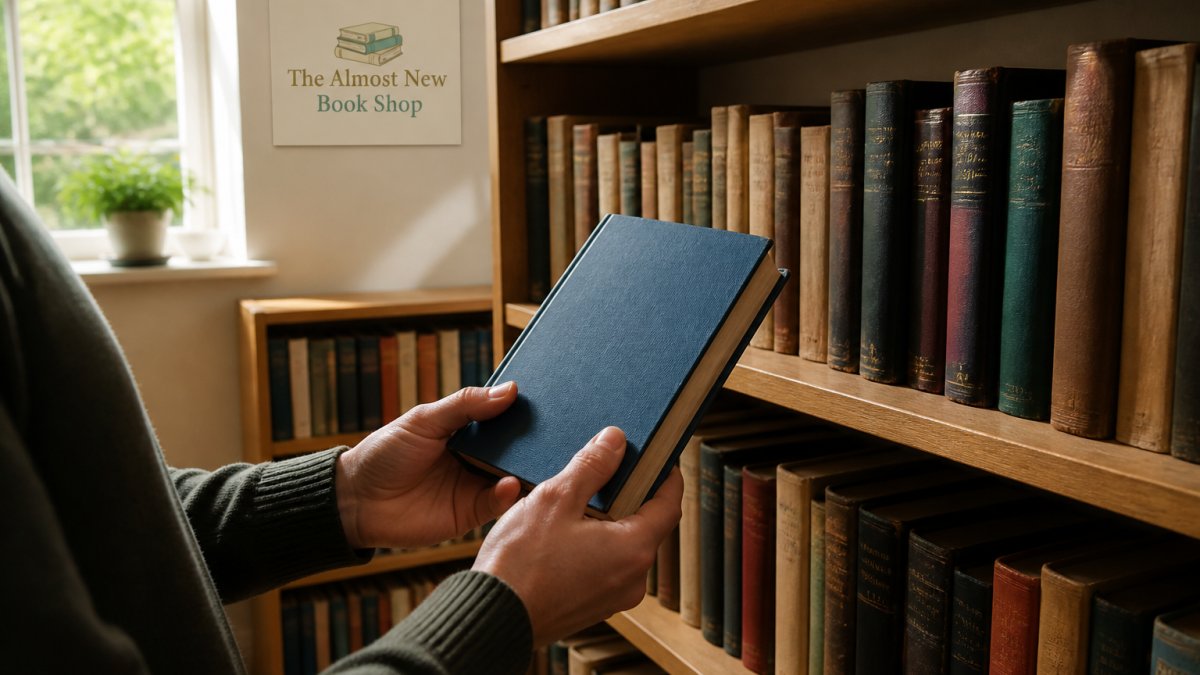
Start by identifying the genres and subjects you read most. Pre-owned retailers typically stock diverse selections across fiction, non-fiction, classics, and specialised categories.
Quality matters environmentally. A well-preserved hardback book will circulate through more readers before requiring replacement than a damaged paperback. When selecting pre-owned books, prioritise condition.
Building a sustainable library also means keeping the books you own in circulation. This extends the book's useful life and ensures your environmental investment continues paying dividends.
Rare or out-of-print titles are another strong case for pre-owned purchasing. Military history collectors and enthusiasts of vintage editions often find that pre-owned channels are the only way to access specific titles.
The environmental case for pre-owned books is clear: they eliminate manufacturing impact, extend useful life, and reduce waste.
Frequently Asked Questions
Are pre-owned books better for the environment than new books?
Yes. Buying pre-owned books eliminates the demand for new print runs, which saves paper, water, energy, and forest resources. Manufacturing a new book requires wood pulp extraction, chemical processing, printing, and transportation. A pre-owned book that's already in circulation skips all those production steps. The environmental savings increase each time a book is read by a new reader, making the resource investment spread across more people.
How does buying second-hand books reduce waste?
Second-hand books extend a book's useful life by preventing it from entering landfill waste. When you buy pre-owned instead of new, you're giving an existing book another reader rather than triggering a new manufacturing cycle. This keeps books in circulation longer, maximises the environmental investment already made in their production, and reduces the volume of printed material that ends up in waste streams.
What about shipping costs to the environment when ordering pre-owned books online?
Shipping does add carbon emissions, but the environmental benefit of avoiding new book production typically outweighs the transport impact, especially if you order multiple books together or choose local retailers. Buying from independent sellers based nearby can reduce delivery distance. However, if you can visit a local charity shop or independent bookshop in person, you avoid shipping emissions entirely whilst still supporting the circular economy.
Are e-books a better environmental choice than pre-owned printed books?
It depends on device manufacturing and use patterns. E-readers require energy-intensive production and mining for materials, but if you read many books on one device, the environmental cost per book decreases. Pre-owned printed books avoid manufacturing entirely. For occasional readers, pre-owned books are likely greener. For voracious readers who would otherwise buy many new books, e-books become competitive. Libraries and book subscriptions offer a middle ground by spreading device and physical book use across many readers.