

How to Clean Old Book Pages Safely
Table of Contents
- Assess Your Book's Condition Before You Start
- How to Dust Old Books Without Damage
- Essential Book Cleaning Tools You'll Need
- How to Remove Stains from Book Pages
- Cleaning Mould from Books Safely
- Cleaning Hardcovers and Paperbacks
- When to Stop Cleaning and Call a Professional
- Frequently Asked Questions
Last Updated: October 8, 2026
Assess Your Book's Condition Before You Start
Before you pick up a cleaning cloth, stop and look at what you're actually working with. The condition of your book, especially its paper age and fragility, determines whether cleaning is safe or whether you need professional help.
Old books fall into different categories. A Victorian-era novel with yellowed but sturdy pages is different from a 1920s edition with brittle, foxed paper that crumbles when you touch it. Books from the mid-20th century sometimes contain acidic wood pulp that becomes fragile over time (The Deterioration and Preservation of Paper: Some Essential Facts - Collections Care).
Here's what to check:
- Paper texture: Gently run your finger along an inconspicuous page edge. Does it feel smooth or rough? Brittle or flexible?
- Discolouration: Look for brown spots (foxing), water stains, or overall yellowing. Foxing often indicates mold exposure or chemical degradation.
- Binding integrity: Is the spine intact? Are pages loose or falling out?
- Mold or mildew smell: A musty odour suggests active mold growth, this requires different handling.
- Visible damage: Tears, creases, or areas where paper has started to separate.
If your book has brittle pages that crack when you gently flex them, or if the paper feels papery-thin and fragile, stop here. This is the moment to consult a professional conservator. Attempting to clean old book pages that are already compromised will cause irreversible damage.
At The Almost New Book Shop, we assess every pre-loved book before it reaches you. Understanding your book's baseline condition helps you make the right decision about whether cleaning is worth attempting.
How to Dust Old Books Without Damage
Dust is the easiest problem to solve and the safest place to start. Most surface dirt and loose dust can be removed without any liquid or aggressive tools. The goal is to lift particles away without grinding them into the paper or forcing them deeper into the pages.
Removing loose dust and surface dirt
Start with the simplest approach: a soft brush and gravity. Hold your book upright and gently brush the spine, cover, and page edges with a soft-bristled brush, the kind used for delicate surfaces, not a stiff paintbrush. Work from top to bottom so dust falls away rather than settling back onto the pages.
For the page edges, use a small, soft-bristled brush or an old toothbrush with very gentle bristles. Brush parallel to the edge, not across it. You're coaxing particles off, not scrubbing.
A small handheld vacuum with a brush attachment can help, but only if you're careful. Keep the suction on low and use it on the exterior only, never vacuum the open pages directly, as the suction can pull at delicate paper fibres.
- Use a soft-bristled brush, not a stiff one
- Work from top to bottom
- Brush parallel to page edges, not across them
- Keep vacuum suction on low if you use one
- Avoid vacuuming open pages directly
Safe page-by-page dusting technique
If dust has settled between pages, you'll need to open the book carefully and clean inside. This is where patience matters most.
Open the book gently, supporting the spine. Never force pages open, let them fall naturally. Work with small sections of pages at a time, maybe 10-20 pages per session if the book is large.
For each section, use a soft, lint-free cloth (microfibre cloths work well) or a dry-cleaning sponge to gently wipe the top surface of each page. Wipe in one direction, from the spine outward toward the fore-edge.
If a page feels particularly fragile, skip it entirely. Not every page needs cleaning, and forcing the issue risks more damage than the dust itself causes.
Essential Book Cleaning Tools You'll Need
You don't need specialist equipment. Most of what you'll use is already in your home or easily found.
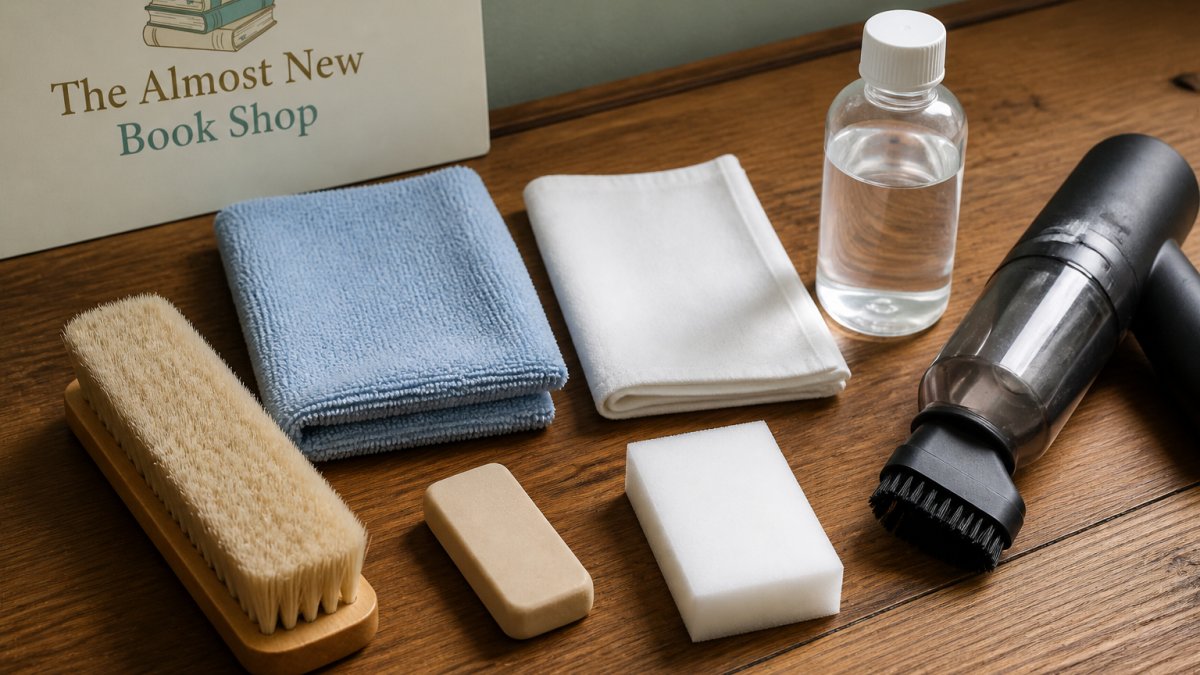
Soft-bristled brush: A natural-bristle brush with flexible bristles. Artist's brushes or soft toothbrushes work.
Microfibre cloth: These trap dust without shedding fibres. Use them dry for dusting, or slightly damp for gentle wiping.
Lint-free cloth: Cotton cloths work, or purchase lint-free wipes designed for delicate surfaces.
Melamine foam sponge: This is a mild abrasive that can lift surface marks. Use it sparingly and only on sturdy paper.
Small vacuum with brush attachment: For exterior dusting only. Keep suction low.
Rubbing alcohol: For certain stains, but use sparingly and only on test areas. Never use on delicate or water-sensitive paper.
Paper towels: For blotting, not wiping. Blotting absorbs moisture; wiping can smear.
What you avoid matters as much as what you use. Don't use:
- Harsh chemical cleaners
- Abrasive sponges or rough cloths
- Wet sponges or dripping water
- Bleach or whitening agents
- Adhesive tape (use archival tape if you must repair)
How to Remove Stains from Book Pages
Stains on old book pages range from manageable to permanent. The type of stain determines your approach.
Common stains fall into categories: water marks, ink or pen marks, food stains (coffee, tea), and foxing (brown spots from mold or chemical breakdown). Each responds differently to cleaning.
Testing products on inconspicuous areas first
Before you treat any visible stain, test your chosen method on a hidden page. Use the inside back cover or the last blank page, somewhere the reader won't see if something goes wrong.
Apply your cleaning method to a small area. Wait 24 hours. Check for discolouration, paper damage, or any unexpected reaction. Only if the test area looks fine should you move to the actual stain.
This single step prevents irreversible mistakes. A failed test on a hidden page is a learning opportunity. A failed attempt on a visible page is permanent damage.
Treating common stains safely
Water marks and light stains: A barely damp microfibre cloth can sometimes lift these. The key word is barely, your cloth should feel almost dry to the touch.
Foxing (brown spots): These are usually permanent. They indicate chemical degradation or mold growth in the paper itself.
Pen or pencil marks: A soft gum eraser can lift light pencil marks. Rub gently in one direction. For pen marks, erasers usually won't help, these are often permanent.
Food stains (coffee, tea): These are tricky. If the stain is old and dry, a barely damp cloth might help.
The hard truth: many stains on old book pages are permanent. Accepting this is part of respecting the book's age and history.
Cleaning Mould from Books Safely
Mould on old books requires care because mould spores are a health hazard. You're not just cleaning for appearance, you're protecting yourself and preventing the mould from spreading to other books.
Mould safety and cross-contamination precautions
First, isolate the affected book. Don't leave it near other books, as mould spores spread easily through the air.
Wear a mask when handling mouldy books. Mould spores can irritate your lungs and airways.
Never use water on active mould. Water feeds mould and makes it spread. Instead, use dry methods first.
Brush loose mould spores off the exterior with a soft brush, outdoors if possible. This prevents spores from spreading inside your home.
For pages inside the book, a dry-cleaning sponge can gently lift mould from the surface. Work slowly and outdoors.
If the mould has penetrated the paper or if the smell is overwhelming, the book is likely beyond safe cleaning.
After handling a mouldy book, wash your hands thoroughly and clean any surfaces the book touched.
Cleaning Hardcovers and Paperbacks
Hardcovers and paperbacks have different vulnerabilities, which means cleaning approaches differ slightly.
Caring for book covers and dust jackets
Hardcover cloth covers: These are often durable but can stain. Dust gently with a soft brush. For marks, test a barely damp microfibre cloth on the inside back cover first.
Dust jackets: These are fragile. Never wet-clean them. Dust gently with a soft brush. If a dust jacket is torn or heavily stained, consider whether it's worth keeping, a damaged jacket can damage the book beneath it.
Paperback covers: These are thinner and more prone to creasing. Avoid moisture entirely. Dust only with a dry brush. Stains on paperback covers are usually permanent, accept them as part of the book's journey.
Gold leaf or embossed lettering on covers requires extra care. Never rub directly over embossed areas. Dust around them with a very soft brush.
Protecting page edges and spines
The spine is the most vulnerable part of any book. It bends every time the book opens, so the paper and glue there are under constant stress.
Never clean the spine with moisture. Dust it gently with a soft brush. If the spine is cracked or peeling, don't attempt to repair it yourself, a bookbinder or conservator should handle this.
Page edges (the fore-edge, top, and bottom of the closed pages) collect dust easily. A soft brush works well here. If edges are stained, accept it, page edges are difficult to clean without damaging the delicate paper at the edge of each page.
If your book has gilt or coloured page edges, avoid any moisture. These finishes are fragile and easily damaged by water or cleaning solutions.
When to Stop Cleaning and Call a Professional
There's a point where cleaning becomes damage. Knowing when to stop is as important as knowing how to clean.
Stop and consult a professional conservator if:
- Paper feels brittle or crumbles when handled gently. Brittle paper is at the edge of failure. Any cleaning risks breaking it further. A conservator can stabilise the paper before cleaning.
- The book has active mould that covers more than a small area. Mould that has penetrated the paper structure requires professional treatment.
- The binding is failing. If pages are loose, the spine is cracked, or the glue is deteriorating, the book needs structural repair before any cosmetic cleaning.
- The book has historical or monetary value. Rare books, first editions, or books with sentimental significance should be assessed by a professional before any cleaning attempt.
- Water damage is extensive. Books that have been soaked or exposed to serious moisture need professional drying and stabilisation.
- You're unsure about the paper age or type. When in doubt, ask. A conservator can identify paper type and recommend safe cleaning methods.
Professional conservation isn't cheap, but it's far cheaper than destroying a valuable or irreplaceable book through amateur cleaning. If the book matters to you, the cost is worth it.
Cleaning old book pages safely comes down to patience and respect for the material. Start with assessment, move to the gentlest methods first, and know when to stop. Most dust and light surface marks can be handled at home with basic tools and care. Stains, mould, and structural damage belong with professionals.
When you're building a collection of pre-loved books, whether you're sourcing rare military history titles, classic fiction, or children's books, understanding how to care for them extends their life and yours.
Frequently Asked Questions
How do I know if an old book is safe to clean myself?
Check the paper condition first. Gently test the page edges, if they crumble or feel brittle, the book needs professional conservation. Books with water damage, active mould growth, or foxing (brown spots) should be assessed by a conservator. For books in reasonable condition with surface dust or minor stains, home cleaning is safe. Always test your chosen cleaning method on an inconspicuous page before treating visible areas.
What's the safest way to remove dust from old book pages?
Use a soft-bristled brush or small vacuum with a brush attachment, working gently from the book's spine outward. For delicate surfaces, a dry-cleaning sponge or melamine foam works well without moisture. Never scrub, dust particles can scratch aged paper. Hold the book firmly closed and brush the page edges, then open carefully and dust individual pages. Work in a well-ventilated area to avoid inhaling dust particles.
Can I use water to clean old book pages?
Water is risky for old paper and can cause permanent damage, warping, or mould growth. Avoid damp cloths on page surfaces. For minor stains, test rubbing alcohol on a hidden page first, it evaporates faster than water. Dry-cleaning methods (brushes, erasers, sponges) are much safer for vintage and antique books. If a book requires wet cleaning, consult a professional conservator.
How do I safely remove mould from book pages?
First, isolate the affected book in a well-ventilated area away from other books to prevent cross-contamination. Wear a dust mask and gloves. Use a soft brush to gently remove surface mould outdoors if possible. For embedded mould, professional conservation is necessary, home treatment risks spreading spores or damaging paper further. Never use bleach or harsh chemicals on old books. After cleaning, store in a cool, dry place to prevent mould returning.