

Used Books vs New Books: A Complete Comparison
Table of Contents
- Used Books vs New Books: Key Differences at a Glance
- Cost Savings and Budget Impact
- Environmental Sustainability and Carbon Footprint
- How to Grade Used Book Condition
- Benefits of Buying Second-Hand Books
- Building a Home Library on a Budget
- Hygiene, Condition and Safety Concerns
- Used vs New: Which Should You Choose?
Last Updated: August 18, 2026
Used Books vs New Books: Key Differences at a Glance
Whether you're building a home library or hunting for that elusive out-of-print title, the choice between used books and new books shapes both your budget and your reading experience. At The Almost New Book Shop, we've seen firsthand how this decision affects thousands of readers, and the answer isn't as straightforward as "one is always better."
Used books and new books each offer distinct advantages. New books arrive pristine, with unbroken spines and unmarked pages, while used books (or second-hand books as they're often called) cost significantly less and carry the environmental benefit of preventing perfectly good stories from reaching landfills. The real question isn't which is objectively superior, but which aligns with your priorities: budget, sustainability, reading experience, or the thrill of discovery.
This comparison breaks down the seven areas where used and new books diverge most sharply. By the end, you'll know exactly which option makes sense for your next purchase, and when it's worth mixing both into your collection.
Cost Savings and Budget Impact
New books in the UK typically cost between £8 and £20 for paperbacks, with hardcovers commanding £15 to £30 or more. Used books, by contrast, usually range from £2 to £8, delivering savings of 50-75% on the same title.
The maths become compelling when you're building a library. A reader who purchases 12 books per year saves roughly £100-150 annually by choosing second-hand options. Over five years, that's £500-750 redirected toward other priorities, or more books.
However, shipping costs can erode savings if you're ordering from online retailers. A £3 used book becomes a £7 purchase once postage is factored in, which is why The Almost New Book Shop's curated selection appeals to budget-conscious collectors: you're paying fair prices upfront without hidden delivery surprises.
For parents building children's book collections, the savings are even more dramatic. Pre-loved children's titles often cost £1-3, compared to £6-12 for new picture books. Parents on a budget can build strong, diverse collections for their children without compromising on quality or variety.
The one scenario where new books win financially: buying bestsellers immediately upon release. High-demand titles rarely appear second-hand at significant discounts, so the cost difference shrinks. But for backlist titles, classics, and anything more than six months old, used books deliver unmatched value.
Environmental Sustainability and Carbon Footprint
The environmental case for used books is straightforward: a book that's already been printed and bound requires no additional paper, ink, or manufacturing energy. By purchasing second-hand, you're extending a book's useful life and preventing it from becoming waste.
The carbon footprint of book production is non-trivial. Paper manufacturing, printing, binding, and shipping all consume energy and resources. When a used book finds a new reader instead of ending up in a landfill or recycling facility, you've avoided those manufacturing emissions entirely.
Beyond carbon, there's the matter of circular economy principles. Books are durable goods designed to be read multiple times. A new book printed and shipped to a warehouse, then to a retailer, then to a reader represents a linear consumption model. A used book that passes through three or four readers before retirement represents genuine resource efficiency.
For environmentally conscious readers, especially Gen Z and Millennial collectors, this sustainability angle matters deeply. Choosing used books aligns personal library building with broader values about consumption and waste reduction. It's not performative, it's a concrete choice with measurable environmental benefit.
That said, new books aren't inherently wasteful. If you're purchasing a title you'll read repeatedly, keep for decades, and potentially pass to others, the per-read environmental cost of a new book diminishes significantly over time. The environmental advantage of used books is strongest when comparing equivalent reading patterns.
How to Grade Used Book Condition
Understanding book condition is essential before purchasing second-hand. The difference between a "good" and "acceptable" used book can mean the difference between a treasured addition to your collection and a frustrating purchase.
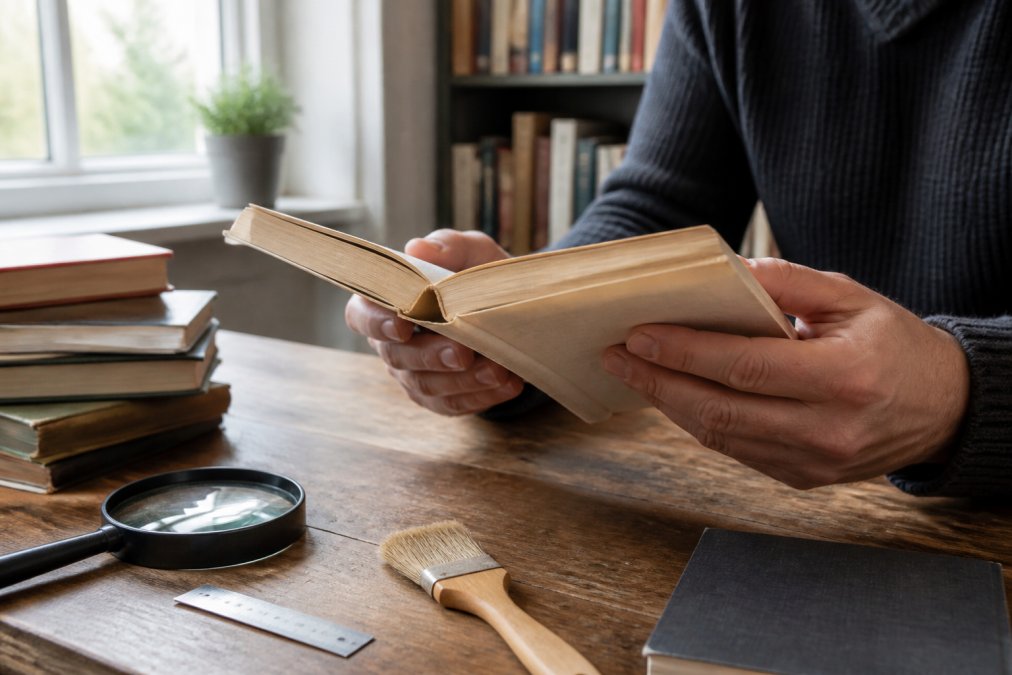
Fine (F): The book appears unread. The spine is unbroken, pages are unmarked, and the dust jacket (if present) shows no wear. Fine books are rare in the second-hand market and command prices approaching new-book levels.
Very Good (VG): Minor signs of handling. The spine may show light creasing, pages might have slight yellowing, and the dust jacket may have minor wear. The book is still highly readable and visually appealing.
Good (G): Obvious signs of use. The spine shows clear creasing, pages may have light marking or foxing (age spots), and the dust jacket may be worn or partially faded. The book remains fully functional and readable, though it shows its history.
Fair (F): Heavy wear. The spine is heavily creased, pages may have multiple markings or stains, and the dust jacket may be damaged or missing. The book is still readable but clearly well-loved.
Poor (P): Severe damage. Pages may be loose, the spine may be broken, and there may be significant staining or marking. Poor-condition books are rarely worth purchasing unless the title is genuinely rare or out-of-print.
When evaluating a used book online, examine photos carefully. Look at the spine, check for water damage or staining, and assess whether any pages appear loose or damaged. At The Almost New Book Shop, condition grading is transparent, we describe exactly what you're getting so there are no surprises upon arrival.
Benefits of Buying Second-Hand Books
Beyond cost and environmental impact, used books offer unique advantages that new books simply can't match.
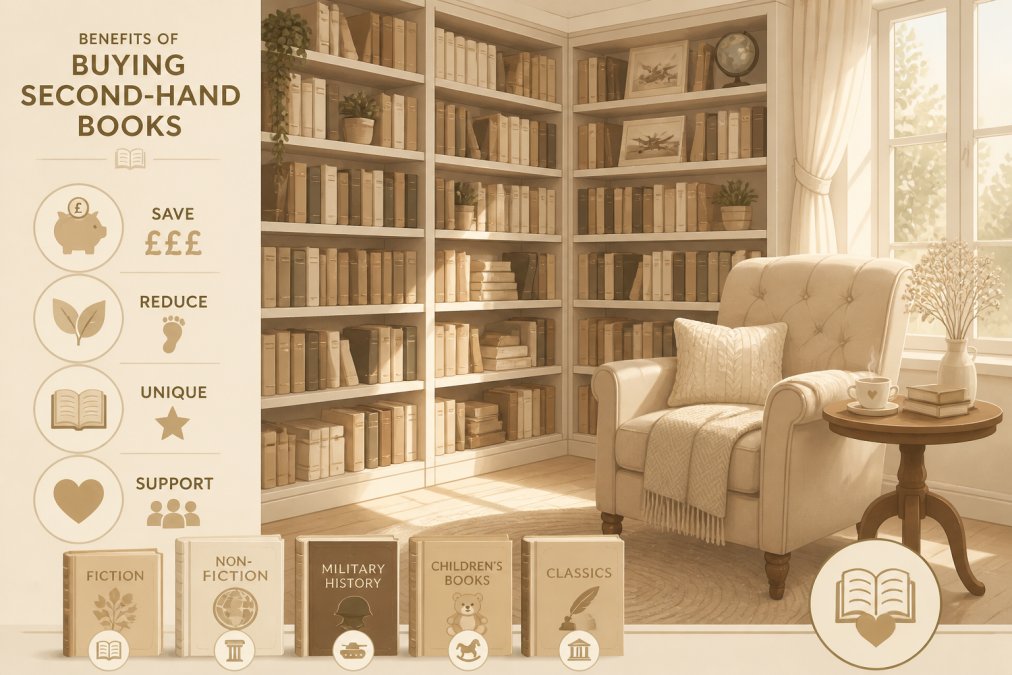
Access to out-of-print titles. Many classics, military history books, and niche non-fiction titles go out of print within years of publication. Used book retailers are often the only source for these titles. A reader hunting for a specific military history volume from the 1990s will find it second-hand or nowhere at all.
The discovery factor. Browsing used books carries an element of serendipity that new-book shopping doesn't. You might find a marginalia-filled copy with notes from a previous reader, stumble upon a rare first edition you didn't know existed, or discover an author you've never encountered. This "hidden treasure" aspect appeals strongly to book collectors and curious readers.
Building diverse collections affordably. A reader who wants to explore multiple genres or authors can do so far more economically with used books. You can experiment with new-to-you authors without financial risk, then upgrade to new copies of your favourites.
Supporting sustainable consumption. For readers whose values centre on reducing waste and supporting circular economy principles, buying used books aligns personal consumption with environmental ethics. It's a tangible way to reduce your reading footprint.
Unique physical characteristics. Some readers genuinely prefer the tactile experience of a well-worn book, the soft pages, the broken-in spine, the evidence of previous readers. A pristine new book lacks this character.
Building a Home Library on a Budget
A home library doesn't require spending hundreds of pounds on new books. Strategic use of second-hand options allows you to build a diverse, meaningful collection affordably.
Start with your core interests. Don't try to buy everything at once. Identify 3-5 genres or topics you genuinely love, then source used books in those areas. A military history collector might focus on sourcing rare volumes in that niche; a fiction reader might hunt for complete author collections.
Mix new and used strategically. Buy new books for titles you anticipate reading repeatedly or gifting to others. Buy used books for exploration, backlist titles, and books you're less certain about. This hybrid approach balances budget with quality.
Use multiple sources. Independent bookshops like The Almost New Book Shop offer curated selections and transparent condition grading. Charity shops offer bargains but less predictability. Online retailers provide convenience and wider selection. Combining sources gives you flexibility and better pricing.
Track what you own. Use a simple spreadsheet or app to track your collection. This prevents duplicate purchases and helps you identify gaps in your library.
Invest in storage and display. A well-organized library is more enjoyable and more likely to be read. Shelving, bookcases, and proper storage prevent books from becoming clutter and encourage regular engagement with your collection.
Prioritize condition for books you'll read frequently. If you're building a library of books you'll actually read (rather than collect), prioritize condition. A worn-out copy of your favourite novel diminishes the reading experience. For reference books or occasional reads, condition matters less.
Hygiene, Condition and Safety Concerns
The most common hesitation about used books is hygiene. The question is legitimate: who owned this book before? Could there be mould, dust mites, or other contaminants?
The reality is more nuanced than the worry. Books are paper and binding, they don't harbour pathogens in the way soft furnishings or clothing might. Dust mites and mould are genuine concerns only in specific conditions: books stored in damp environments, books with visible mould growth, or books that smell strongly of must or decay.
Most used books are perfectly safe. A book stored in a normal home environment for years is no more hygienic risk than a library book borrowed by dozens of readers. The key is examining condition before purchase and taking basic precautions.
Red flags to avoid:
- Visible mould or mildew growth (appears as dark spots or discolouration on pages or cover)
- Strong musty or damp smell
- Water damage with visible staining or warping
- Signs of pest damage (small holes, insect droppings)
- Books from estate sales of homes with known mould or moisture issues
Safe handling practices:
- Store used books in dry, climate-controlled environments
- If a book smells musty, air it out in sunlight for a few hours, this often eliminates odours
- Wash your hands after handling books in poor condition (though this is precautionary rather than essential)
- For books with visible dust, gently wipe the exterior before shelving
At The Almost New Book Shop, condition assessment includes hygiene evaluation. We don't stock books with mould, pest damage, or severe moisture issues. Transparency about condition means you know exactly what you're purchasing.
Used vs New: Which Should You Choose?
The decision ultimately depends on your priorities, budget, and reading habits.
Choose used books if:
- You're building a library on a limited budget
- You value environmental sustainability
- You're hunting for out-of-print or rare titles
- You enjoy the discovery and serendipity of browsing
- You read books once and move on to the next title
- You're exploring new genres or authors cautiously
Choose new books if:
- You want pristine condition and unbroken spines
- You're purchasing a title you anticipate reading repeatedly
- You're buying a gift and want the presentation of a new book
- You want the latest edition with current publishing information
- You're supporting an author you deeply admire
- You need immediate availability (new books are always in stock; used availability varies)
The hybrid approach works best for most readers. Purchase new books strategically, for favourites you'll reread, for gifts, for books where condition genuinely matters. Buy used books for exploration, backlist titles, and building breadth in your collection. This balances budget, sustainability, and reading satisfaction.
For building a personal library specifically, used books offer unmatched value. The Almost New Book Shop's curated selection of fiction, non-fiction, classics, military history, and children's titles makes it straightforward to build a diverse collection affordably while preventing perfectly good books from reaching landfills.
Building a thoughtful home library requires choosing books that matter to you, not just books you can afford. Used books make that possible. The Almost New Book Shop offers a curated selection of pre-loved titles across genres, from rare military history editions to beloved classics and quality children's books, all priced to fit real budgets. Start your collection today with a gift card (£5.00) and discover why thousands of readers are choosing second-hand books as their path to a richer, more sustainable reading life.

Frequently Asked Questions
How much can I save by buying used books instead of new?
Used books typically cost 30-70% less than new editions, depending on condition and demand. A pre-owned paperback might cost £3-6 compared to £8-12 for new. Building a library of 50 books could save £150-300. Shipping costs vary by retailer, but many offer competitive rates that still result in overall savings compared to buying new from high street retailers.
What are the environmental benefits of buying second-hand books?
Purchasing pre-loved books prevents waste from landfills and reduces the carbon footprint associated with paper production, printing, and distribution. Each used book purchased extends its lifecycle and reduces demand for newly manufactured copies. The circular economy of second-hand books conserves natural resources and energy. For environmentally conscious readers, buying used aligns with sustainability goals without compromising access to quality titles.
How do I determine the condition of a used book before purchasing?
Book grading uses standardized terms: Fine (like new), Very Good (minor wear), Good (visible wear but readable), Fair (significant wear), and Poor (heavily damaged). Check the dust jacket, spine, pages, and cover for dog-ears, stains, or margin notes. Reputable sellers provide detailed condition descriptions and photos. Ask about sanitization methods if hygiene is a concern. Always review return policies in case the book doesn't match its description.
Are used books safe to bring into my home?
Pre-loved books are generally safe when sourced from reputable retailers who inspect and handle stock properly. Most second-hand books don't harbour mold, dust mites, or significant hygiene issues, especially recent publications. If concerned, you can gently wipe covers and edges, air books in sunlight, or use freezing methods for older titles. Retailers like The Almost New Book Shop curate stock carefully to ensure quality and cleanliness, making used books a trustworthy choice for families and collectors alike.
Why should I buy used books from a specialist retailer instead of other options?
Specialist retailers offer curated selections, accurate condition grading, and reliable customer service that general marketplaces often lack. You get expert knowledge about rare editions, out-of-print classics, and specific genres like military history. Buying from dedicated second-hand shops supports local independent businesses committed to sustainability rather than profit-driven resellers. Many offer gift options, email subscriptions for new stock, and hassle-free returns, benefits that make the experience more rewarding than generic platforms.
This article was written using GrandRanker