

Where to Buy Cheap Classics: 7 Best Sources
Table of Contents
- Why Cheap Classics Are Easier to Find Than You Think
- Best Websites for Second-Hand Books
- Charity Shop Book Hunting Tips
- Classic Literature Book Bundles and Multi-Buy Deals
- Where to Buy Cheap Classics: Curated Online Shops and Specialist Sellers
- Your Local Library and Book Subscription Boxes for Classics
- Discount Codes, Free Shipping, and Other Ways to Save
- Conclusion
Last Updated: August 17, 2026
Building a home library of classic literature does not have to cost a fortune. At The Almost New Book Shop, we've helped hundreds of readers track down pre-loved editions of everything from Jane Austen to George Orwell at a fraction of the cover price. This guide covers the seven best sources for cheap classics, including second-hand websites, charity shops, book bundles, specialist sellers, and angles most guides completely overlook.
Quick Picks:
- Best Overall: The Almost New Book Shop, curated pre-loved classics with transparent condition grading
- Best for Free Titles: Public domain platforms, legally free, zero shipping cost
- Best Physical Hunt: Charity shops, unpredictable but often extraordinary value
- Best for Gifting: Curated specialist sellers and gift cards for book lovers
Why Cheap Classics Are Easier to Find Than You Think
Classic literature is one of the easiest categories to buy affordably. Millions of copies exist in circulation from over a century of printing, while demand rarely spikes the way it does for new releases. That combination keeps prices low across almost every channel.

A single title like Pride and Prejudice exists as a free public domain e-book, a £1 mass-market paperback, a £5 pre-owned trade edition, and a £30 clothbound collector's copy. You are choosing which version suits your shelf and budget, not whether to buy at all.
Pre-owned books also represent sustainable shopping. Rather than a new copy being printed and shipped, an existing volume finds a new reader. Many buyers, particularly environmentally conscious Gen Z and Millennial readers, now actively prefer second-hand editions on principle.
The result is a genuinely buyer-friendly market for building an affordable library of literary fiction.
Best Websites for Second-Hand Books
Online marketplaces for pre-owned fiction have improved dramatically. Condition descriptions are more reliable, search tools are more precise, and most reputable sellers now photograph copies individually rather than using generic stock images.
When browsing, filter for "Good" or above; anything graded "Acceptable" often means heavy annotation or significant cover damage. For classic literature, mass-market paperback editions are the most widely available and consistently the cheapest, usually priced between £1 and £4 for common titles.
The Booksellers Association guidance on second-hand book trading standards
What to Look for in Book Condition Grading
Book condition grading is a standardised system sellers use to describe the physical state of a pre-owned volume:
| Grade | What It Means | Typical Price Range |
|---|---|---|
| Very Good | Minimal wear, clean pages, dust jacket intact if applicable | Higher end of second-hand pricing |
| Good | Some shelf wear, pages clean and unmarked | Mid-range, best value for reading copies |
| Acceptable | Visible wear, possible annotations or stamps | Lowest price, functional but cosmetically rough |
| Poor | Heavy damage, missing pages, structural issues | Usually unsellable or free |
For reading copies of literary classics, "Good" is the sweet spot. You get a clean, readable book without paying a premium for near-mint condition. A common mistake is filtering only for "Very Good" and missing dozens of perfectly readable copies at half the price.
Public Domain vs. Paid Editions: Which Is Worth Buying?
Public domain editions are books whose copyright has expired, meaning anyone can legally publish or distribute them for free. In the UK, copyright generally expires 70 years after the author's death, so most titles written before the mid-20th century are in the public domain.
Platforms like Project Gutenberg and Standard Ebooks offer free, well-formatted digital editions of thousands of classics. For e-reader users, this is genuinely the cheapest option available. According to Project Gutenberg's catalogue, over 70,000 titles are freely available, covering the vast majority of the literary canon.
The case for paid editions comes down to physical format, editorial apparatus, and annotation. An annotated Penguin Classic includes introductory essays, footnotes, and contextual notes that a bare public domain text lacks. For readers studying a text or encountering it for the first time, that apparatus matters. For a second or third read, the free version is often sufficient.
Charity Shop Book Hunting Tips
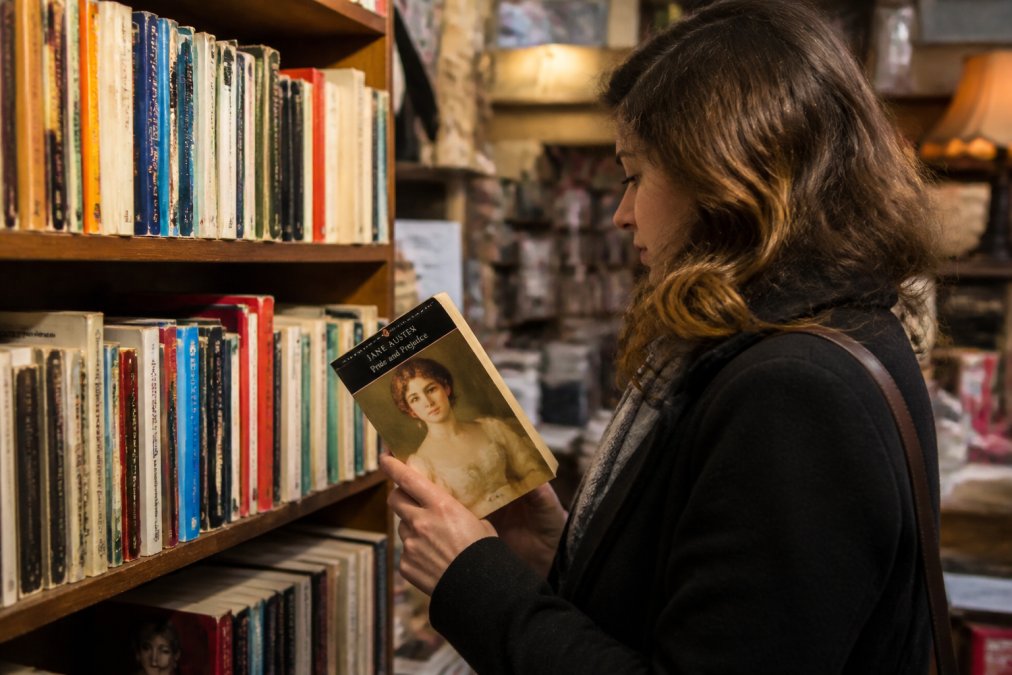
Charity shops remain one of the best-kept secrets for building a classic literature collection on a tight budget. Prices are typically between 50p and £2 per paperback, lower than almost any online source once you factor in shipping.
The catch is unpredictability. What you find depends entirely on what was donated that week. The strategy that works is regularity. Visiting the same two or three shops every fortnight gives you a far better chance of finding specific titles than a single marathon session.
How to Spot Quality Pre-Owned Fiction on the Shelf
Check these three things before buying any pre-owned fiction:
- Page block: Fan the pages from front to back. Yellowing is cosmetic; foxing (small brown spots) can indicate damp storage. Smell the block; a musty odour suggests mould, which can spread.
- Spine integrity: Open the book flat and check whether the spine cracks or pages feel loose.
- Annotations: Flip through quickly for pencil or pen marks. Light pencil is easy to erase; heavy annotation is a personal call depending on the text.
Classic Literature Book Bundles and Multi-Buy Deals
Buying classic literature in bundles is one of the most cost-effective approaches for readers building a collection quickly. Many sellers offer multi-buy discounts, typically structured as "3 for £X" or "5 for £X" deals, that bring the per-book cost down significantly.
Curated collections, grouped by author, era, or theme, tend to offer better value because the selection work has already been done.
Edition Comparison: Mass-Market Paperback vs. Clothbound vs. Annotated
| Edition Type | Best For | Typical Price (Pre-Owned) | Notes |
|---|---|---|---|
| Mass-market paperback | Everyday reading, travel copies | £1-£4 | Most widely available second-hand |
| Trade paperback | Comfortable reading, gifts | £3-£7 | Larger format, better typography |
| Clothbound (e.g. Penguin Clothbound) | Display, collecting | £10-£25 | Harder to find second-hand |
| Annotated edition | Study, first-time readers | £4-£10 | Adds editorial context |
| Library edition | Durability | £2-£6 | Often ex-library, stamped |
For most readers building an affordable library, mass-market paperbacks are the correct choice. They are compact, cheap, and widely available second-hand. Clothbound editions are worth seeking out at charity shop prices; a £1 clothbound Penguin Classic is one of the great bargains in book collecting.
Where to Buy Cheap Classics: Curated Online Shops and Specialist Sellers
The best place to buy cheap classics online is a curated specialist seller rather than a general marketplace. Specialist sellers do the sorting work for you, eliminating hundreds of poorly described listings.
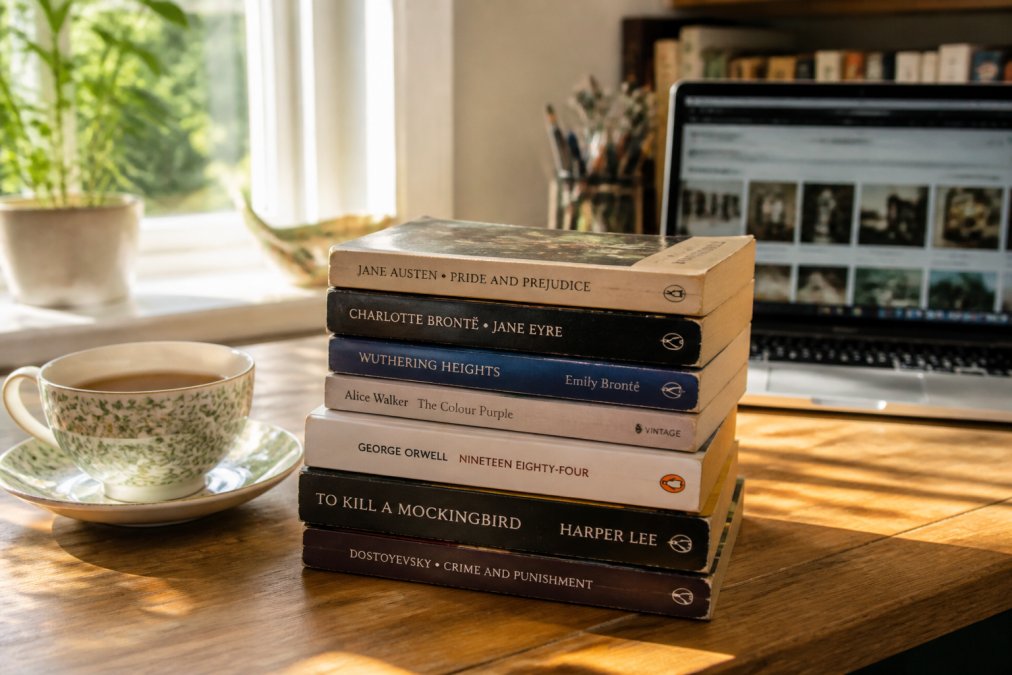
The Almost New Book Shop is built around exactly this principle. Every title is individually assessed and described, with honest condition grading. Pre-loved titles are priced at £5.99 for most paperbacks, with selected hardbacks available at £9.99. For readers who want to give a classic as a gift without choosing a specific title, a gift card starting at £5.00 lets the recipient browse the full curated collection themselves.
The shop stocks many genres beyond fiction classics: military history, biography, and non-fiction titles sit alongside literary canon staples.
Your Local Library and Book Subscription Boxes for Classics
Two sources that most guides on cheap classics completely ignore: your local library and book subscription boxes.
Local libraries are the most underused resource in the reading ecosystem. Every public library offers free borrowing of classic literature, and most councils now provide access to digital lending platforms such as BorrowBox, which carries thousands of e-book and audiobook editions of classic titles at no cost. According to Libraries Connected's overview of digital library services, the majority of public library authorities now offer digital lending as a standard service.
For readers who want to try a classic before committing to a physical copy, or who simply want to read widely without spending anything, the library is the correct first stop.
Book subscription boxes for classics deliver curated selections of pre-owned or new classic titles each month, often themed around a particular era, author, or literary movement. The value proposition is discovery at a per-book cost lower than buying individually. For readers who enjoy being surprised and trust the curator's taste, subscription boxes are an excellent way to build an affordable library over time.
Discount Codes, Free Shipping, and Other Ways to Save
Shipping costs are the hidden variable that determines whether a cheap classic is actually cheap. A £1.50 paperback with £3.99 postage is not a bargain.
The practical solutions:
- Bundle orders to hit free shipping thresholds. Most online booksellers offer free delivery above a certain order value, producing a lower per-book cost than buying individually.
- Subscribe to seller email lists. Discount codes and promotional offers are almost exclusively distributed to email subscribers. Signing up to The Almost New Book Shop's email list is the most direct way to receive advance notice of new stock and any promotions.
- Check for seasonal sales. January, summer, and pre-Christmas periods typically see the deepest discounts on pre-owned stock.
- Use library sales and book fairs. Many libraries hold periodic sales of withdrawn stock at 10p to 50p per volume.
- Compare total cost, not listed price. Always calculate listed price plus postage before comparing sources.
| Saving Method | Best For | Effort Required |
|---|---|---|
| Bundle buying | Regular readers building a collection | Low |
| Email subscription | Deal-seekers and new stock alerts | Very low |
| Library borrowing | Trying classics before buying | Very low |
| Charity shop hunting | Unpredictable finds at very low cost | Medium |
| Seasonal sales | Planned purchases, bulk buying | Low |
| Library sales and book fairs | Out-of-print and vintage classics | Medium |
| Public domain downloads | Digital readers, e-reader users | Very low |
Building a classic literature collection affordably comes down to knowing which channel suits which need. For reliable condition grading and curated pre-loved stock, a specialist seller beats a general marketplace every time. The Almost New Book Shop offers individually described pre-owned titles from £5.99, with honest condition notes and a range that extends from literary fiction to military history and biography. Subscribe to The Almost New Book Shop's emails to receive new stock alerts and be first to know when rare or out-of-print titles arrive.
Frequently Asked Questions
Where is the cheapest place to buy classic books in the UK?
Pre-owned book shops and charity shops consistently offer the lowest prices for classic literature, with many titles available for under £3. Curated second-hand retailers like The Almost New Book Shop stock a range of pre-loved classics from around £5.99. For free access, your local library remains the best option, while public domain titles can be downloaded legally at no cost from sites such as Project Gutenberg.
Are second-hand bookshops better for finding classics than online retailers?
Both have advantages. Charity shops and second-hand bookshops let you inspect condition before buying, which matters for older or vintage editions. Online second-hand retailers offer a far wider selection, clear condition grading, and the ability to search for specific titles or out-of-print books. For rare or hard-to-find classics, a reputable online pre-owned shop is usually more reliable than browsing physical shelves and hoping the right title turns up.
Is it better to buy classic book bundles or individual copies?
Bundles work well if you are building a reading list from scratch and want multiple titles from the same series or author. Individual copies make more sense when you want a specific edition, such as an annotated version or a clothbound classic, or when you already own most of a set. Pre-owned bundles from curated shops often represent the best value per book, especially when free or discounted shipping is included.
How can I build a collection of classic literature without spending a fortune?
Start with public domain editions for titles published before 1928, which are free to download or available as very cheap print-on-demand paperbacks. For physical copies, combine charity shop visits with a curated second-hand retailer for titles you cannot find locally. Subscribe to email lists from pre-owned book shops to catch new stock and promotional offers. Buying in small bundles rather than individually usually lowers the cost per book further.
Do charity shops often stock classic literature?
Yes, classic fiction and literary canon titles are among the most commonly donated books, so charity shops tend to have a reasonable supply. The challenge is consistency, stock changes daily and popular titles sell quickly. Visiting regularly, going early in the week when new donations are processed, and knowing which condition issues to accept versus avoid will significantly improve your success rate when hunting for affordable classics this way.
This article was written using GrandRanker