

How to Find Rare Military History Books: A Collector's Guide
Table of Contents
- Understanding What Makes Military History Books Rare
- Identifying First Edition Military Books
- Valuing Second-Hand Military History Books
- Best Online Marketplaces for Rare Books
- Authentication and Provenance Verification
- Where Military Collectors Hunt Beyond Mainstream Sites
- Common Mistakes to Avoid When Collecting Rare Military History Books
- Conclusion
Last Updated: August 24, 2026
Understanding What Makes Military History Books Rare
Rarity in military history books isn't determined by age alone. A book printed in 1890 might be commonplace, while a 1970s regimental history could be genuinely scarce.
First editions form the foundation of collectibility. Publishers typically print fewer copies of specialist military titles than mainstream fiction, meaning first printings of out-of-print military memoirs or battlefield accounts become harder to source over time. Once a publisher stops printing a title, every copy still in circulation becomes slightly more precious.
Out-of-print status is the critical turning point. Once a book goes out of print, supply becomes fixed. No new copies enter the market, yet demand from military enthusiasts, historians, and collectors continues. The available pool only shrinks as copies are lost, damaged, or absorbed into private collections, creating genuine scarcity.
Condition and provenance matter enormously. A first edition in pristine condition with its original dust jacket commands premiums over identical copies missing the jacket. A book with verifiable historical provenance, signed by the author or once owned by a notable military figure, becomes an archival piece.
First editions and out-of-print status
A first edition is the initial print run of a book's first publication. For military history titles, this distinction carries real weight. Publishers often print conservatively with specialist non-fiction, anticipating modest sales. A first edition of Ken Tout's By Tank D to VE Days, a gripping firsthand account of armoured warfare from D-Day to Victory in Europe, represents the original 1987 publication.

Out-of-print books have been withdrawn from active publication by their publishers. For military history, this often happens within 5-15 years of release. Once out of print, that edition becomes finite. Every copy lost to poor storage, water damage, or disposal shrinks the available pool. The combination of first edition + out-of-print status creates genuine collecting potential.
Condition, provenance, and historical significance
Condition grading follows a standardized scale collectors use worldwide. "Fine" condition shows minimal wear, tight spine, and clean pages. "Very good" allows light shelf wear and minor foxing. "Good" includes visible wear, loose dust jackets, or light staining.
Provenance is the documented ownership history of a book. A military history volume signed by its author carries provenance. A book bearing a regimental library stamp or once owned by a decorated officer carries narrative weight. A copy of James Holland's Normandy '44, combining personal testimonies with detailed military analysis of D-Day landings, becomes more valuable if it belonged to a Normandy veteran.
Historical significance determines long-term collecting appeal. Primary sources, soldier memoirs, strategic analyses written during wartime, regimental histories compiled by those who served, hold more lasting value than modern retellings. Works by established historians like Anthony Beevor, whose Arnhem account of Operation Market Garden is considered definitive, maintain strong demand.
Identifying First Edition Military Books
The first step in hunting rare military history books is confirming you've found a genuine first edition. Many collectors stumble here, mistaking later printings for originals.
Look at the title page and copyright page. The copyright page, which follows the title page, declares the printing history. A first edition typically shows only the original publication year with no mention of reprints. If you see "First Edition" printed explicitly, that's ideal. If the copyright page lists multiple printings, you're holding a later printing.
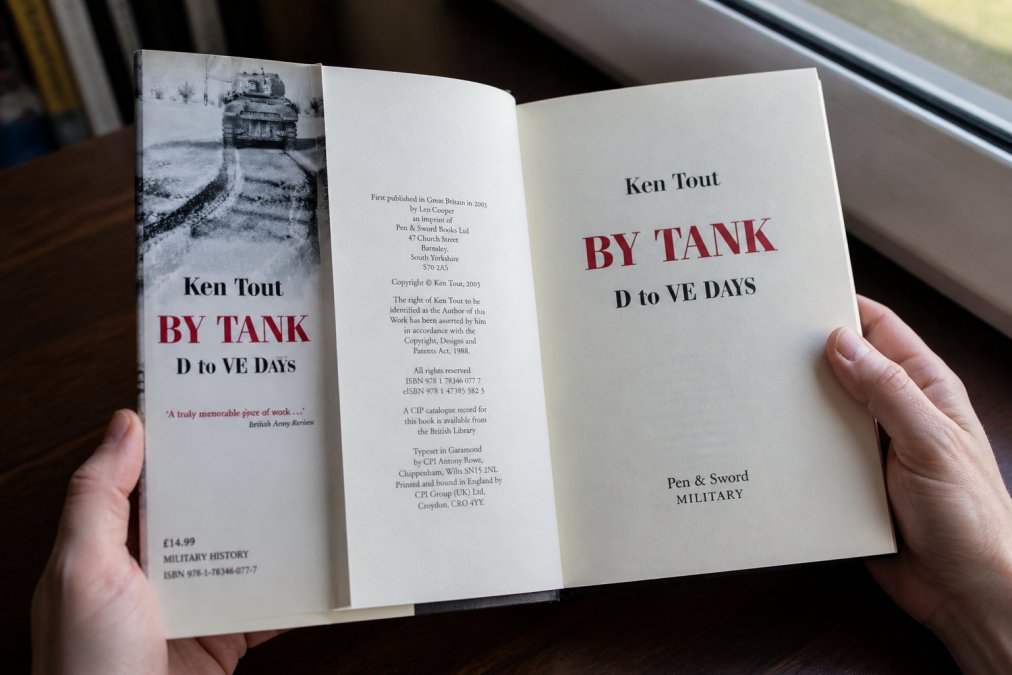
Checking publication details and bibliographic information
ISBN and publisher information anchor your identification. Military history books published before 1974 typically lack ISBNs, predating the ISBN system. For books published after 1974, the ISBN appears on the copyright page and back cover. A first edition ISBN differs from reprints. Cross-reference the ISBN against online bibliographic databases to confirm the printing.
Publisher details matter. Some military publishers, Yale University Press, Penguin Military, Osprey Publishing, have distinct imprints. A book bearing the original publisher's name suggests an early printing.
Dust jacket presence significantly impacts value. Military history books from the mid-20th century onward typically came with dust jackets. A first edition with an intact original dust jacket commands premiums over copies missing the jacket.
Spotting dust jackets, signatures, and authentication markers
Dust jacket condition reveals the book's handling history. Original dust jackets from decades past often show fading, particularly on the spine. This fading is normal and actually a sign of authenticity.
Author signatures add significant value. A signed copy of Helen Fry's MI9: A History of the Secret Service for Escape and Evasion in World War Two, a Yale University Press hardback exploring the almost-forgotten intelligence organisation behind Allied escapes, becomes a unique artifact. Signatures appear on the title page, half-title, or a dedicated signature page. Verify signatures against known examples of the author's handwriting.

Dedication inscriptions differ from author signatures. A handwritten inscription to a previous owner is common and doesn't indicate a signed first edition. These personal inscriptions can add charm and provenance, particularly if the recipient was a notable military figure.
Look for publisher's marks, small symbols or logos on the title page or copyright page. These distinguish editions and printings.
Valuing Second-Hand Military History Books
Once you've identified a first edition or rare military history book, determining its value requires systematic research. Market value for rare military history books ranges widely. A common first edition in good condition might fetch £8-15 (vialibri.net). A scarce regimental history with strong provenance could command £40-80. Exceptional books, limited editions, signed copies, or historically significant volumes occasionally exceed £150.
Condition grading standards for collectible volumes
Fine (F): Minimal wear. Spine is tight, pages are clean and unmarked, dust jacket shows only trivial wear.
Very Good (VG): Light shelf wear is visible. The spine might show minor creasing, edges slightly worn, light foxing on endpapers. Dust jacket shows more noticeable wear but remains intact.
Good (G): Moderate wear is evident. The spine shows creasing, boards might be slightly warped, foxing or light staining appears on pages. Dust jacket may be chipped or faded.
Fair: Significant wear is present. The spine might be cracked, pages could show staining, dust jacket is often missing or heavily damaged.
Poor: Heavy wear, loose pages, water damage, or missing sections. These books have minimal collector value unless exceptionally rare.
Researching comparable sales and market pricing
Online databases provide quick pricing benchmarks. Search for your specific book title and edition across specialist antiquarian sites, general second-hand marketplaces, and auction house records. Note asking prices, but also actual selling prices when available.
Compare multiple listings. If you find ten copies of the same first edition listed, you'll see price variation based on condition and dust jacket presence. The median asking price gives you a realistic market range.
Auction house records reveal what serious collectors actually pay. Search auction databases for your title. A book that sold at auction for £35 has stronger market evidence than one asking £60 on a general marketplace.
Rarity multipliers affect pricing. A book appearing in only two or three online listings commands premiums over titles with dozens of copies available. Limited print runs, particularly regimental histories printed for distribution to veterans only, create artificial scarcity that collectors value.
Best Online Marketplaces for Rare Books
Finding rare military history books requires knowing where collectors and dealers congregate. The Almost New Book Shop curates military history titles specifically because demand from collectors remains strong.
Specialist antiquarian dealers and curated collections
Antiquarian book dealers specialise in rare and out-of-print volumes. These dealers typically maintain physical shops or online catalogues with vetted inventory. Prices reflect this expertise, you'll pay premiums compared to general second-hand marketplaces, but you gain confidence in authenticity and condition accuracy.
Dealers often maintain waiting lists for specific titles. Contacting dealers directly can yield better results than browsing listings.
Curated collections from established retailers provide another avenue. The Almost New Book Shop maintains a dedicated military history section because we understand this audience. We inspect every volume, verify condition, and describe books accurately. Our sustainable model means we're matching books with readers who genuinely value them. Books priced at £4.99 to £11.99 in our collection represent exceptional value for military enthusiasts building their libraries.
Beyond retail: auction houses, ephemera dealers, and archival sources
Auction houses specialise in high-value rare books. Sotheby's and Christie's regularly feature military history collections. Auction catalogues describe books with scholarly detail, and pre-sale estimates guide pricing expectations.
Ephemera dealers focus on historical documents, maps, photographs, and printed materials beyond traditional books. Military ephemera sometimes includes rare printed materials.
Estate sales and house clearances occasionally yield military history collections. Executors often lack expertise in valuing specialist books and price them below market rates.
Library deaccessioning creates opportunities. When libraries withdraw books from their collections, they often sell them at significantly reduced prices.
Authentication and Provenance Verification
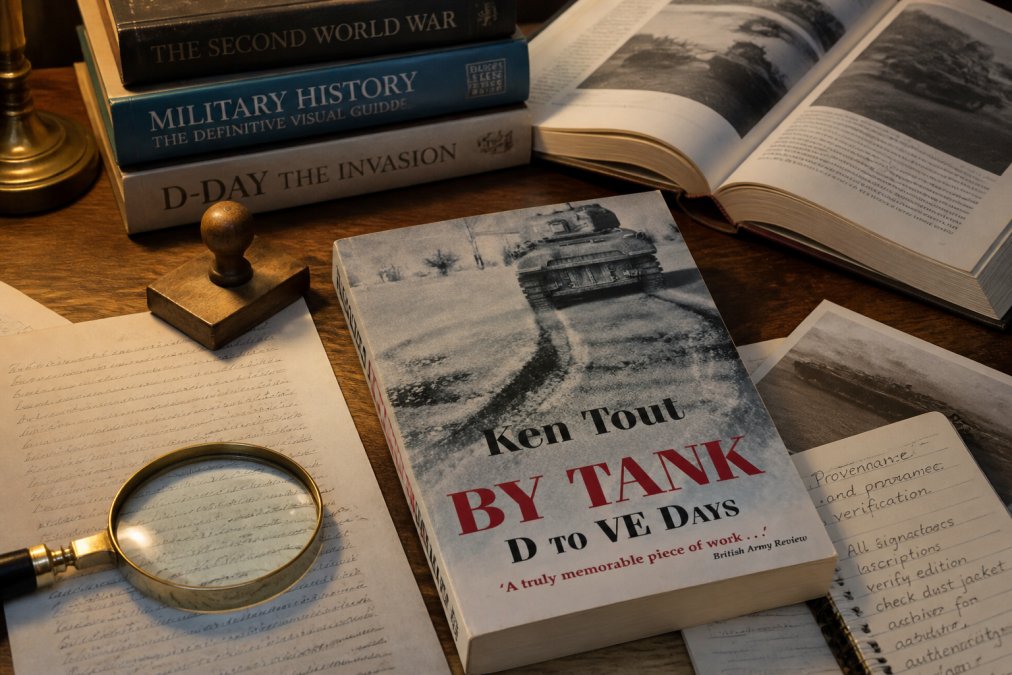
Verifying authenticity protects you from counterfeit editions and misrepresented copies. Forged signatures, reprinted dust jackets, and doctored publication pages exist in the rare book market. Serious collectors apply systematic verification methods before committing significant funds.
Signature authentication requires comparing against known examples. Publishers often provide signature samples in their archives or catalogues. Genuine signatures show consistent pressure, letter formation, and spacing. Forged signatures often appear too uniform or lack natural variation.
Dust jacket verification involves examining printing quality and paper stock. Original 1940s-era dust jackets used specific paper stocks and printing technologies (loc.gov). Modern reproductions often show different paper texture, ink quality, or printing resolution.
Publication details cross-referencing against bibliographic databases confirms printing status. The Library of Congress, British Library, and specialist military history databases maintain detailed publication records (loc.gov). If a book's publication details don't match these records, investigate further before purchasing.
Provenance documentation strengthens value claims. Request documentation from sellers. Legitimate sellers provide it.
Where Military Collectors Hunt Beyond Mainstream Sites
Serious collectors expand their search beyond obvious online marketplaces. These alternative sources often yield better value and more interesting finds.
Regimental histories, battlefield accounts, and primary sources
Regimental histories are often published in limited runs by regiments themselves or military history societies. These books rarely appear on mainstream retail sites. Contacting regimental associations directly can reveal titles available for purchase.
Battlefield accounts and memoirs from smaller publishers carry significant collector value. Ken Tout's By Tank D to VE Days exemplifies this, a veteran's firsthand narrative of armoured warfare capturing authentic tactical experience. Hunting them requires contacting military history societies, veteran organisations, and specialist publishers.
Primary source collections, soldier letters, diaries, and tactical documents, occasionally appear bound as limited editions. Subscribing to military archives and historical societies' newsletters reveals new releases before they're widely distributed.
Military memoirs and strategic studies from lesser-known publishers
Independent military publishers like Osprey Publishing, Frontline Books, and Pen & Sword produce titles that rarely reach mainstream bookshops. Contacting them directly about out-of-print military memoirs can yield results.
Academic presses publish rigorous military history and strategic analysis. Yale University Press, Oxford University Press, and university presses globally produce scholarly military titles. Helen Fry's MI9: A History of the Secret Service for Escape and Evasion in World War Two, published by Yale, exemplifies this category. These books often go out of print after modest print runs, creating collector opportunities.
Self-published military memoirs from veterans represent a growing category. These books, produced in limited quantities, become rare quickly. Connecting with veteran communities and military history forums helps identify self-published titles before they disappear from circulation.
Common Mistakes to Avoid When Collecting Rare Military History Books
New collectors often make predictable errors that cost money or lead to disappointment.
Confusing reprints with first editions is the most common mistake. A book marked "First published 1944, this edition 2010" is not a first edition. Read the copyright page carefully.
Overvaluing condition claims without verification leads to overpaying. Request detailed photographs before purchasing expensive volumes.
Ignoring dust jacket importance costs money later. A first edition without its original dust jacket might sell for £12. The same book with the dust jacket could command £40.
Buying without research on comparable sales leads to poor decisions. Always search for your specific title before purchasing. Check multiple marketplaces and understand the market price range.
Neglecting storage conditions damages books after purchase. Military history books stored in damp basements, direct sunlight, or temperature-fluctuating environments deteriorate rapidly. Proper storage, cool, dry, dark conditions with stable temperature, preserves value and readability.
Pursuing only famous titles limits discovery. While Anthony Beevor's Arnhem and James Holland's Normandy '44 are deservedly popular, lesser-known regimental histories and battlefield accounts often represent better value.

Finding rare military history books combines detective work, patience, and systematic research. Start by understanding what creates rarity: first edition status, out-of-print availability, condition, and provenance. Learn to identify genuine first editions by examining publication details and dust jacket presence. Research comparable sales to establish realistic market values. Hunt across specialist antiquarian dealers, auction houses, and alternative sources like regimental associations and military publishers.
The Almost New Book Shop specialises in military history titles because we understand collectors' needs. Our curated selection includes rare memoirs, battlefield accounts, and strategic studies sourced specifically for serious readers. Every book is inspected for condition and accurately described. Our sustainable model means we're building community around military history, not simply clearing inventory. Whether you're beginning a collection or adding to an established library, explore our military history section for titles that combine historical significance with exceptional value.
Frequently Asked Questions
How can I identify rare military history books worth collecting?
Look for first editions with original dust jackets, out-of-print titles, signed copies, and books with strong provenance. Check the publication date, publisher, and printing information on the title page. Military memoirs, regimental histories, and battlefield accounts from recognised publishers are often sought after. Condition matters significantly: a book in excellent condition with an intact dust jacket commands higher value. Cross-reference titles against antiquarian catalogues to verify scarcity and current market pricing.
What's the difference between identifying first edition military books and later printings?
First editions typically show specific publisher marks, dust jacket designs, and binding styles unique to the initial print run. Check the copyright page for printing statements like 'First published' or absence of 'Reprinted' notices. Later printings often have different cover art, updated introductions, or altered typography. For military history, first editions of WWII accounts, D-Day memoirs, and strategic studies command premium prices. Comparing multiple copies against bibliographic records helps confirm edition status.
How do I know if a second-hand military history book is fairly priced?
Research comparable sales on antiquarian sites and check condition grading standards: Fine, Very Good, Good, Fair, and Poor. Factor in dust jacket condition, which significantly affects value. A WWII memoir in Very Good condition might sell for £15-40, whilst a rare first edition could reach £100+. Consider rarity, author reputation, and historical significance. Books from smaller print runs or specialised military publishers often command higher prices. Compare several listings before purchasing to understand fair market value.
Where should I look beyond mainstream online retailers to find rare military history books?
Explore specialist antiquarian dealers, auction houses, ephemera dealers, and archival collections. Military enthusiasts often find regimental histories through regimental associations and defence studies publishers. Online marketplaces dedicated to rare books, estate sale sites, and military museum gift shops stock hard-to-find titles. Local second-hand bookshops sometimes hold curated military collections. Networking with other collectors through military history forums and book clubs reveals private sales and stock clearance opportunities unavailable on mainstream platforms.
This article was written using GrandRanker