

MusicMagpie vs Biblio for collectors
Table of Contents
- MusicMagpie vs Biblio: Platform Overview for Collectors
- How to Grade Second-Hand Book Condition
- Pricing, Payouts, and Payment Processing
- How to Identify Collectible Books Worth Selling
- Shipping, Logistics, and Condition Standards
- Best Websites for Rare Book Collecting
- MusicMagpie vs Biblio: Which Platform Suits Your Collection
- Conclusion
Last Updated: August 19, 2026
MusicMagpie vs Biblio: Platform Overview for Collectors
When selling a book collection, your platform choice determines your returns. MusicMagpie vs Biblio represents two fundamentally different approaches: one prioritises speed and convenience, the other caters to collectors who understand that rarity and condition yield better payouts.
If you've got common paperbacks, MusicMagpie's automated process gets cash in your account within days. If you're holding rare editions, first printings, or niche military history titles, Biblio's collector-focused marketplace often yields significantly better returns, though it demands patience and precise condition grading.
This guide breaks down how each platform works, where they excel, and which suits your collection before you list a single book.
How to Grade Second-Hand Book Condition
Condition grading is the foundation of every successful book sale, and it's where most sellers either leave money on the table or face returns. Both platforms require accurate assessment, but Biblio's collector audience is far more exacting about what "very good" actually means.

The standard grading scale runs from Fine (nearly perfect) down to Poor (barely readable). Fine has tight binding, unmarked pages, and pristine dust jacket. Very Good means minor wear: small spine crease or faint pencil mark. Good indicates obvious handling: creased spine, worn edges, dog-eared pages. Fair means significant wear but readable. Poor describes books falling apart.
MusicMagpie's system is simpler because their buyers expect bulk inventory and grades broadly: Acceptable, Good, Very Good. Biblio attracts serious collectors who reject books listed as "Very Good" if they have undisclosed foxing, repaired tears, or other flaws.
When grading for Biblio, photograph the dust jacket front and back, spine, page edges, and any defects. Note every flaw: loose pages, inscriptions, highlighting, water damage, mould. Collectors expect transparency because they're paying premium prices. On MusicMagpie, focus on overall readability and structural integrity.
The biggest mistake sellers make is over-grading. A book read twice and shelved carefully is Very Good, not Fine. Grade conservatively; buyers will be pleasantly surprised and you'll avoid returns.
Pricing, Payouts, and Payment Processing
This is where the platforms diverge most sharply.
MusicMagpie uses algorithmic pricing based on ISBN, market demand, and inventory levels. You submit a book, their system checks its database, and within hours you get a non-negotiable offer. Payouts happen within 5-7 working days via bank transfer. The convenience is real, but you're accepting whatever the algorithm determines your book is worth.
Biblio operates as a marketplace where you set your own prices. You list a book, decide what you want for it, and wait for a buyer. Your earning potential is higher, especially for rare or out-of-print titles, but some books might sit listed for months. Biblio takes a 15% commission and holds payment in your account until you request withdrawal. Payouts take 2-4 weeks after a sale.
For 50 common novels, MusicMagpie delivers predictable income quickly. For a curated collection of rare military history books or signed first editions, Biblio usually generates substantially more revenue per book.
Consider your collection's composition: if 80% are common titles, MusicMagpie's speed wins. If you're selling anything with collector appeal, first editions, signed copies, out-of-print titles, or niche subject matter, Biblio's higher ceiling justifies the wait.
How to Identify Collectible Books Worth Selling
Not every old book is valuable, but many seemingly ordinary books command premium prices among the right collectors. Learning to spot collectible books before listing can mean the difference between a £2 payout and a £50 sale.
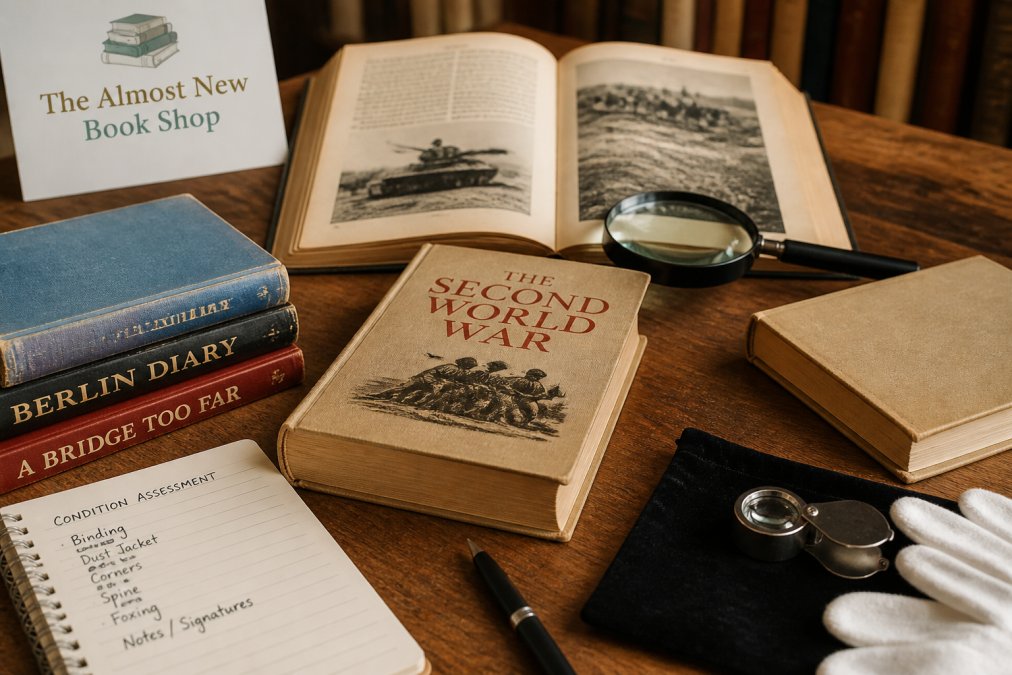
First editions are the most obvious category. Check the copyright page; if it reads "First Edition" or shows only the publication year without subsequent printings, you've got a first. Some are worth hundreds of pounds; others are worth a few pounds more than later printings.
Signed copies command premiums across every genre. A signature on the title page, especially if personalized or dated, increases value significantly. Military history books with author signatures attract serious collectors willing to pay well above market rate.
Out-of-print books have inherent scarcity value. If you can't find a current edition at major retailers, the book has collector appeal. Check whether the book has been reprinted; if the original 1987 edition is out of print but a 2015 edition exists, the original might still be collectible depending on condition and rarity.
Limited editions and special printings matter. A book marked "Limited Edition 247 of 500" is worth more than a standard trade edition. Book club editions, identifiable by a small circular mark on the back cover, are typically worth less than first trade editions.
Dust jacket condition dramatically affects value. A first edition with an intact, unfaded dust jacket is worth substantially more than the same book without one.
Subject matter drives collectibility. Military history books, especially first-hand accounts or rare regimental histories, attract dedicated collectors. Signed editions of poetry, limited-run small press publications, and out-of-print children's books also command premiums.
Before listing, research comparable sales on Biblio. Search by ISBN and author to see what similar editions sold for recently. This 10-minute research prevents underpricing rare titles.
Shipping, Logistics, and Condition Standards
How your books reach the buyer matters enormously, especially on Biblio where condition expectations are exacting.
MusicMagpie provides prepaid shipping labels and arranges courier collection from your home. You pack the books, print the label, and a courier collects them. This eliminates finding a post office or paying for shipping yourself. MusicMagpie's logistics are built for volume and expect minor transit wear.
Biblio requires you to arrange and pay for shipping. You choose the carrier and pay postage, which you can factor into your asking price or absorb as a business expense. You control packaging quality but are responsible for transit damage. If a book arrives damaged, the buyer can dispute the sale.
For Biblio sales, especially high-value books, invest in proper packaging. Use padded mailers or small boxes, wrap books individually, and consider signature-required delivery for items over £30.
Both platforms have clear condition standards. MusicMagpie's are forgiving; they expect wear and price accordingly. Biblio's are strict: if you describe a book as "Very Good" and it arrives with an undisclosed dent, you'll face a return request.
Best Websites for Rare Book Collecting
While MusicMagpie and Biblio dominate the volume market, serious collectors also use specialist platforms catering specifically to rare and collectible books.
AbeBooks is the largest marketplace for rare and out-of-print books globally. Independent booksellers list inventory here, attracting serious collectors searching for specific titles. AbeBooks often generates higher prices than Biblio, though seller fees are comparable. The platform's search filters are exceptionally detailed, allowing collectors to find first editions, signed copies, and specific printings.
Vialibri aggregates listings from multiple rare book platforms simultaneously, showing collectors the best prices across sellers. If you list on AbeBooks, your books automatically appear in Vialibri searches.
For military history specifically, specialist forums and collector groups often yield better results than general platforms. Collectors of regimental histories, military memoirs, and campaign accounts actively seek out sellers in dedicated communities.
The decision between MusicMagpie, Biblio, and specialist platforms depends on your collection's nature. Common books sell faster on MusicMagpie. Collectible books earn more on Biblio or AbeBooks. Niche military history often commands the highest prices through dedicated collector networks.
MusicMagpie vs Biblio: Which Platform Suits Your Collection
The choice comes down to three factors: what you're selling, how much time you have, and what matters most, speed or maximum return.
Choose MusicMagpie if you're clearing general inventory. You've got shelves of novels, non-fiction, and textbooks in decent condition but not rare. You want frictionless transactions: submit books, get paid, move on. You'll receive payment within a week. Per-book payouts are modest (often £0.50 to £3 for common titles), but the process is reliable.
Choose Biblio if your collection contains books with collector appeal. You have first editions, signed copies, out-of-print titles, or books in exceptional condition. You're willing to wait weeks or months for the right buyer. Your per-book earnings will be significantly higher (often £5 to £50+ for genuinely collectible titles).
MusicMagpie vs Biblio: Quick Comparison
| Factor | MusicMagpie | Biblio |
|---|---|---|
| Best For | Common books, volume selling | Rare books, high-value items |
| Payout Speed | 5-7 days | 2-4 weeks after sale |
| Pricing Control | Algorithm decides | You set the price |
| Condition Tolerance | Forgiving | Exacting |
| Per-Book Earnings | £0.50-£3 (typical) | £5-£50+ (collectible items) |
| Shipping | Prepaid labels, courier collection | You arrange and pay |
| Seller Commission | Built into offer | 15% of sale price |
| Best Collection Type | General fiction, textbooks | First editions, signed copies, out-of-print |
A hybrid approach works well for many collectors: list common books on MusicMagpie for quick liquidity, and reserve Biblio for anything with genuine rarity or condition excellence. This maximises total earnings while keeping the process manageable.
Conclusion
The difference between MusicMagpie and Biblio reflects a broader tension in the second-hand book market: speed versus value, convenience versus precision. MusicMagpie wins if you're clearing inventory quickly. Biblio wins if you understand your collection's true worth and have patience to find the right buyers.
For collectors building a library rather than clearing shelves, The Almost New Book Shop offers a curated alternative. Our selection emphasises quality, rarity, and sustainability: military history, classics, signed editions, and out-of-print titles that deserve readers who'll treasure them. Browse our collection at The Almost New Book Shop, where every book has been carefully selected and priced fairly. Start with titles like The Marble Collector by Cecelia Ahern (£7.99), a BBC Radio 2 Book Club Pick, or give the gift of discovery with The Almost New Book Shop gift card (£5.00). Subscribe to our emails for weekly curator picks and rare finds that won't last long.


Frequently Asked Questions
Which platform pays more for books: MusicMagpie or Biblio?
MusicMagpie typically offers immediate, guaranteed pricing based on ISBN scans, making payouts predictable. Biblio connects you with independent buyers, so prices vary by demand and rarity. For bulk selling and inventory clearance, MusicMagpie's fixed rates suit most sellers. For rare or collectible books, Biblio may yield higher returns if the book appeals to specialist collectors, though sales take longer.
How do I know if a book is collectible before selling it?
Check the first edition status, publication year, author significance, and condition grade. Rare military history titles, signed editions, and out-of-print classics hold value. Research comparable sales on Biblio or AbeBooks to gauge collector interest. Look for dust jackets in good condition, as these significantly increase collectible value. If a book appears in collector guides or has limited print runs, it warrants individual listing rather than bulk selling.
What shipping and condition standards does each platform use?
MusicMagpie provides prepaid shipping labels and specifies 'Good' condition minimum standards for acceptance. Biblio requires sellers to set condition grades (Fine, Very Good, Good, Fair, Poor) and handle their own courier collection or postage. Biblio's transparency around condition grading appeals to collectors who value detailed descriptions, while MusicMagpie's standardised approach suits faster, bulk transactions.
Is it better to sell rare books on MusicMagpie or Biblio?
Biblio is better for rare and collectible books because it attracts specialist collectors willing to pay premium prices for condition and rarity. MusicMagpie works best for mainstream, recent titles with high turnover. If you have military history first editions or out-of-print classics, Biblio's marketplace reaches the right audience. For general inventory clearance, MusicMagpie offers speed and certainty.
This article was written using GrandRanker