

Wob Alternative for Quality Books: 2026 Comparison
Table of Contents
- Wob Alternative for Quality Books: What Actually Matters
- Condition Grading: The Real Quality Signal
- Packaging and Delivery: Where Cheap Books Get Damaged
- How to Grade Used Book Condition Before You Buy
- Best Places to Buy Used Books in 2026 (Compared)
- Why Independent Second-Hand Bookshops Online Beat Big Marketplaces
- Shipping, Returns and Sustainability: The Full Cost of a Cheap Book
- Niche Collections: Military History, Travel and Out-of-Print Finds
- Conclusion: Picking the Right Wob Alternative for Quality Books
- Frequently Asked Questions
Last Updated: September 23, 2026
Wob Alternative for Quality Books: What Actually Matters
Most people judge a second-hand book by its price tag. That is the wrong instinct. The condition grading is what separates a bargain from a disappointment, and it is where budget marketplaces quietly cut corners. This guide from The Almost New Book Shop explains how grading works, how to verify it, and where to find a reliable wob alternative for quality books in 2026.

Condition Grading: The Real Quality Signal
Condition grading is a standardised description of a book's physical state, covering the spine, pages, dust jacket, and any markings. "Good" does not mean good in everyday language. It means readable with visible wear.
| Grade | What It Means | Typical Flaws |
|---|---|---|
| Like new | Barely opened | No marks, tight spine |
| Very good | Read once or twice | Minor shelf wear |
| Good | Clearly read | Creasing, page yellowing |
| Acceptable | Well-read | Loose spine, annotations |
| Ex-library | Former library stock | Stamps, stickers, plastic covers |
Packaging and Delivery: Where Cheap Books Get Damaged
A book that survives a warehouse does not always survive the post. Packaging quality is the most under-discussed factor in second-hand buying, and it is where cheap shipping quietly costs you.
How to Grade Used Book Condition Before You Buy
You can verify a seller's grading claims with a short checklist before you commit. Run through these five checks on every listing:
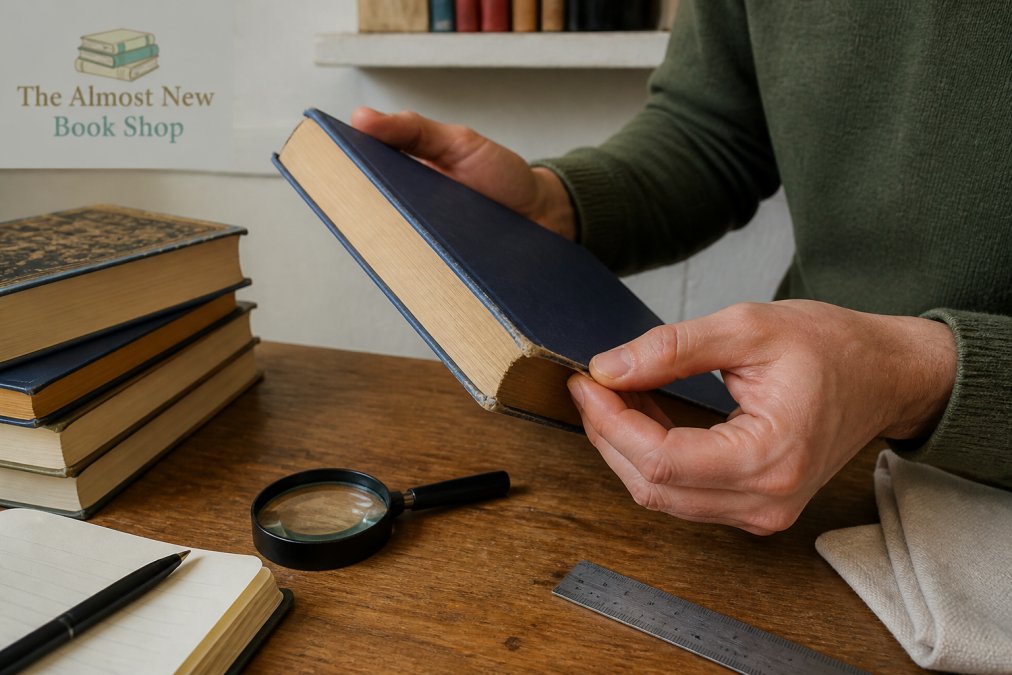
- Ask for spine photographs, not just the front cover
- Check whether the listing names the dust jacket condition separately
- Look for "ex-library" disclosure, which affects value and smell
- Confirm whether annotations, highlighting, or inscriptions are mentioned
- Check page yellowing and foxing notes on older or out-of-print titles
Best Places to Buy Used Books in 2026 (Compared)
The best places to buy used books in 2026 fall into four categories: curated independents, large general marketplaces, charity shops, and specialist dealers. Each has a different grading standard, packaging record, and price model. For quality-focused buyers, the deciding factor is not inventory size but grading transparency, whether the seller inspects and describes each book individually.
| Retailer Type | Grading Transparency | Packaging | Best For |
|---|---|---|---|
| Curated independents | High, item-by-item | Rigid wraps | Collectors, quality seekers |
| Large marketplaces | Variable, third-party sellers | Mixed | Volume, low prices |
| Charity shops | Low, in-person only | N/A | Browsing, local finds |
| Specialist dealers | Very high, expert-graded | Bespoke | Rare, academic, antiquarian |
The Almost New Book Shop: Curated Pre-Loved Titles
Our top pick is The Almost New Book Shop, a Chichester-based retailer built around rescuing pre-loved books before they reach landfill. Every title is curated rather than bulk-listed, so the condition description reflects an actual inspection.
Gift Cards for Book Lovers
For the bibliophile who already owns everything, a The Almost New Book Shop gift card at £5.00 lets them choose their own pre-loved treasure. It sidesteps the classic gift-book problem: guessing the wrong title.
How to Verify Grading Accuracy Before You Buy
Most guides tell you what the grades mean. Fewer tell you how to check whether a seller's 'Very Good' actually matches the industry standard. This is the trust gap that separates a reliable retailer from a hopeful one.
Run these checks on any unfamiliar retailer:
- Does the listing name the dust jacket condition separately from the book block?
- Is 'ex-library' disclosed upfront, with stamps and stickers described?
- Are annotations, highlighting, or inscriptions mentioned by page range?
- Is page yellowing or foxing noted on older or out-of-print titles?
- Can you request spine and copyright-page photographs before purchase?
Packaging Quality: The Missing Differentiator
Quality-conscious buyers worry about transit damage, and for good reason. Packaging is where cheap shipping quietly costs you. Jiffy bags feel economical, but they leave hardcovers exposed to every sorting-machine corner between dispatch and your door. A bruised spine or a bent corner turns a 'good' book into an 'acceptable' one before you have opened it.
Why Independent Second-Hand Bookshops Online Beat Big Marketplaces
Independent second-hand bookshops online beat big marketplaces on one metric that matters most: grading accuracy. A curated shop inspects each book and describes it honestly. A marketplace listing thousands of third-party sellers cannot guarantee that consistency.
Shipping, Returns and Sustainability: The Full Cost of a Cheap Book
The cheapest sticker price rarely stays the cheapest once shipping is added. A £2 paperback with £3.50 postage costs more than a £4.50 book with free delivery, and it may arrive in worse condition.
Niche Collections: Military History, Travel and Out-of-Print Finds
Niche stock is where general marketplaces fall down. If you collect military history, you want a seller who knows a first-edition Beevor from a reprint, not an algorithm guessing at keywords. Specialist retailers stock the titles generalists overlook, and they grade them with an expertise that mass listings cannot match.
Specialist Retailers Worth Knowing
The market for quality used books splits into distinct specialist segments, each with its own grading conventions:
- Academic and university press stock. Sellers specialising in academic titles often grade to library standards, noting underlining, marginalia, and binding tightness separately. This matters for research copies where a loose signature makes a book unusable.
- Antiquarian and rare book dealers. These traders typically belong to professional associations with published codes of practice, and they describe condition using established terminology such as 'foxed', 'cocked', and 'rebacked'. For pre-ISBN titles, this vocabulary is the only reliable guide.
- Military history specialists. Dealers in this segment frequently stock regimental histories, campaign memoirs, and limited print runs that never appear on general marketplaces. They know the difference between a book club edition and a first impression.
- Travel and regional writing. Out-of-print travel guides and regional writing often surface only through specialist sellers who understand their collectible value.
How to Evaluate a Specialist Seller
Specialist retailers live or die on reputation, so their grading tends to be more conservative than a general marketplace. A common pattern is to under-promise and over-deliver: a book described as 'Very Good' from a specialist often arrives closer to 'Near Fine' by general standards.
When assessing a specialist, look for:
- A published grading rubric specific to their segment
- Membership of a recognised trade association with a code of practice
- Detailed provenance notes for rare or antiquarian titles
- Willingness to provide additional photographs of binding, endpapers, and colophon
Where Curated Generalists Fit
For buyers who want niche titles without navigating multiple specialist sites, a curated generalist like The Almost New Book Shop bridges the gap. Travel guides from Lonely Planet sit alongside WWII memoirs and regional writing, which means one order can cover a holiday read and a collector's find. For out-of-print and rare editions, this curation is the difference between finding a title and giving up.
Conclusion: Picking the Right Wob Alternative for Quality Books
Finding a genuine wob alternative for quality books comes down to one question: does the seller inspect what they sell? Grading accuracy, careful packaging, and a straightforward returns policy matter more than a rock-bottom price. Buyers who prioritise those three things rarely regret a purchase.
Frequently Asked Questions
Is World of Books' book quality good?
Quality varies by individual listing because stock comes from many sources. Their condition categories (Very Good, Good, Acceptable) are broad, so two books in the same band can look quite different. Check the specific description and any photos, and read customer reviews for the title you want. If consistent grading matters to you, a curated wob alternative that inspects and describes each copy individually is a safer route.
How can I ensure the quality of second-hand books when buying online?
Look for retailers that publish detailed condition notes covering spine integrity, dust jacket presence, page yellowing and whether the copy is ex-library. Ask for extra photos if the listing is vague. When you learn how to grade used book condition yourself, you can judge a listing in seconds and avoid the disappointment of a book that looks nothing like its description.
Are there independent alternatives to large-scale used book retailers?
Yes. Independent second-hand bookshops online often curate smaller, better-described stock than mass marketplaces. The Almost New Book Shop, for example, lists individual titles with condition notes and specific details, from a Lonely Planet France guide at £3.99 to Anthony Beevor's Arnhem at £4.99, so you know what you are getting before it arrives.
How does buying second-hand books support sustainability?
Every pre-owned book you buy keeps a physical copy in circulation rather than sending it to landfill or triggering a new print run. That supports a circular economy for books and reduces the paper, ink and transport footprint of reading. Choosing a wob alternative for quality books that rescues and rehomes stock makes that environmental benefit the core of the purchase, not an afterthought.
What should I look for in a used book retailer's condition grading?
A trustworthy grader names the specific flaws: bumped corners, faded spines, inscriptions, foxing or missing dust jackets. Vague labels like 'acceptable' tell you nothing. Look for retailers that use consistent categories, describe wear honestly, and offer a straightforward returns policy if the book arrives in worse shape than described.
The challenge with second-hand buying is that quality is invisible until the parcel lands. The Almost New Book Shop removes that gamble with item-by-item curation, honest condition grading, and a catalogue spanning classics, military history, travel, and children's titles. Get started with The Almost New Book Shop and build a library you can trust, one rescued book at a time.